Top Shelf Reviews

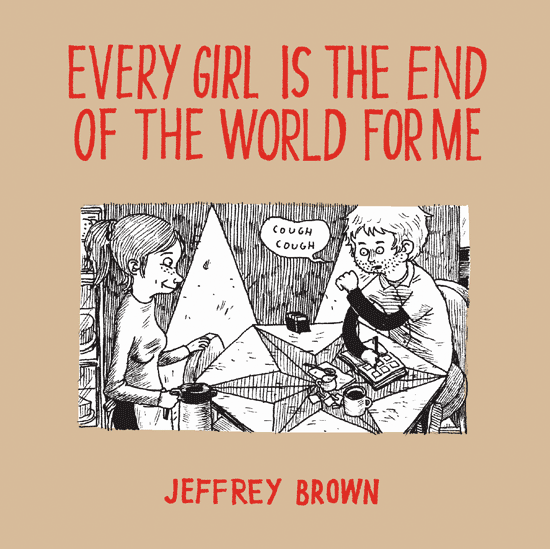
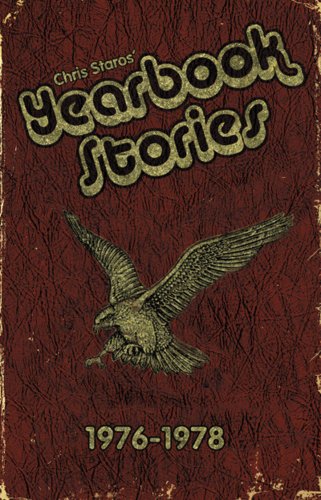
I ordered a few books from Top Shelf’s recent on-line sale, and they arrived this week. It was a nice little gift, from myself. Apart from some free samplers, there was also Alex Robinson’s Too Cool To Be Forgotten, two James Kochalka books, and a CD inspired by Craig Thompson’s magnificent Blankets opus by the band Tracker (I’ll have to read it again now, with the accompanying soundtrack, though its 11 tracks won’t be enough to sustain the reading of the massive volume). I also picked up these two little numbers; Chris Staros’ Yearbook Stories 1976-1978 and Jeffrey Brown’s Every Girl Is The End Of The World For Me.

The latter is an epilogue to his so-called Girlfriend trilogy, of which I have read none. However, this104 page book was still quirkily enchanting, and I’m sure very guy could relate to it. I showed it to my fellow office dwellers when my package arrived and the title alone brought many a smile. Brown is a respected cartoonist, as well as a prolific one. Told over three weeks as 2003 becomes 2004 it’s essentially an intricate, dialogue driven look at the ladies that come and go from his life and how he feels about them. With his e-mails, and phone calls he paints a picture of a heart that flits between hope, confusion and sorrow, with great realism. The sketchy art won’t be for everyone, but if you’re a fan of Harvey Pekar’s work, you’ll no doubt find another everyman hero here.

Top Shelf have also just released an awesome trailer for Brown’s other series, The Incredible Change-Bots, a Transformers parody, but I’m sure it’s much more than that. Watch it and laugh.

Yearbook Stories was a pleasant surprise. Consisting of two short tales in its 32 pages it centres on two formative tales of the author’s high school years. The first one, The Willful Death of a Stereotype, chronicles Chris’ anxiety and desire to fit in yet still be himself, when he is presented with a move to a new school and a chance for re-invention. The first step in this process means pinning his hopes on becoming the new class president. Iluustrated by Bo Hampton, and with great lines like, “But dreams are not made of logic, and that alone is their magic,” it’s more whimsical than Every Girl, but still honest and real.

The second story, The Worst Gig I Ever Had is considerably more mature, with its swearing and nudity and is drawn by Rich Tomaso. This focuses on young Chris’ first band and a job for a bunch of bikers in the woods, which explains the title. I much preferred this tiny tome rather than Every Girl, with it’s quaint vibe that’s similar to The Wonder Years TV show from a few years ago. Both tales of the young Chris are bite-sized episodes in his life that perfectly capture the typically curious world view of a growing boy.

You can go here for a Every Girl Is The End Of The World For Me preview, and here for a Yearbook Stories preview.

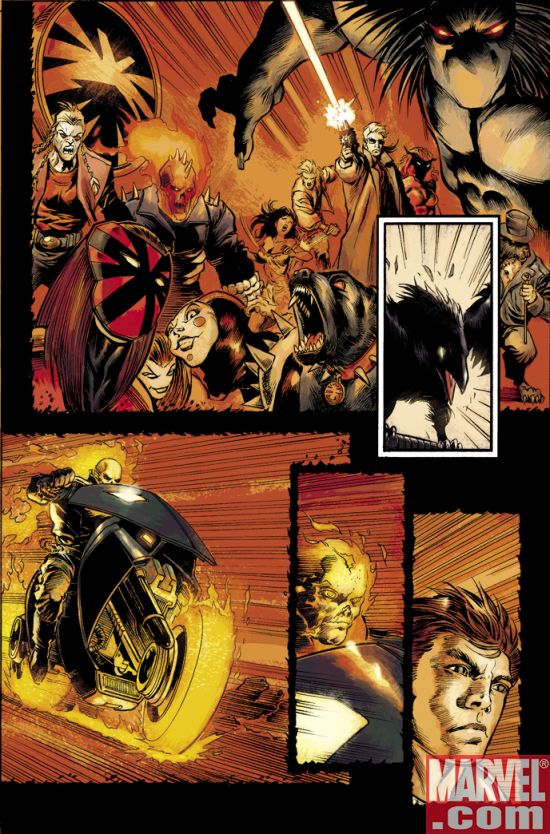
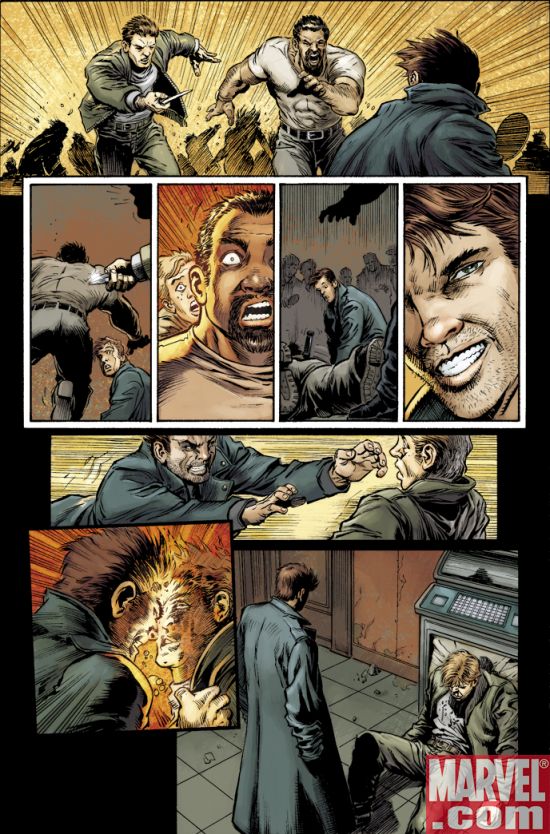
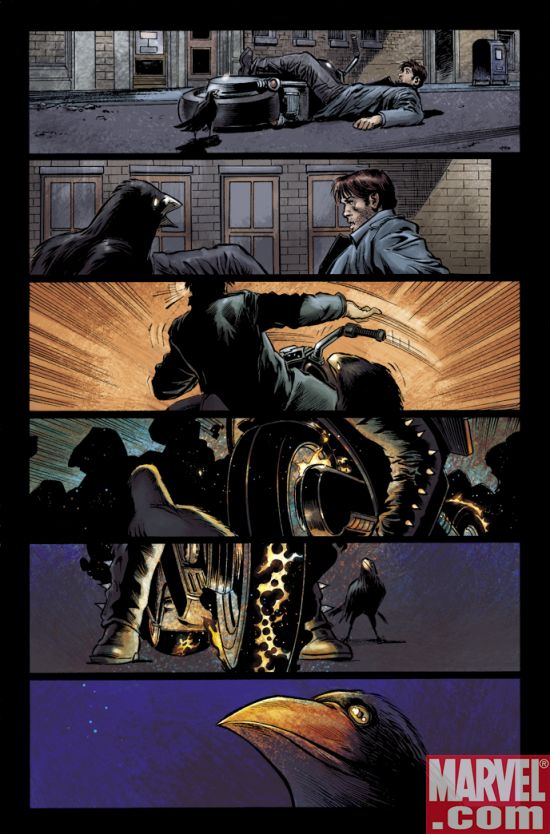
Ghost Rider: Danny Ketch #1 Preview

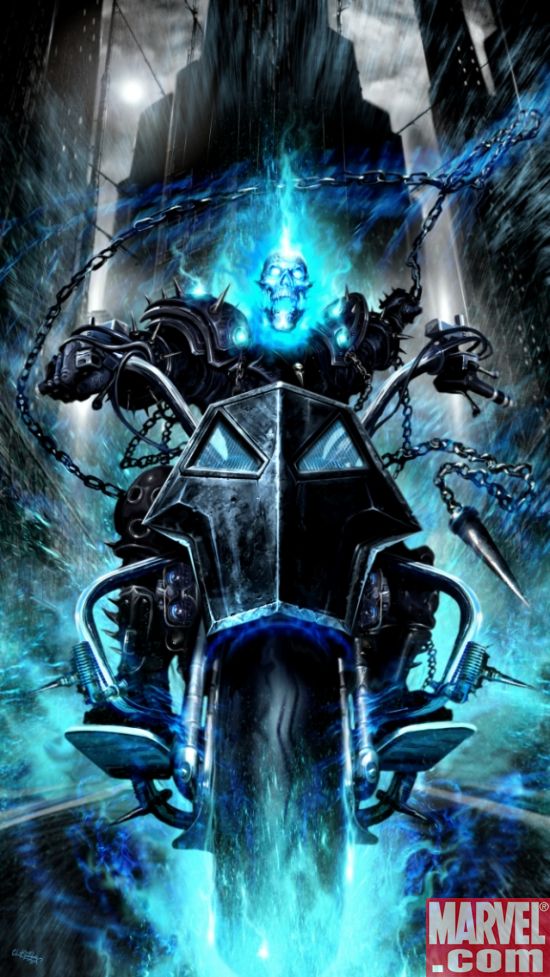
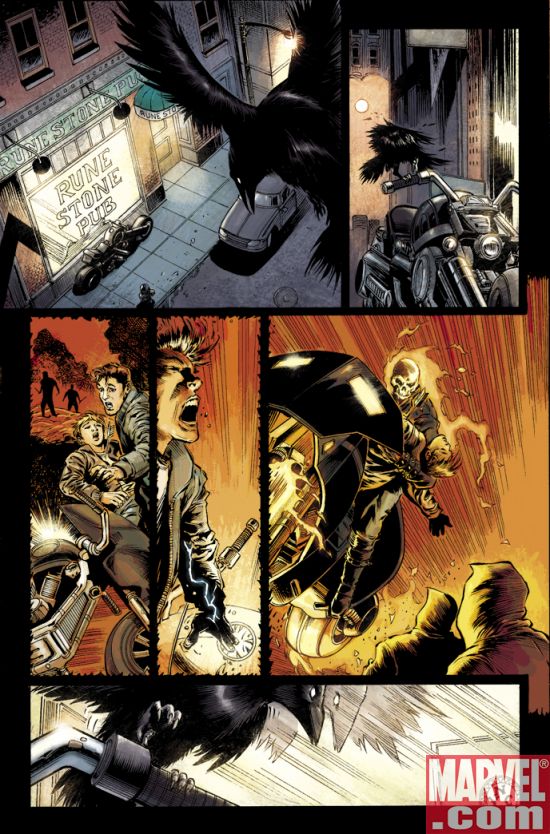
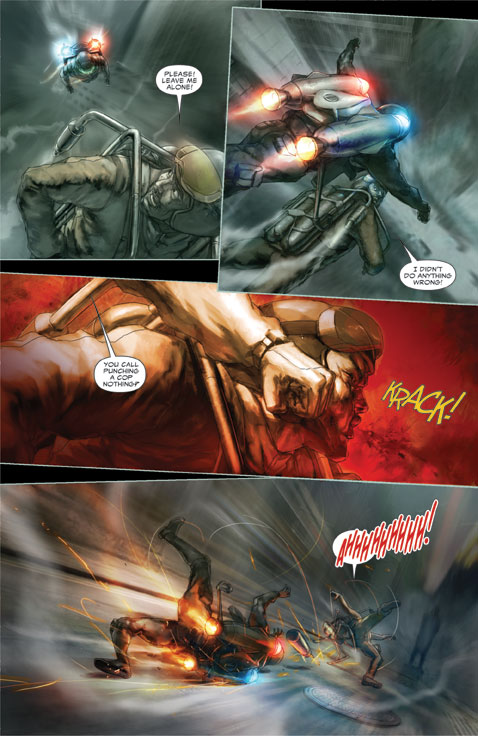
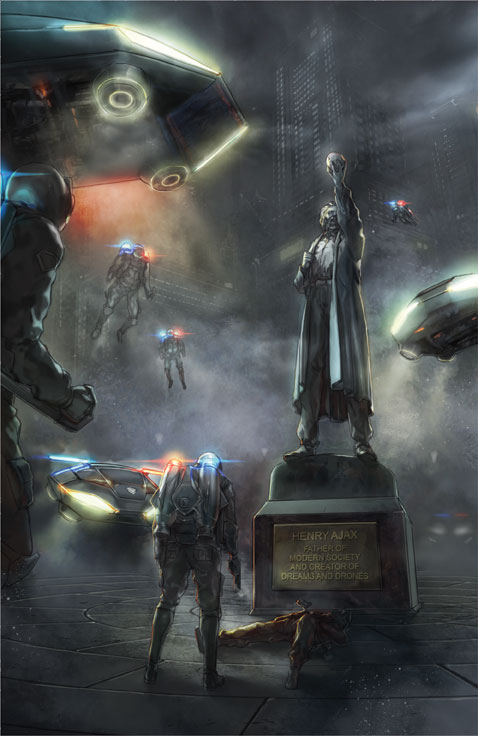
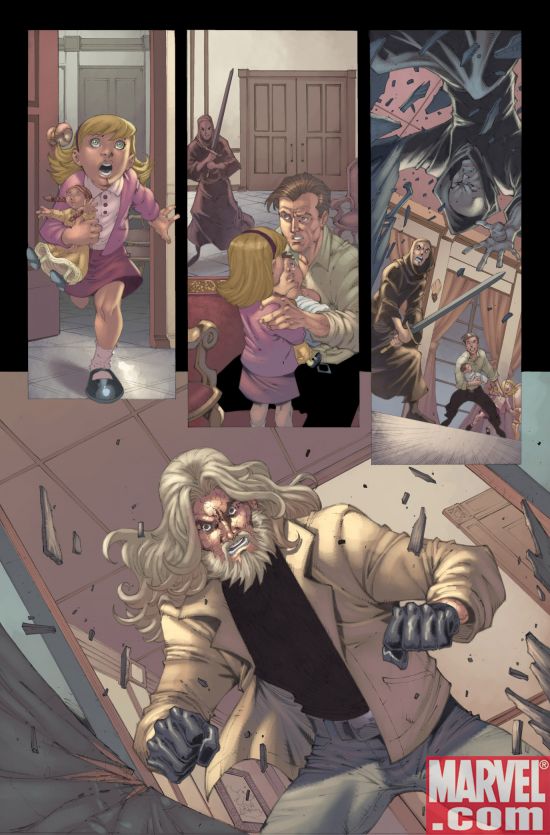
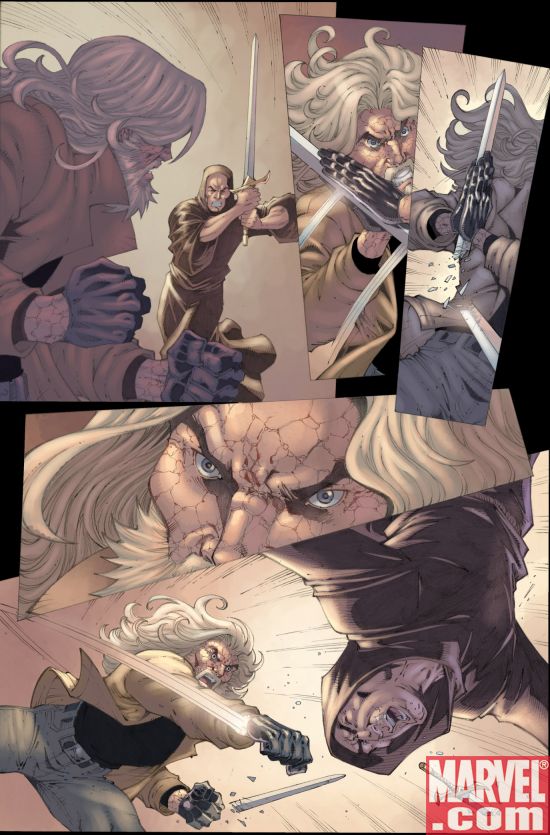
Below is the awesome Clint Langley cover, and a few wordless interior pages from the new 5 ish mini-series devoted to former Ghost Rider, Danny Ketch. Written by Simon Spurrier (Silver Surfer) and pencilled by Javier Saltares (Iron Man), the first issue goes on sale on October 22 and explores the expanding mythos of the Spirit of Vengeance.

Flash Gordon #1 Review

Flash Gordon has had more facelifts than an ageing starlet. The sci-fi character was created by Alex Raymond in 1934 as a newspaper strip hero to compete with Buck Rogers. However, good old Flash has fared much better. Most would be familiar with the character from the awesome 1980 film (sing it with me, “FLASH! AHAAA!), the late 80s Defenders of the Earth cartoon, or last year’s poorly received TV series. However, far too many people confuse the character with DC Comics’ Scarlet Speedster, much to the chagrin of fanboys everywhere.

Ardden Entertainment is the newest publisher in the comic book biz, with Flash Gordon being their sole release. After a #0 issue launched at the New York Comic-Con, we have the official debut of the blond adventurer’s latest re-imagining.

It begins much in the same way as MI:2, except without the catchy theme music. Flash is climbing a cliff, when his solitude is shattered by a phone call ordering him back to campus, where he earns his living as a teacher. Seeing the rugged heartthrob as a professor may be too far fetched for some, but thankfully, the university scenes are swift, as Flash shouts at his boss, and meets his long time “friend”, CIA agent Dale Arden. There’s some fisticuffs, gun pointing and witty remarks, before Flash is recruited for the CIA once more and told that his old friend scientist Hans Zarkov has gone rogue and is building a Weapon of Mass Destruction. Flash doesn’t believe it, but seems to be the only one who knows where Zarkov is hiding, so it’s off to Africa for the team. All doesn’t go smoothly though, as the pair face a betrayal and a mid-air collision, leaving the issue on a cliff-hanger, showing evidence of its comic strip origins.

I wasn’t expecting much with this title. A new publisher, with new creators and a franchise that has been re-invented more times than Madonna’s wardrobe does not bode well. I’m glad I was wrong. Writer Brendan Deneen and artist Paul Green are a formidable duo who know each other’s strengths. Deneen’s script keeps things moving at a frantic pace, yet it never seems rushed. Having legendary comic book scribe J.M DeMatteis (The Amazing Spider-Man) as Editor is also a great addition to Ardden. Green’s artwork is simple, yet certainly not simplistic. With few lines he manages to give the characters a real fluidity, and the colours are perfectly suited to each scene. With manga inspired pencils reminiscent of J. Scott Campbell or Joe Madureira, it’s a very pretty book, with a sense of dynamism and beauty.

Once the team leave earth and meet Ming, things will heat up even further I’m sure as the cast grows and alien environments and creatures start to appear, as can be previewed here. For those with fond memories of Flash Gordon this update should be welcome, and for those who’ve never experienced his swashbuckling antics, this is a great place to start.

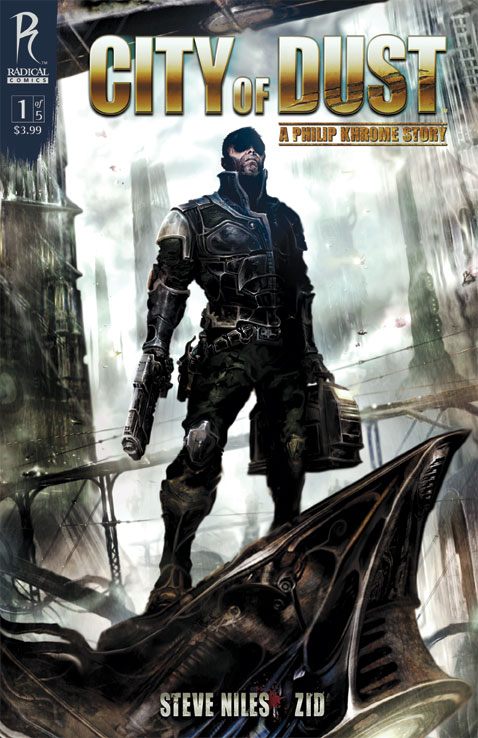
City of Dust #1 Review

Radical launch another title on October 1 with City of Dust, a 5 issue mini-series reminiscent of Blade Runner, Minority Report and the Christian Bale film, Equilibrium. Even those unfamiliar with the work of authors such as Philp K. Dick, certain aspects of this story will still appear familiar, such as the concept of mind crimes. COD’s future world has been constructed upon the belief that “fantasy, religion and imagination were wastes of the human mind, and served to corrupt the individual and pollute the masses.” Imagination is a scary place in this world, which means no comics. How cruel.

A future city where the government controls everything and any fantastic stories or ideologies are outlawed is nothing new. In fact, apart from the art the concept bears a loose resemblance to Freedom Formula, another Radical series. Those similarities are not glaring however and City of Dust makes a rather nasty (in a good way) first impression in its opening pages to ensure it diverges enough from other sci-fi tales.

Steve Niles is a strong enough writer to make this tale more than a knock-off . His horror leanings are hinted at, with multiple, violent deaths and a mysterious pair of bad guys. Well, I think they’re bad guys. Not much is given away. Just enough to entice readers into this world and start salivating for the next issue, especially on the last page where the protagonist is caught red-handed by his superiors partaking in an outlawed activity.

The hero of this adventure is homicide cop Philip Krome. A man filled with doubt, and lust apparently. He unwittingly imprisoned his father as a boy, after being told a classic, and illegal, children’s story. Niles gives Khrome enough uncertainty in his job that we are able to sympathise with him when he kills a nervous man reaching for a crucifix, not a weapon as Khrome assumed. The world building is just beginning and this 48 pager sets the tone well. A massive chunk of that comes from artist Zid.

Zid’s art is close to two of Marvel’s current stars, Adi Granov and Gabriele Dell’otto in the way colour and light is used to create an evocative atmosphere. I’d say this may be Radical’s best looking book to date. If you’re a fan of those artists, you must grab  City of Dust. The sense of depth adds a great deal of realism in the bustling city setting and creates a world of texture and beauty.

The liberally applied violence, profanity and sex also makes this Radical’s most adult book to date, so be warned. With its talk of mind crimes and hi-tech crime fighting gizmos, some hardcore sci-fi lovers may be tempted to roll their eyes with a “seen it all before” attitude. That would be a mistake. As The Matrix showed, as well as the films mentioned above, there is still much uncharted territory in gritty futuristic tales.

Visit here for a massive 19 page preview of this issue.

Joe Chiappetta Interview

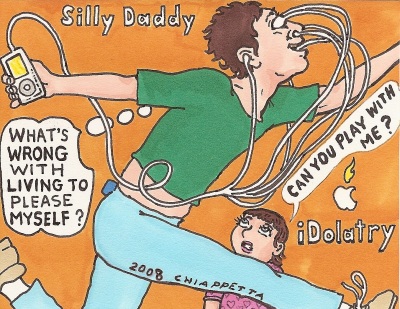
He could’ve quite easily been a wrestler or chess champion if he followed his high school gifts, but ultimately Chicago resident Joe Chiappetta chose to become a cartoonist. And he’s been doing it for a remarkable two decades. After becoming a father Joe launched his Silly Daddy comic in 1991, starting in print and then working his way to the web in 2004. Along the way, he’s gathered Harvey and Ignatz nominations, as well as a Xeric Award in 1998. His deceptively simple, usually one panel gags seem to be inspired by both reality and fantasy. They are sometimes groan inducing, sometimes thought provoking and more often than not, just simply funny.

Was this always going to be your dream job, rather than part-time wrestler/part-time chess champion, or were you always going to be some sort of artist?

Not exactly. At the age of four I wanted to be a police car when I grew up. I’m serious. The black and white blocky cop cars from the ’70s were so impressive to me. And they had such important duties –carrying guns and bad guys. However, by my early teen years, the idea of being an artist became more of a drive for me. Yet in retrospect, I do acknowledge that both the career paths of an artist and a police car were equally obnoxious. It still baffles me today that many of my key teachers in high school and college encouraged me to get further into fine arts as a career. And that’s what I did, completely oblivious to the fact that the demand for new fine artists was microscopic compared to high growth industries like the healthcare field. Yet I was willing and eager to drink the Kool Aid that the fine arts field was serving. I came out of Northern Illinois University thinking that becoming the next Andy Warhol was only a few paintings away. Being dangerously prolific and self-centered coming out of college, I had time to not just make great paintings, but also make comics while the oil paint was drying. I never dreamed that the mini-comics I was printing would get more praise and money than the paintings… but that is exactly what happened. And that is why today my social networking profiles say, “Cartoonist” in the occupation category rather than “Artist.”

What were the challenges and blessings of moving from print to the web as your medium of choice?

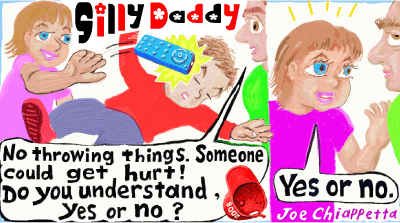
The biggest challenge of moving focus to webcomics over print comics for me is the eye strain of looking at the light emitting from the computer screen. In fact that’s why I was very slow to expand my web presence as the internet became more commonplace. Before I knew what to call this condition, I would get intense burning and aching in my eyes that I couldn’t explain. It turns out that I have something called “photophobia.” Literally it means “fear of light,” but practically, it means my eyes are more sensitive to light than the majority of other people. At first I thought it was some sort of made-up wimpy gen-x health disease, but after going to a few doctors in real pain, and struggling for years to get work done using a computer the way most people do, I finally accepted the truth of it; my eyes were not invincible. Once I accepted this, then I was able to make a number of adaptations to how I use the computer so it isn’t a pain to look at.
What are some of the adaptations you’ve made to still be able to use the computer?

It’s a lot of little things that make a big difference. Used in tandem, I can pretty much use the computer just as long as the next person. But take away just one of these and it’s like kryptonite:
1) Lower the screen contrast and screen brightness on every device you use. I even do this on my Pocket PC Phone.
2) Increase the screen font size on every device you use.
3) Lower your screen resolution. This makes everything bigger.
4) Keep desktop monitors about two arm’s lengths away from your eyes.
5) Take a lot of breaks.
6) Wear sunglasses as needed on screen.

7) Make your website background black. That is the only reason that my SillyDaddy.net site is colored the way it is. It has nothing to do with how some people say art looks good on a black background. I could care less about that. For me it’s a health issue. I can look at my own site longer without pain in the eyes because the dark background blocks a lot of the screen from blasting my eyes. So that’s the biggest challenge for me. Back to your question about what are the blessings of moving from print to webcomics, there are so many. The biggest one is ease of distribution. I scan an image, press upload and publish, and bam. It is available to the entire online population. That’s a big contrast to the laboring I drudged through: prepping the work for the printer, getting printer quotes, dealing with packaging books, paying for shipping, dealing with distributors, etc. There’s no comparison. Click — I’m done.

How has becoming a Christian changed how you view your work?

When I started in the art field, I couldn’t say this but now I can; being a cartoonist is not my main purpose for living and comics are not my god anymore. Let me explain that, because it’s not like I was bowing down three times a day to a statue of the comic god. One of the definitions of “god” is this: “one that is worshipped, idealized or followed.” And that is exactly what I was doing with my cartooning. I was devoted to it — so much so that there was little left to give to other relationships. Can you get some impressive art and comics out of such a setup –where the artist is fully committed, and in essence, worshipping his craft of making art? Absolutely. But then when you go and look at the relationships in that artist’s life, they are usually a mess. That was me. That’s where my heart was: worshipping, idealizing and following the business of comics. It should come as no surprise that this is one of the definitions of “god.” I was a practicing idolater. It should also come as no surprise that such a life may be filled with incredible activity, but that life is also terribly empty. Having other high-profile cartoonist like Jeff Smith of “Bone” plug my work is certainly an honor. But it doesn’t keep me warm at night. Again, that was me. Creative people are so susceptible to the pull of idolizing their career that many of them are simply unprepared to recognize and oppose the pull of idolatry. They think idolatry is just some sort of ancient practice that the uh… the people in that one third world country still do with statues and stuff. But it’s much more than that. Idolatry is alive and well in the entertainment industry. So becoming a Christian has exposed all these truths to me about what I was doing with my life: how unloving I had been compared to the love of Jesus Christ. That’s the kind of love that I want. And that’s the kind of love that all people really hope for, whether they acknowledge it or not. There’s a proverb that says, “What a man desires is unfailing love,” and that is so true. Who doesn’t want that? But only one person gives that sort of love — Jesus. He proved that on the cross. Everyone else, as hard as they try, will eventually fail you. But Jesus doesn’t fail. He conquers death. That’s where the real action is. So I must get in line with his plan. What that understanding does to me as a cartoonist is it puts things in perspective. Now cartooning is just another thing that I do, like riding a bicycle. But it’s not who I am. It’s like Number 6 would always say defiantly to the bad guys in the Prisoner TV series, “I am not a number. I am a free man.” In my case, I have become free in Christ. I am his disciple. That’s who I am. I also happen to make comics.

What has the response been like from your readers? Are there many other parents out there who can identify with your lessons and adventures?

The response continues to amaze me. Of course parents have a special appreciation for my work since they live this stuff every day. But most surprising is that I also gather deep interest and readership loyalty from people nowhere near having kids. They just appreciate the laughs and insight in a safe family place. Who doesn’t want that?

In a 3 year period, you received nominations for Harvey and Ignatz Awards, and then won the Xeric Award in 1998. Was that level of recognition a sigh of relief for you, knowing that people appreciated your work?

I think that’s a good way to put it. But awards and nominations are tricky, especially back then when my security was in my work and not in God. So once I started getting nominated for awards, the relief gave way to anxiety. I was looking for joy through the status that comes from awards and reviews. And so it became a point of frustration when I didn’t win or didn’t get nominated now and then. Don’t get me wrong. There’s nothing wrong with awards. In fact, if you’re giving one I’ll gladly take it. But I developed a bad attitude about them. I was the problem. I sought the praise that comes from men rather than the praise of God. And again, that is a dead end trip.

I hope you don’t mind me telling the world you are 40 years old this year, which effectively means you’ve been a cartoonist for half of your life. Is it still as scary/frustrating/rewarding today as it was when you first began?

Oh, not at all. Back when I started doing comics, all my hope, joy and faith rested on the success or failure of my comics. Anyone in the industry for more than a minute knows that this was a recipe for disaster. So now when I do comics, my hope, joy and faith is not in them. My hope joy and faith is in God. So if the Internet gets destroyed and no one can access Silly Daddy webcomics anymore, my faith doesn’t go down with the ship. What I am trying to say is that back when I started, my emotional investment was in cartooning. Think about that. I was beholden to the whims of a industry being overrun with video games, decreasing readership patterns, decreasing retail outlets and increasing corporate dominance. It’s crazy to be emotionally vested in such a situation. But that’s what I did. I can’t really say that I have a better attitude about approaching the comics industry because I am older, wiser, and have spent half my life in it. But I can say that I have a better perspective on navigation through the comics industry securely because of the clarity that comes from following Jesus Christ.
You’ve covered some pretty broad subjects over the course of Silly Daddy. Do you find there are certain themes that you continue to revisit?

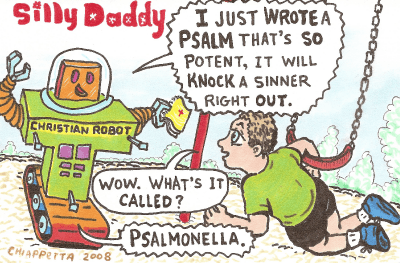
Humor is huge in the series, but I don’t guarantee humor every time. Instead I go for profound or preposterous, and humor is often part of the mix. Most of the recurring themes in Silly Daddy revolve around family situations, particularly parenting, marriage and relationships. Then there is a much smaller percentage of my work that has a surreal, sci-fi, technology or Christian theme.

Those last four themes seem like an odd mix.

I think that’s why it works so well. I would boot up the Christian Robot strips as an example.

There must be times when you simply don’t feel like creating three new strips a week, and you just want to spend the day in front of the TV watching day time soap operas. How do you keep the momentum going?

Hah! My days of watching daytime soap operas (General Hospital) are long gone. But I know what you mean. Thinking in pictures really helps to keep the momentum going. You might say that is how I’m wired. I say that’s how God makes certain people. I think we all have been given some ability to think in pictures, but for most artists, thinking in pictures is a gift from God. The problem comes when you don’t acknowledge the giver. That’s when you turn the gift into a curse. Back to the question, on days when the ideas aren’t flowing like a river, I use to panic and think I was all washed up. But now I understand that there is a time for everything. On such days I might just do sketches or focus on other aspects of the business.

How do you see the future of your work, (besides perhaps Silly Grand Daddy?) Do you think you’ll ever go back to print on a regular basis?

Just to set the record straight, it’s not that I have abandoned print comics. Rather, in between big collections of my work, instead of releasing singe comic book issues of my work, which is so labor intensive, I will just release them on the web. Then when I have enough material for a solid collection of new Silly Daddy comics, a new book will come out. My next big graphic novel will most likely be called, “Silly Daddy Short Stuff” and it will be full color. In fact I am also toying with the idea of releasing the graphic novel at the same time I release a science fiction novel (all text) that I wrote. The working title on that is “Star Chosen.” But I might just call it Silly Daddy in Space. Yeah, I’m real creative — it’s about a father… in the future.

Finally, are you still a Silly Daddy after fifteen years of parenting, or have you now become Serious Daddy?

I think my wife and kids would agree that I still range between the two extremes: silly and serious. The difference now, and I do hope readers continue to pick up on it, is that reading Silly Daddy, you see the silly, the serious, plus the big deal: the everlasting joy.

New Silly Daddy comics can be seen every Monday, Wednesday and Friday here.

Broken Frontier

Perhaps you’ve noticed that my posts have slowed down somewhat over the last fortnight. No, it’s not because I’m being distracted by playing The Force Unleashed. It’s because I’ve been blessed with the opportunity to write for Broken Frontier, one of the largest and most respected comics sites on the ol’ web. It’s not a “proper” job or anything, but it is a great lesson in discipline and exposure for me as a wannabe writer (like most comics fans are.) Over the last two weeks, my reviews for Vertigo’s Greatest Hits #1, The Punisher #62, Big Hero 6 #1, Deadpool #1 and Gypsy Joe Jefferson have all gone up. Plus I have a cool interview or two and an article on the way. It’s a fair amount of work, but an interesting challenge and heaps of fun. I’ll still be posting reviews and news here as always, just not as often, and of course, I’ll be linking to my latest BF stuff here too. Feel free to check out my reviews and drop by the forums to say if you agree or disagree if you like. Whew, there’s a lot of links in this post isn’t there?

X-Men: Worlds Apart Preview

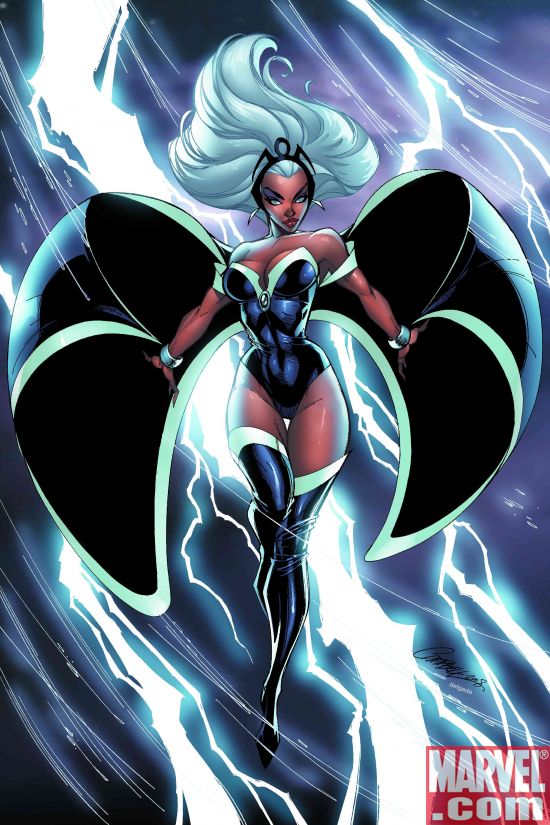
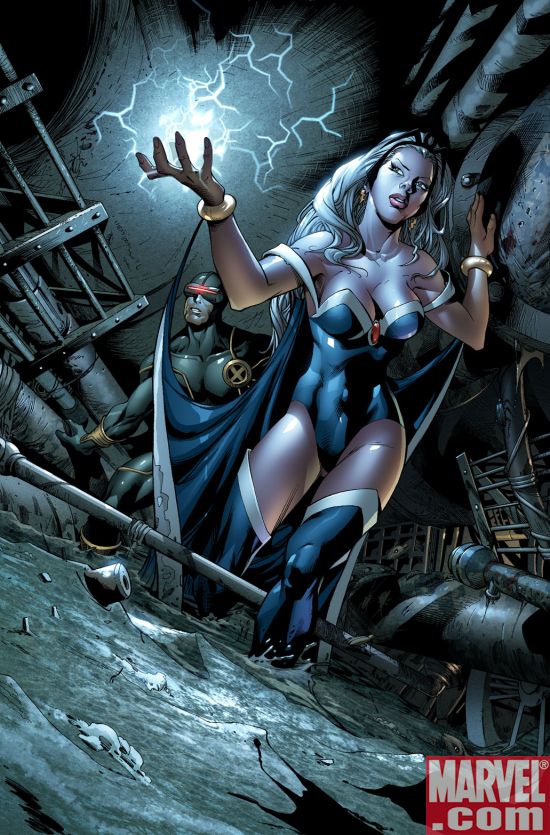
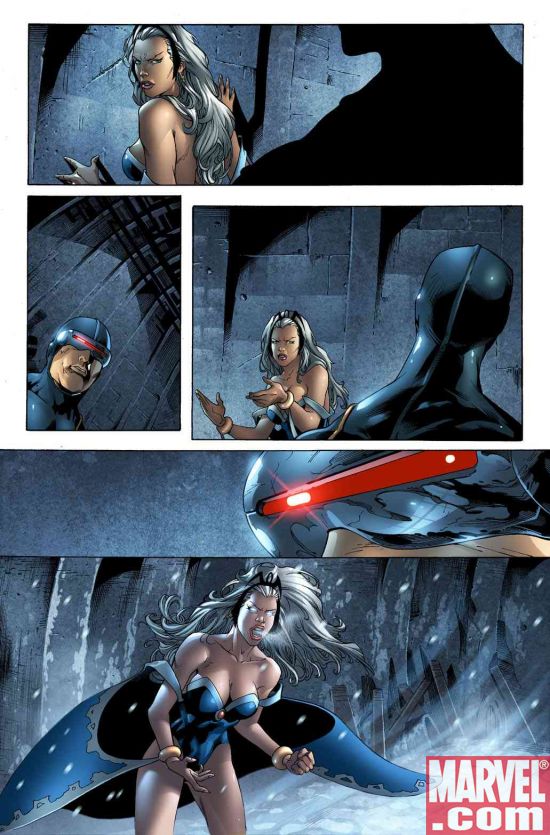
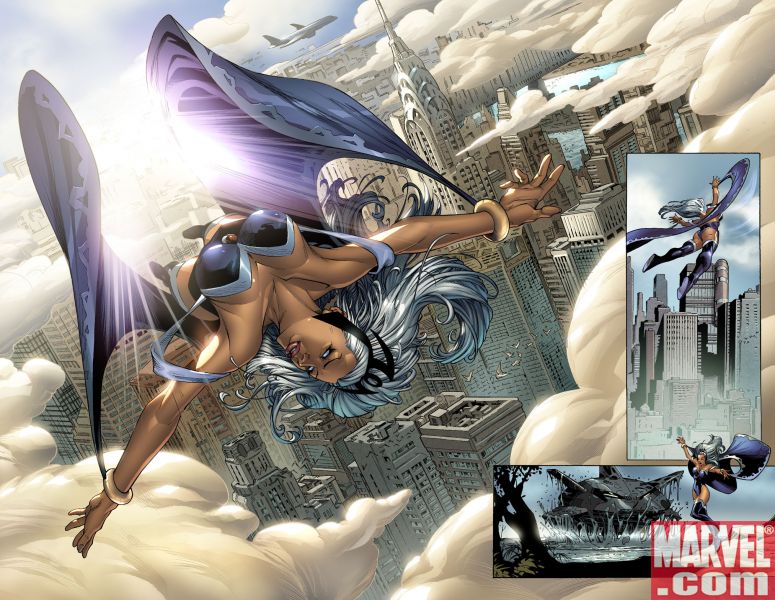
Black Panther’s wife, and X-Men member Storm is at the centre of a new 4 ish mini-series from writer Christopher Yost (New X-Men) and penciller Diogenes Neves. The mini focuses on a puzzling murder in Storm’s new homeland of Wakanda, and Ororoa Monroe’s identity as Queen, godess and superhero. Below is the cover by J. Scott Campbell and a few random pages. The first issue hits the stands on October 15.

Radical’s New Site

Radical Publishing are a fairly new comic book company, and they have launched a new site that’s accessible for fans and professionals alike. The renovated site includes animated menus, content from their library, links to blogs and their on-line store.

From Radical’s own mouth: Also exclusively developed by Sandman Studios for the website are animated trailers for CALIBER: FIRST CANON OF JUSTICE, FREEDOM FORMULA: GHOST OF THE WASTELAND and Yoshitako Amano’s MATEKI: THE MAGIC FLUTE, combining music, sound design and art from the books. These comic-trailers further expand the Radical Publishing experience through multimedia entertainment. Also a CITY OF DUST: A PHILIP KHROME STORY trailer will be posted within the next week.

“The goal of our site is to create an online home for Radical Publishing that matches the strength and distinct stylization of our titles,” states Barry Levine, President and Publisher of Radical Publishing. “The incredible talent and vision of Sandman Studios sets a presentation standard not only for comic publishers, but for all producers of narrative entertainment.”

Radical is proud to invite all fans of high concept, as well as genre entertainment to our new website and we urge you to continue to visit http://www.radicalcomics.com for Radical Publishing updates, announcements and the latest content from the constantly growing Radical Publishing library.

Amazing Spider-Girl #25 Preview

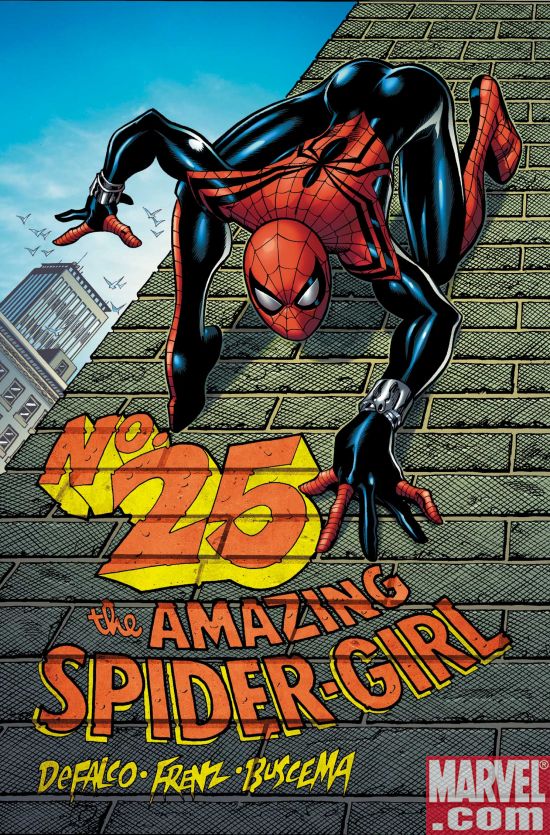
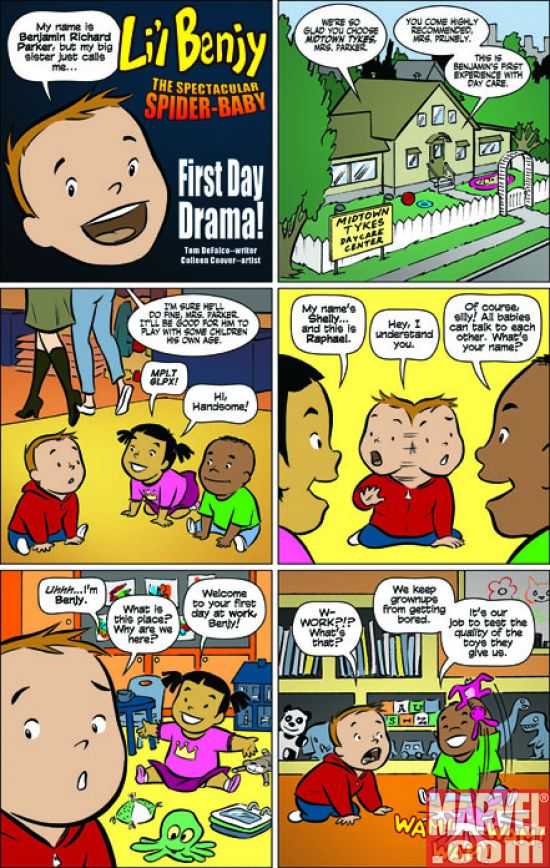
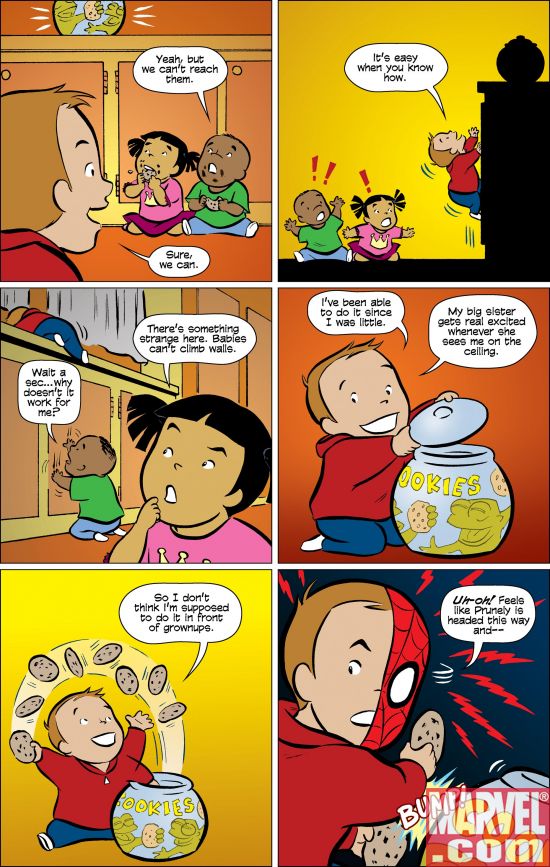
Here’s a text-free look at the double-sized series that just won’t die, Amazing Spider-Girl. Written by Tom DeFalco with art by Ron Frenz, the series focusing on Spidey’s future daughter, Mayday Parker is a fan fave. In this anniversary ish, Mayday must rescue her middle-aged father from the clutches of Fury, the Goblin Queen. The back-up stories centre on a trip to the past involving Peter Parker’s classic foe, Kaine, with art by Todd Nauck and a story drawn by Coleen Coover all about Peter’s other kid in Li’l Benjy: The Spectacular Spider-Baby. The issue goes on sale on October 8. For now, enjoy the pics.


Abyss TPB Review

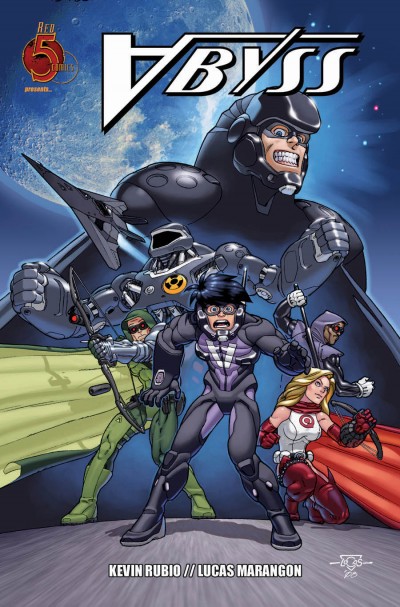
The first two pages of this RED 5 book show a unique twist on a couple of Batman and Robin homages, going even further in the following pages with more in-jokes than you can shake a Mylar bag at. And that’s a good thing, because the writer of this adventure is the creator of the grand daddy of all fan films, TROOPS, which also means Kevin Rubio has instant nerd appeal for the rest of his life. His twist on the classic teen hero tale in Abyss proudly displays his ode to, and parody of, superheroes. With TROOPS and his work on Dark Horses’ Star Wars: Tag and Bink Were Here showing equal parts adoration and good hearted mocking for the SW universe, Rubio moves onto our most beloved of all pop culture creations – spandex escapades.

Young Eric Hoffman is going through the motions of his life now that his famous father is dead. With his military uncle showing him what his Dad left him, comprising mainly of lots of hi-tech toys and international organizations, Eric seems less and less enchanted. Then he sees his Dad standing before him AND at the same time, realises he was the infamous Abyss, notorious super villain. Suddenly Eric’s interested, not in continuing his father’s legacy, but in creating a new, heroic one.

Dad’s lair includes nice touches, such as amass of kryptonite, and a signed photo of Ozymandias from Watchmen, contained in what looks like a cross between the Batcave and a Bond villain’s hideout. Eric’s quest to save his father’s latest evil scheme is noble in intention, but full of mistakes in execution. He eventually convinces the heroic Green Arrow-like Arrow and his new partner, the young female Quiver (whom Eric promptly asks out on a date) that he’s not at all like his pop. A reluctant team-up, a kidnapping, another reluctant team-up (on both sides of the conflict), fake deaths and good humoured jabs at Comic-Con, Kingdom Come, superhero transport, the jobs of Supes and Bats alter egos and more abound for the rest of the story as the battle draws near.

Long time comics readers will definitely get more out of this than those less familiar with the history of The Big Two, but that shouldn’t dissuade newcomers. Funny is funny, no matter how full your noggin is with geeky knowledge, and Rubio is wise enough to put just enough jokes in to satisfy a wide audience. Case in point, when Eric asks Arrow how he makes his money to pay for all his gadgets, the archer replies, “the old fashioned way – merchandising!” Nice. With lines like that, and great facial expressions (thanks to Tag and Bink artist Lucas Marangon) and timing that could make this duo the next Giffen/ DeMatteis/Maguire (1980s Justice League) this is an entertaining, brisk read.

Certain sequences brought back fond memories of Sergio Aragone’s classic Mad magazine margin gags, or the humourous background action in most of the Zuckers/ Abrahams (Hot Shots, Naked Gun) films, especially the clever “scrolling” news headlines scene. With all this from the original four ish mini, some great looking costumes, a healthy dose of wit, the series original covers which reference famous classics, plus an intro by Blair Butler (TV’s Fresh Ink) and Rubio, this is a well rounded entertaining little number. Abyss reminds us that it’s good when nerds can laugh at themselves, I mean – ourselves.

Dragon Prince #1 Review

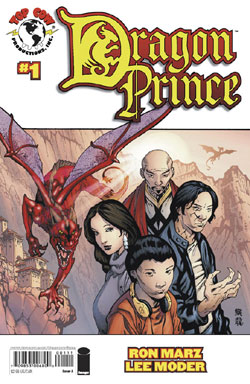
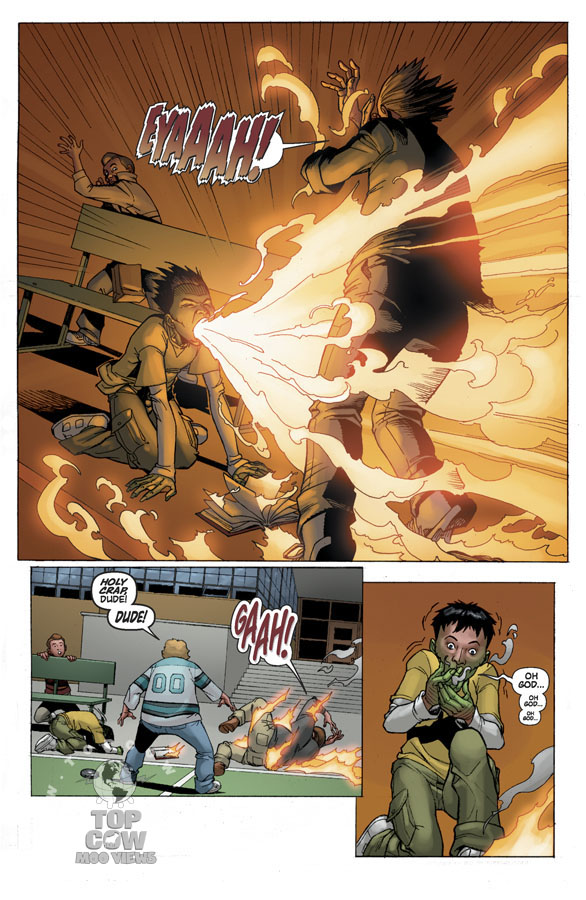
Starting any comic with a wounded crimson dragon being attacked by gun wielding motor cyclists in an ancient rice filed is certainly attention grabbing. Writer Ron Marz (Green Lantern, Witchblade) is no stranger to the worlds of mysticism coupled with heroism, and here he distinguishes himself from the pack yet again by offering another creator-owned adventure. We soon learn that the man versus dragon battle is being relayed by a single mother to her young son, Aaron. The boy seems vaguely interested in such bed-time tales, until the next day at school, when his regular bullying gets him all riled up, triggering a transformation within him in which he vomits fire and turns pale green. How embarrassing. Running away from school, leaving a crispy bully in his wake, he arrives home to find his mother, who is not surprised at all by these life changing events. In fact, she expected them. She tells Aaron that it was only a matter of time until his true heritage would be shown. With elements of teens becoming something other than human and manifesting new powers it resembles early X-Men, and together with the whole “My Dad’s a dragon?!” vibe, there’s also a tinge of Phil Hester’s Firebreather. And that’s a good thing. Lee Moder’s art is superb as always, giving both the home/playground settings as much familiarity as the more fantastic realms, but with a dynamic nature evident in both worlds. Where the series goes from here will be an interesting lesson in patience. Hopefully Marz manages to pull a few surprises from his hat to keep both newbies and jaded fanboys entranced until the final issue. A kid-friendly, simple story with a cool looking tattooed dragon hunter and a boy on the run, and in way over his head. Dragon Prince will be an oasis to those seeking relief from the “edgy,” and mature epics currently clogging the shelves.

Challenger Deep #1 Review

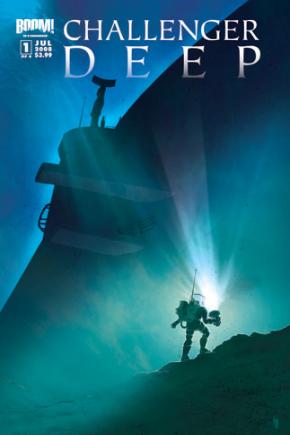
Captain Holden leads his crew on a routine data gathering mission somewhere near Guam when they are hit by a mystery vessel, leaving the sub broken and helpless, while their superiors argue about the seriousness of the situation, with a few scientific phrases thrown in for good measure.

It takes a few pages for this tale to become anything other than that simple description, but if there’s one thing BOOM! seems to excel at, it’s taking stories that’s seem familiar, and then throwing in some unexpected elements to make them gripping and unexpected. That’s what Challenger Deep has going for it.

We soon learn that there are only 50 hours of air left in the vessel and its stuck near a huge ice shelf, and only one man can save them. Dr Eric Chase’s fly fishing opportunity is interrupted by men in dark suits, imploring him to serve his country and save these men’s lives. But he’d rather not. Chase is an expert in the ocean’s depths, but couldn’t care less about saving over 100 lives. In fact, he hasn’t cared much for the deep blue since his wife’s death 5 years ago, and hasn’t stepped on a boat since. That finally changes however when the men in charge let him know about the sub’s precarious position, plus the fact that it’s warheads are set to detonate in 72 hours. Nuclear warheads + methane ice=Armageddon. A planetary match. And that’s bad.

Written by Andrew Crosby and Andy Schmidt, with art by Chee, it seems somewhat reminiscent of one of BOOM!’s better titles, Station, but with a nuclear sub replacing an international space station. With 3 issues left, I can only assume the rest of this series will quicken the pace. There’s a lot of set up in this issue, but it is necessary, and now that it’s out of the way, hopefully the real adventure can begin. Some may be disappointed by the art. It’s dark and sketchy, with minimal detail, but it is a mood setter. Thankfully the pace and dialogue make up for it. Characters are quickly established and intriguing plot elements, such as the Captain’s erratic behaviour, and the crew’s handling of him after the crash, plus the mysterious name that also helps convince Dr Chase to save the world, all help to lift this tale above the depths of mediocrity.

Jerrell Conner Interview

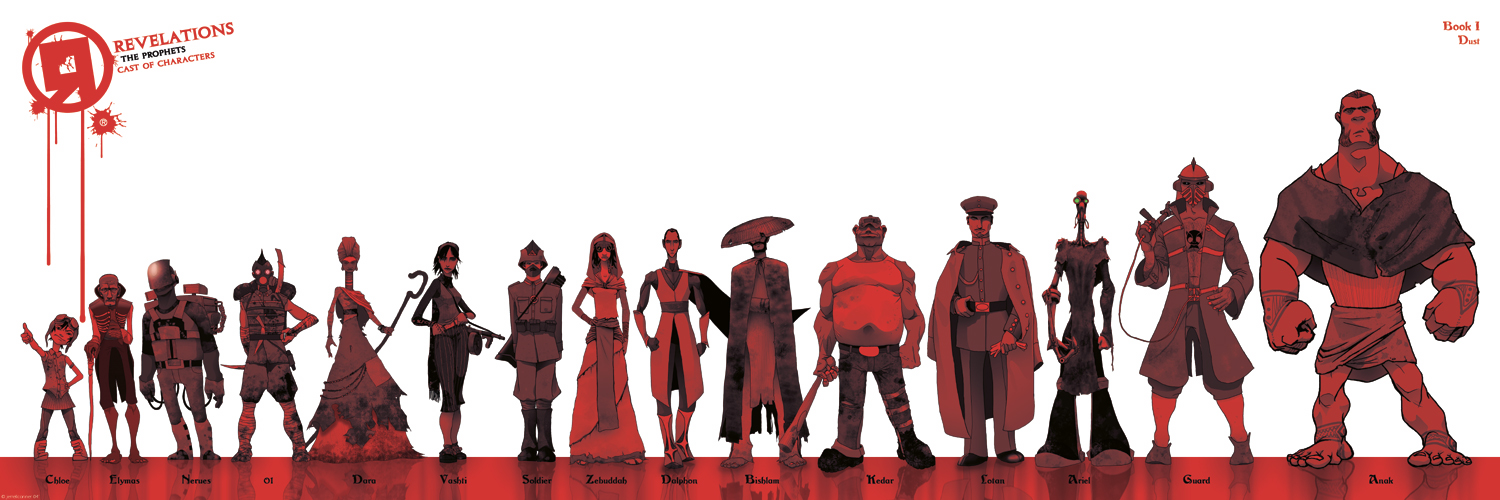
I met artist Jerrell Conner at this year’s Comic-Con. A humble, and obviously talented guy, his work has only been gaining more and more fans as of late, with exhibitions, posters, t-shirts and all manner of things focusing on his unique designs. In 2005 he released an original graphic novel, entitled Revelations: The Prophets, the first in a planned trilogy inspired by the biblical book of the same name. It’s certainly unlike most books on the stands, with certain sequences dedicated solely to prose, and uninhibited layouts. It may be too untraditional for some, and there are rare signs of a new artist’s hands, particularly in the imperfect spelling and occasional unclear art, but for a self-published writer/artist, it’s a bold debut, and shows the promise of a multi-discipline artist.

Revelations was initially your thesis project right? How different did the book end up being from your initial proposal?

Yes, it started back in 2001, in a quite different format than it’s current state. Initially it was a mock pitch for an animated feature. Not a book at all, basically a rough outline of the story (not nearly as flushed out or expansive as it has grown to be
over the years). Only 3 characters from the original project still remain (and have evolved quite a bit), there was a sculpt of one of the characters, process books, and concept
art, movie posters, and a short 3 minute animation which was essentially the center piece.

It’s quite a unique style you have. I can see touches of David Mack and Bill Sienkiewicz. Would you say they are influences on your work, or have I missed the mark entirely?

Hmmm, I wouldn’t say you’ve missed the mark, I am a fan of David Mack’s stuff and recently ran into him at a convention, but I don’t believe his work was something I referenced a lot while, or before, working on my book, same with Bill’s, but that’s more of a recent acknowledgement for me. Often people ask me about my style, and it’s hard to put in words, I don’t have a single place of reference for it. Just growing up in the time I did and in the environment that surrounded me, I seemed to soak up a great deal of influences. I’m pretty much a sponge, so there is some anime, concept art, G.I Joe, video games from the early 90’s, early X-Men and Dark Horse stuff in there, but nothing too
specific. I think two of my biggest influences when I started the Revelations series were Egon Schiele, and Ashley Wood, sooo awesome!

What’s your process for creating new artwork? Is it a combination of traditional tools as well as the computer?

Funny, I knew little to nothing about the comic industry/process. The Revelations book series just kind of threw me into the mix of it all (though as a fan, I really didn’t have aspirations in doing a comic), and I had a lot of figuring out to do, so stumbling through the process was…. interesting. The goal was to do a mix of traditional painting and Photoshop work, and that’s the way it started. I did some paintings for backgrounds for the first few spreads, going back and forth from paint to the computer, back to painting and so on. The problem was this was a 96 page graphic novel and that was taking waaay to long! So about 95% of the book ended up being Photoshop drawn on a tablet, which really worked out better in the end and was much faster. It was a learning curve to say the least, but towards the end I think the panels really began to come together and have a nice flow and color scheme.

Revelations: Book 1 was published in 2005, with plans to publish two further books by 2006. What happened that put those plans on the back burner?

I got lazy. No, not really. Actually the opposite, I got REALLY BUSY with all kinds of art work going on! The thing that sucks (I’ve learned) about self publishing is ALL
the responsibility you have to carry, and all the hats I find myself needing to wear. The first hurdle was that, once the books were published, having to do the press and promote
them, then touring and doing shows, and getting them in shops, because I was the distributor. Hustling them to as many shops and conventions as I could, the problem was that it was JUST me doing it, so there was really no time to work on the next title during that time. Secondly, everything was out of pocket, so with the bills and expenses I had just through living I needed to do other freelance jobs and art projects to pay the bills, and even make it possible to do conventions and shows, which was fine, because it was still art and I enjoyed it for the most part, but of course if all my time was spent doing those projects the next Revelations title was pretty much on a shelf collecting dust, partially
finished but still waiting to be completed. I more recently have made the commitment of not letting a week go by without finishing at least one page for the next book, moving around other projects to at least fit one day in for it every week, otherwise I fear it would never get done. Things that get put off, tend to KEEP getting put off.

Your art career seems to have taken off quite nicely, with work for clothing lines,
posters and the like. Was that always the hope for you, that you’d become a working
artist?

I’ve been drawing and doing art for what seems like forever. My earliest memories are of drawing Star Wars space battle scenes, making sound effects and the whole 9. It was like play time for me, so I’ve always known it was something I wanted to do. It kind of runs in the family, all my siblings and parents seemed to have some creative streak and artistic tendencies, but it wasn’t until I started winning competitions and contests in middle school/high school that I thought this was something that I could actually do for a living and not just for fun on the side.

How difficult is it too manage your burgeoning art career, with your comic book ambitions?

See two questions above! Pretty much those have been my main difficulties and struggles with that crazy balancing act betwixt the two. For me, Revelations is first and foremost in my mind, even though at times it has to take a back seat so I can do other projects, the main reason why I do those projects is because I feel those are opportunities for me to further the book series. They pave the way for all the stuff I do with Revelations.

My aspirations are not about becoming a famous artist or being popular. I’ve had this vision of this story in my head for years now, and telling it in a certain way. The goal is
just to finish it and get it out there in people’s hands, in a place where they can be exposed to it, get caught up in it. Whether or not they even know who the artist is irrelevant. It’s all about the story and getting across the message.

How do you think your faith influences your decisions as an artist?

I don’t think there are any decisions that AREN’T affected by my faith. It goes: God, family, then art. My passion for my beliefs is what drove me as an artist initially, and I feel this gift isn’t for my own benefit but for others. To NOT do it, to NOT give it my all would be a
disservice, not only to those who can gain from it, be uplifted, and inspired, but to the One who gave this gift in the first place.

What directions would you like your career to take in the future?

Early in college I had aspirations in the area of direction, but lately I don’t know. I really don’t look too far ahead. Right now, the focus is for finishing these Revelations books, and get them to the big screen!

What thoughts go through your mind when you look back at your previous work, and when
you see others enjoying it?

Generally i think, “Geeeeeze that’s crappy!” But we all have to start some place. I’ve seen my style and process grow a lot over the years. I do understand however that without the early work back then I wouldn’t be here now. I get a big kick out of it when someone actually likes my work or the books. It’s more of a surprise than anything. It is reassuring though, and makes me feel like maybe I am doing something right and not wasting my time following the wrong calling, like I should have been a doctor or plumber or
something.

Go here for a very well done video piece on indie artists at Comic-Con 2008, including Jerrell, and go here for his official site.

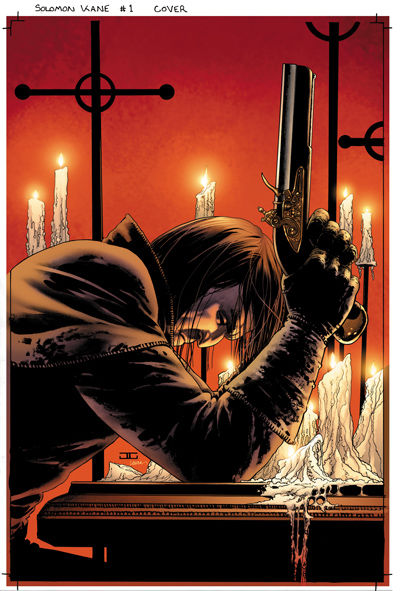
Making of Solomon Kane #1

Comic books are a lot like onions – they make you cry. No, I mean, they have many layers. Yeah, that’s it. Now at Dark Horse’s official site, you can peel back those layers and have a brief look at what it takes to make a comic, specifically Solomon Kane #1. The 32 page comic goes on sale on September 24 and is written by Scott Allie, with pencils by Mario Guevara. Covers are provided by Joe Kubert and John Cassady (who also does the Lone Ranger covers) This unique feature showcases the first 6 pages of the ish, in its various stages, namely the script, pencils, colouring and lettering. All comics are a team effort and this is a rare example to peak behind the curtain and see what each creator brings to the finished product. Go here for a look at the mad puritan Solomon Kane, the other creation from Conan creator, Robert E. Howard. This new series begins with a 5 part adaptation of one of Howard’s novels, “The Castle of the Devil.”