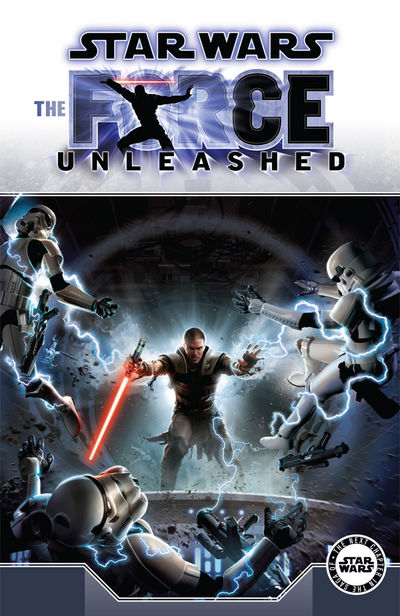
Star Wars: The Force Unleashed TPB Review

With all the hype that the game has been getting, which from what I’ve seen so far, it certainly deserves, this comic tie-in has slipped under the Star Wars radar. Of course, it was always going to be an uphill battle, with the frenzy surrounding the upcoming LucasArts release, so it’s no surprise that this OGN (original graphic novel) appears to be the forgotten sibling in the game’s shadow. After reading this book I’ve come to realise that it can’t compete with the awesomeness of flinging around stormtroopers and frying everyone with lightning from your hands, but sadly, it can’t compete with a lot of the other comics out there either. It certainly doesn’t help that I couldn’t even find it on the official SW site, and that both Dark Horse and Amazon list the book as 104 pages, while it actually goes up to 126. That’s enough to make any SW loyalist about as confused as Jar Jar at poker.

Those with a bad taste in their mouth after the Clone Wars film may very well find relief in this darker tale though, and newbies need not be perplexed, as there is a short explanation as to where this adventure is set in continuity (2 years before Episode IV-A New Hope).
The tale concerns Darth Vader’s secret apprentice, Starkiller (named after Luke Skywalker’s initial name, before George Lucas rejected it), his pilot Juno Eclipse and personal droid Proxy, who is effectively the narrator of this once-hidden tale. There are some cameos to be seen here as Starkiller flits around the galaxy dispatching goodie and baddie alike with skill and abandon (and a lightsaber of course), but they will probably only be familiar to followers of the expanded universe, rather than the films. For such an important note in SW history, Starkiller’s story appears rushed. It deserves more than this. More expansion, more explanation of the main character’s judgements, more of everything. His turning from evil to not so evil, and almost a rallying cry for the birth of the Rebellion seems a hasty one. In fact, the whole TPB just seems haphazard, with mere snippets of Starkiller’s life, rather than a complete biography. I’m sure Haden Blackman, the writer of both this book and the game, had some restrictions placed on him by Mr. Lucas, due in part to the earlier release of this compared to the game. Hopefully more will be revealed when we get to pick up the controller for ourselves next week, and there is enough to mine here for future novels and mini-series. As it stands The Force Unleashed TPB comes across as an unsatisfying part of a larger picture. The art by Brian Ching. Bong Dazo and Wayne Nichols is serviceable and in line with the look of Dark Horse’s other Star Wars series, but it’s not enough to save it. However it did make me want to play the game even more, and that’s probably this book’s greatest audience- eager gamers. If that is its primary function; to serve as a companion piece, rather than a stand alone story, then its done the job. Anything Star Wars related has a lot to live up to, however and fans can be an unforgiving bunch. If you don’t want to be one of them, then leave this alone, and save your money for September 16-19 (depending on where you live), when the console game is launched and we can all breath a sigh of relief as the Star Wars franchise enthralls us once more. Hopefully.

Go here for a preview.

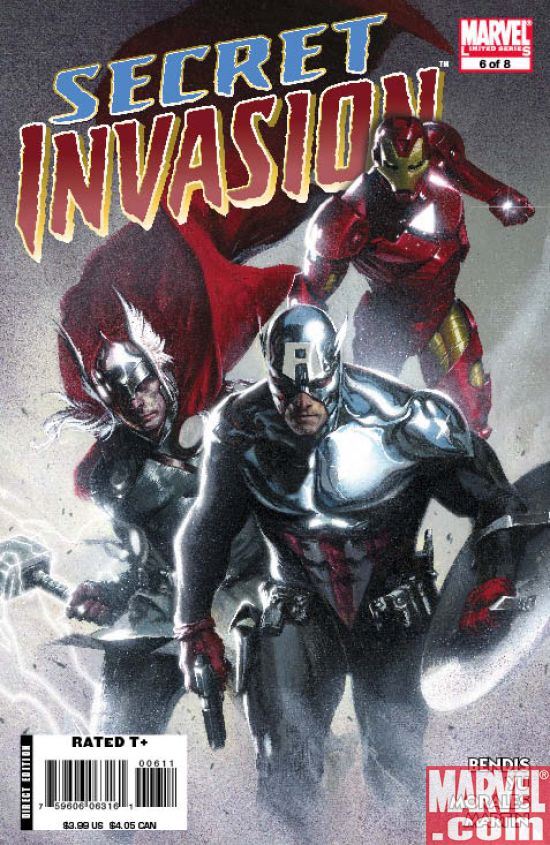
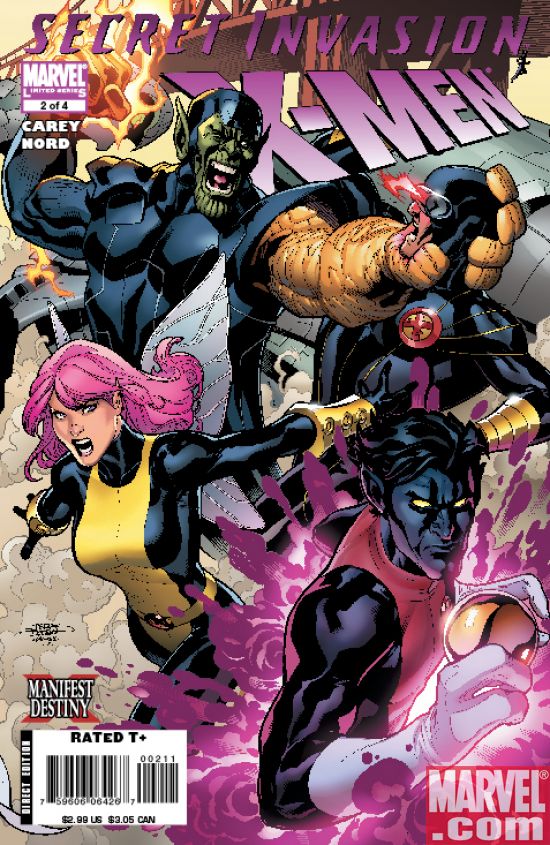
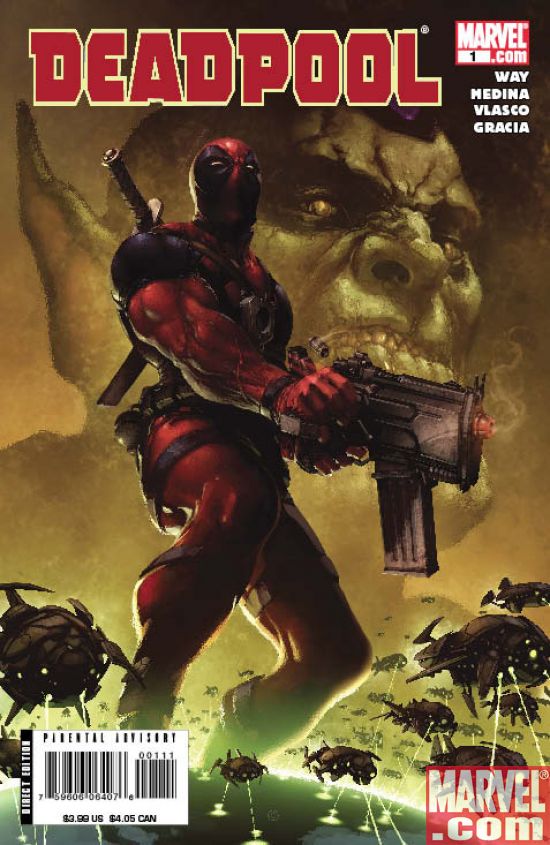
Pretty Pics

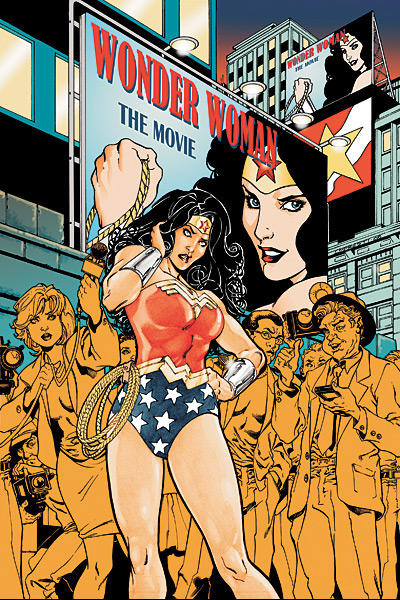
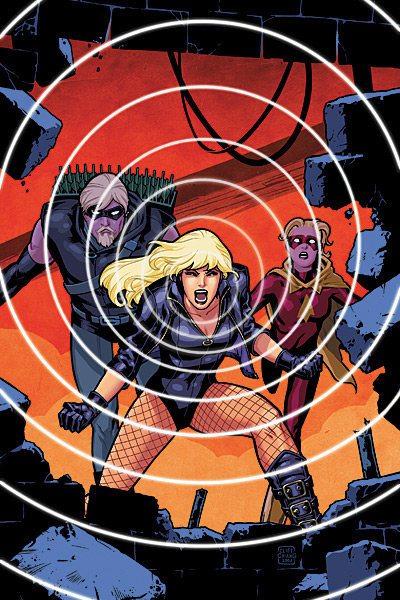
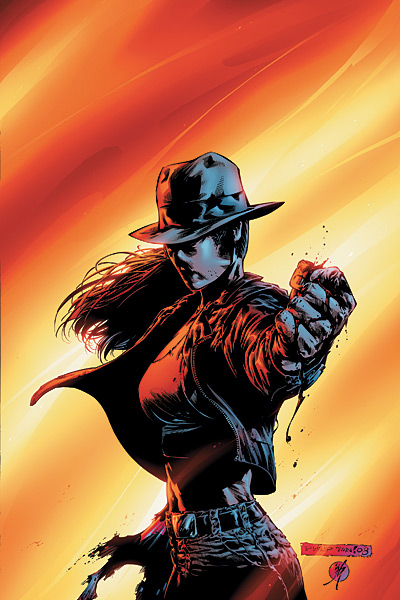
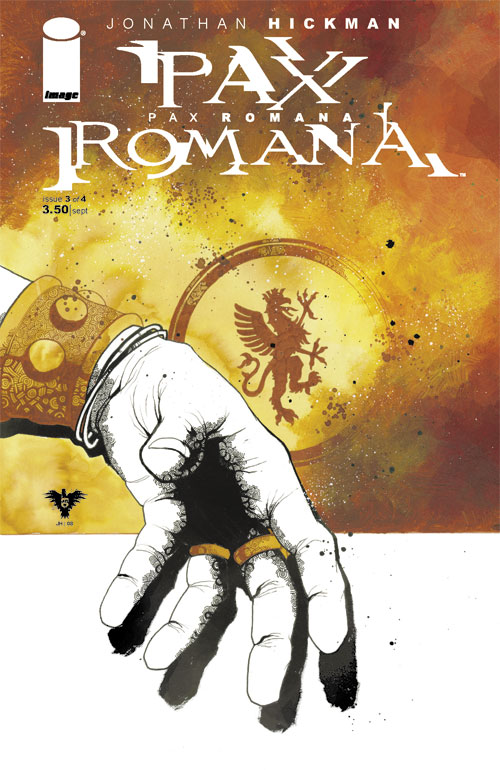
Below is a just a sample of great looking covers from comics available this week, including Secret Invasion #6, Secret Invasion: X-Men #2 and Deadpool #1 from Marvel, Wonder Woman #24, Green Arrow/Black Canary #12 and Final Crisis: Revelations #2 from DC, and finally, Image’s Pax Romana #3. That’ll keep your eye balls occupied for a while.

Some New Kind of Slaughter Interview

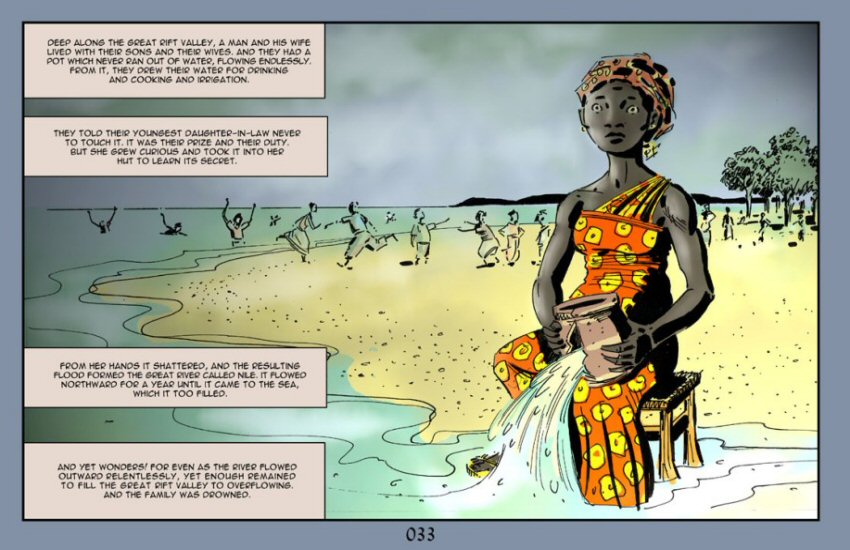
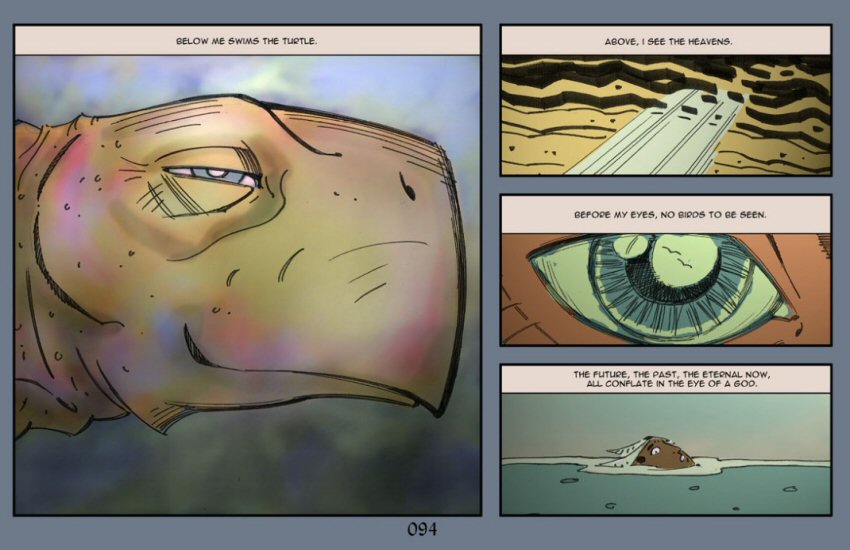
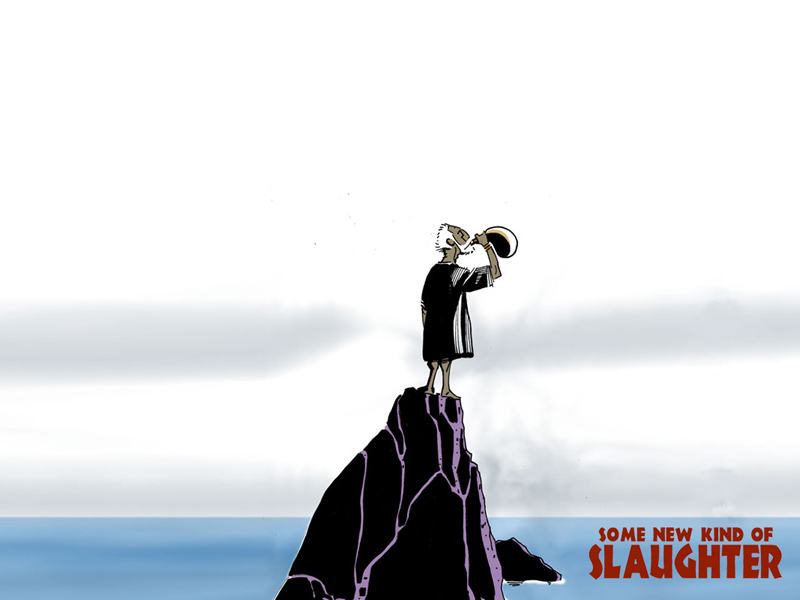
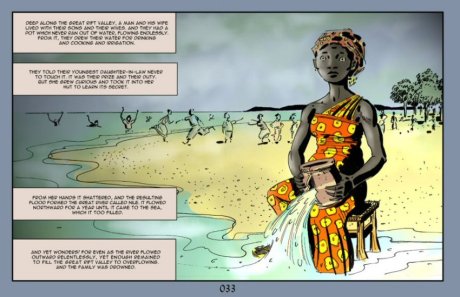
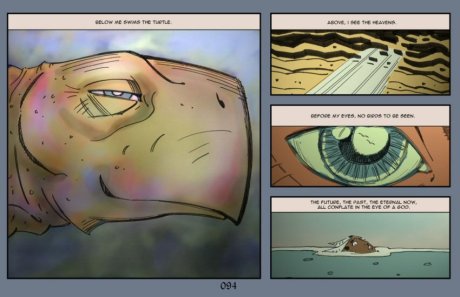
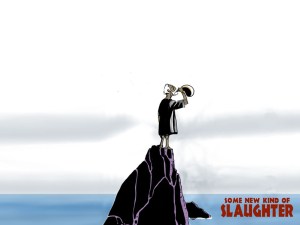
Here’s the last of my interviews that I was holding off from my INFUZE days, until its new iteration would take place, which for me, I guess is this here little blog. It was conducted in January of this year, with the creators of SOME NEW KIND OF SLAUGHTER, mpMann and A. David Lewis. Slaughter was a bold four ish mini published by Archaia Studios Press, that looked at the concept of world changing floods in different lands and cultures. Arachaia put it more succinctly: If there is one constant throughout most of Earth’s historical nations, cultures, and religions, it is the threat and the destruction of the Great Flood. In the wake of the recent Indian tsunami, Hurricane Katrina, and alarm over global warming, the award-winning creators of The Lone and Level Sands return to plumb the depths of the world’s great myths with this four-issue, all-ages mini-series, exploring how this legendary fear may be more relevant now than ever before.

It seems like quite an intricate tale. Do you foresee this book having an appeal to a mainstream comic-book fan as well as to the independent comics audience? Was there an intentional attempt to appeal to specifically either or both types of reader?

Marvin Perry Mann: It will probably appeal more to the indie/alt cognoscenti and, for that matter, new mainstream readers than to the spandex or manga fans. But there’s no small amount of overlap. Most of the writers I’ve worked with have been quite broadly read in comics, much more so than I. The complex story structure of the book should give fans of formalist comics something to bite into, and the emotional depth of several of the tales will satisfy lovers of stories about real people, despite the mythological underpinnings.

But I think it’s fair to say that neither Dave nor I set out to target an audience. Some New Kind of Slaughter fits no well-trod genre. We wanted to produce a work that would engage us, and tell stories that might open eyes. We assumed that there were like-minded readers out there. The formal structures and challenges of telling so many stories in some coherent fashion were spice to the process.

A. David Lewis: It’s no good, from a creative standpoint, to identify an audience and then, after the fact, to write for that target. I mean, unless you’re trying to make a point about that specific audience, I can’t see it going too well. Really, that’s more a concern for the publisher and its marketers. The creators, though, have to go with what hooks them to do a story, especially when they’re operating outside a mainstream character base; I mean, the purpose for writing a Batman story might just be to write a freakin’ Batman story. But, thanks to the good graces of publishers like Archaia Studios Press, Marv and I can pursue stories that interest us, for which, in turn, ASP has found terrific readerships.


I imagine the research process must have been quite intensive and enlightening. How did you choose what absolutely had to be in the project and what you could do without?

mpMann: Well, Noah had to be in. Dave did the primary work on that story, the longest in the project, nearly 1/3 of the page count in all. And as I have said elsewhere, he knocks it out of the ballpark. This is Noah as you have never seen him before.

Lewis: Aw, Marv’s a flatterer. But, yeah, I became interested in Noah the same way I became interested in the Pharaoh for The Lone and Level Sands. I mean, it really fascinates me how much people, both secular and religious, think they remember about biblical characters that just isn’t there in the text. There’s so much wiggle room, so much gray area, and exegetes over the centuries have, with good intentions, spun out a number of character interpretations. None, as far as I could find, looked to fill Noah’s Iserian “gaps” (check out that hard-core scholarly terminology!) in terms of other cultures’ Floods. So, I had a great angle at which to approach the research.

mpMann: The second one that was almost as mandatory, at least for me, was Ziusudra/Utnapishtim, the Sumerian cum Babylonian prototype for Noah. Their stories are very similar, so it was important to find ways to distinguish them. One way was to make Ziusudra the narrator. He was after all, the earliest flood hero to come down to us. And since “doubt and certainty as an approach to faith” was one of our themes, we used Ziusudra to represent doubt, and Noah to embody certainty.

The Sharon Boatwright story was something I had concocted whole cloth for an earlier project using Utnapishtim. With a little fiddling she fit right in and gave us something to tie myth to the present day. Her flood has the most contemporary resonance, but her story is told in a manner that is the most dreamlike.

The Chinese myth of Da Yu/Nuwa is really a composite of two very different myths. But together they form a unified story that illuminates how one can be inspired by the story of another.

The Hindu myth “almost” made the cut as one of the long form stories, and does get more space than the other done-in-one myths.

In tackling these myths in Slaughter but also in your previous work The Lone and Level Sands, has it surprised you how the themes and story telling techniques of these ancient tales reverberate even in today’s stories? I’m thinking the work of Joseph Campbell here.

mpMann: Heh, well, if we’re thinking of Joseph Campbell then it shouldn’t be a surprise that new stories parallel the old, or that the old tales still have power to inspire us. The underlying structures and interests of these stories speak to our human longings and fears. What can be fun is making the topical connections to contemporary life, and learning to distinguish the local from the eternal.


Comics seem like the perfect avenue for you to tell this story. Is it easier for you both to work in comics than any other art form, with the kind of stories you want to tell?

mpMann: Does it? I think these stories, constructed this way, might well have been presented in prose form, or perhaps as epic poetry. Okay, epic poetry in today’s market would surely result in fewer readers, but, historically, both prose and poetry have tackled the idea of “many-stories-in-one” any number of times. Bringing an approach like this to comics is a bit different. Think of it as bringing a classic form to this relatively new medium. Comics can to do what older literary forms have long done.

Lewis: I do tend to visualize my stories, yeah, so I suppose they could be wrought for film, television, web animation, or comics. But the comic book medium has techniques and tools unique to it that tend to mesh best with the way I like to approach telling a story. I don’t mean to disparage the purely written word – prose or poetry – which has its own strengths and magic. But I am a believer that the word-image synergy of comics has a unique effect on engaging the reader’s mind. (Go see Visual Linguist Neil Cohn on all this.) Young children can read picture books more easily because they have verbal and visual information working in unison to help them to meaning. This isn’t a simplistic interaction; it’s a relatively natural one. Whether the brain is actually hardwired for this or not, I can’t say, but I do know that this whole engagement of the visual languages in comics accomplishes things that you don’t often find in words or pictures alone.

David, in April you’ll be a part of Boston University’s “Graven Images: Religion in Comic Books and Graphic Novels.” It’s an intriguing topic. Can you give us a glimpse of what you’ll be discussing?

Lewis: Well, abstracts and presentation proposals are still coming in from across the country and abroad, ahead of the January 31st deadline. So, my co-chair and I need to work thought a selection process to finalize the program slate. I can say, though, that we’ve got educator and award-winning creator James Sturm as its keynote speaker, and the Sunday Q&A will include both him and other comic creators engaged in a wide-ranging discussion: What are “religious comics?” And what impact do they have?

There’s plenty of metaphorical application of religion and faith for any narrative medium. Neo is as Christ-like in The Matrix as Superman is. Lost seems as much like Purgatory as Peter Parker resembles Job. However, this conference is about the more overt depictions of faith and the religious in comics…which is a rapidly expanding corpus. A Contract with God, MAUS, Chick tracts, Christian publishers, Testament, Cerebus, Preacher, Mark Millar’s Chosen, or even (brace for it) Spawn, just to name a few. Even in secular terms, religion plays an important part in comic book storytelling, certainly as much as politics and perhaps moreso than sexuality, to name two umbrella topics. So, “Graven Images” is an exciting first attempt by Boston University to create a bridge between academy study and this creative upswell.

Marvin, from an artist’s point of view, was the design of the narrative difficult at all? Were there any sequences that took you a while to grasp visually?

MpMann: Since I co-wrote the script with Dave, I made a point of providing myself with different kinds of writing styles and pacing to help the reader to keep track while hopping around so much. The Ziusudra material is mostly first person narrative. Dave wrote the Noah story primarily as dialogue. Much of the Sharon Boatwright story is silent. The short done-in-one myths are all captioned, and Da-Yu/Nuwa is a story within a story. Visually, some are more naturalistic, and others more cartoonish. I relied on my natural “hand’ to provide  visual continuity. Color, of course was a real key to the sections.
How would you both describe the collaborative process and the way it shaped the story or the project? Was it very much a partnership with lots of big ideas going back and forth?

Lewis: To be honest, this is a process and an approach I would never attempt with another other than Marv. He and I already had a rapport, a solid working sense of each other, and a language on which we could rely. Moreover, it was a partnership in which I could place my trust, handing over this Flood concept to Marv and then moving back to a second banana role. Rather than feeling like Lando reluctantly giving the Millennium Falcon to Han, I got to be Chewie sitting right next to him and playing co-pilot. Perhaps I’m too domineering or controlling, but I don’t think I could have done this with anyone else.

mpMann: Dave concocted the original notion of doing “all” of the world’s flood myths. I was skeptical as first. But when it came time to put something together and Dave was consumed with his PhD program, he graciously allowed me to run with his idea and take the lead in outlining the story and doing a first draft on about 2/3 of it. But we both took a pass at the other’s work and both of us have our fingerprints all over the whole.

How do you both feel about the mainstream comics scene and how it measures up against the more independent publishers? Do you have a personal preference more for one than the other, or would you prefer the two worlds mingle more often than they currently do?

Lewis: I refuse to apologize either for having an interest Joss Whedon’s Astonishing X-Men or for not being particularly compelled by, say, Seth. I mean, I think the independent market produces more hits-to-misses than the mainstream, but that’s because the latter generally deals in quantity. And, amongst that quantity, there are some great and entertaining stories. Both groups have their snobs, their elitists, and their obsessives – that’s what turns me off, personally. So I do like it when those two worlds meet or influence each other. They’re both needed, so long as they’re not polarizing, you know?

Independent publishing obviously gives creators like Marv and me more freedom, though there is limited exposure and machinery supporting it. (No offense whatsoever to Archaia; they know they’re not Time-Warner, nor do they wish to be, I think.) The indies let us pursue these odd, atypical stories, whereas the mainstream might not be so kind. Still, I’ve got an ache in my soul to tell this one Superman story in my noggin – really for no other reason than, heck, I’d be writing a Superman story!

mpMann: The market for comics is diversifying into many markets and I can’t help but think that’s very healthy. Hopefully more of these markets will be able to provide improved living wages for creators in the future. One thing that could help would be an outlet for more 48-90 pages stories, the graphic novella.
You’ve worked with the Exodus story in Sands and now Noah and the flood in Slaughter. What is it about the Bible that intrigues you as storytellers?

mpMann: For me these are familiar stories seen in a new light, and that is valuable. Like many non-religious people, I am nevertheless fascinated by religion and the things people are willing to believe. Undercutting the sanctimonious way that so many of these stories are presented is a service in itself. Looking at the human side of them, maybe even providing a little humor, can make them fresh and worthy of reassessment.

The project currently on my drawing board is a comedy/horror western, The Grave Doug Freshley. It is a real change of pace from The Lone and Level Sands, Inanna’s Tears and Some New Kind of Slaughter, all of which deal in ancient myths and societies. But after that, I will be working on a trio of stories under the omnibus title of Ba’al. These stories blend the Ugaritic myths of Canaan with the confrontation between Elijah and Ahab and his wife Jezebel that appears in the Book of Kings. I am anticipating dense, rich stories, and I guarantee they will have a point of view. I am writing them, so as they say, “this time it’s personal.”

Lewis: Marv said the magic word: Myths. That has proven time and again to be where my interests lay. The Lone and Level Sands drew from biblical legend as does a major chunk of Some New Kind of Slaughter, but the latter also goes into mythic stories from a global variety of cultures. I found myself moving there in my Mortal Coils series as well. And, for that matter, my next project draws from the mythic fabrics of both Native American sagas and, quite separately, Western sport lore. I suppose I see myth in all stories anyways, so why not go straight to the source?

Are you planning on working together again in the future or are you both busy with solo projects?

mpMann: No plans on the horizon, but we said that after finishing The Lone and Level Sands. Dave is a lovely collaborator, smart, humane and gracious, so as I have said before, “Never say never.”

Lewis: Hey, I often say “never!” But, like I mentioned above, Marv’s the one creator for whom I readily make exceptions. I’m looking forward to Ba’al and I hope to share peeks of my next project with him as well. After that…?

Say, Marv, want to hear my Superman story?

Go here for a preview of issue one.

Freedom Formula #2 Review

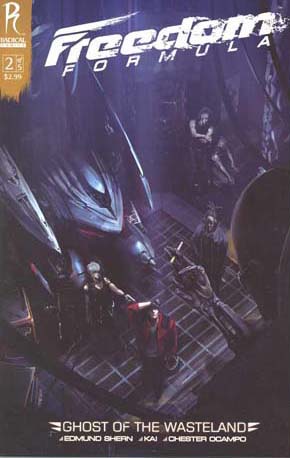
This is what Speed Racer could’ve been like. Hectic, well constructed, mature. Definitely my favourite Radical book, and a welcome departure from perhaps their more famous series such as Hercules and Caliber. Radical Publishing recently celebrated their one year anniversary and already have a string of Hollywood heavy hitters interested in film versions of their projects, such as Johnny Depp, John Woo and Bryan Singer. That bodes well for a good future for the new company, and a great foundation from which to launch further unique titles.

Freedom Formula #2 (of 5) picks up right after the events which closed the premiere issue and doesn’t let up, thanks to the fast paced writing of Edmund Shern and fluid pencils of Kai and Chester Ocampo.The first ish was great. This is even better. It opens in Los Petropolis, a typical gleaming city of the future.

Zee Obanon is captured after being involved in a crash in his home, known as the Wasteland, while on his way to deliver a package for his recently departed father. He, along with his package, falls into the wrong hands. The hands of a group of nasties who take a keen interest in Zee’s father, Jugger Faizer.

As Zee gets to work for his new captors, in a far glitzier part of town, we are introduced to Daedalus, a prime Freedom Infinity racer and puppet for his corporate overlords. These men in dark suits, led by a Mr. Long pay Daedalus 5 million “credits,” (which is the word any writer can use to make the setting seem more futuristic) to infiltrate the illegal street races known as Freedom Formula. The suits don’t like the “norms” getting all rebellious in the face of the big business world of “eugene” (read genetically engineered) racing.

Zee and his new friends stage a daring robbery from the corporation in order to grab some valuable engine parts, which leaves one of the thieves dead, and the rest surprised at Zee’s driving prowess. Zee is then given a unique VC, otherwise known as Vicious Cycle, from his new lawless “friends” to compete in the next illegal race, which ends in a surprising fashion.

This series continues to build intriguing concepts with a genuine rhythm. It’s full of beautifully diverse art and characters that you just know are heading for a deliciously frantic collision. Freedom Formula, like the street races it glamourises, is an enjoyable thrill ride. Strap yourself in and enjoy the view.

Go here for a preview of this issue.

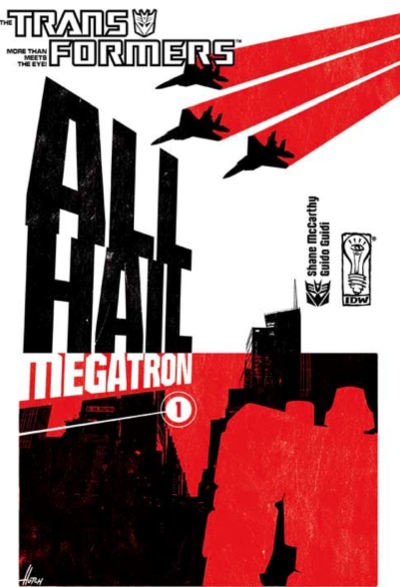
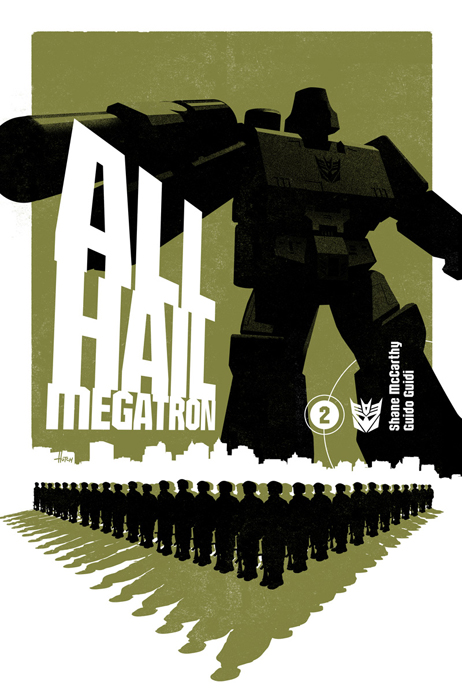
All Hail Megatron # 1-2 Review

Humans used to just be an afterthought in the Transformers cartoon back in the day, (The day was at some point in the 1980s) but now every screen incarnation and especially the latest toon re-imagining, feels compelled to throw in a few annoying kid sidekicks to keep the youngens happy, but it annoys us jaded Generation 1 lovers, or maybe just me.

Well, IDW’s latest series happily swings things in the ‘bots favour, thanks to writer Shane Mc Carthy and artist Guido Guidi. It begins with the Constructicons tearing up New York, and loving every minute of it, with a smashing (literally) arrival of Megatron who shows the Decepticons how it’s really done. It’s a great intro to this 12 ish series, and I could even hear the characters voices in my head, like I was 12 years old again, sitting in front of the TV on a Saturday morning.
Then the US Army try their noble best, but against transforming fighter planes, their efforts are brave, but futile. The last two pages are silently set on Cybertron as the Autobots try in vain to revive their fallen leader, Optimus Prime.
The second issue begins with a name familiar to Trans Fans – Witwicky, a Colonel in fact, who gets interrupted at a party and brought up to speed about the Decepticons destruction. Meanwhile Andy Reid, a survivor from issue one’s counter attack is doing his best to dodge a “large mechanical dog,” ie, Ravage and save bystanders while doing so. There are a lot more humans, and talking, in the second issue, but there’s also Soundwave (yes!), a surprisingly frightening attack from that manic cassette tape, Frenzy and finally, an attack from Devastator, the united Constructicons behemoth. There’s nary an Autobot to be seen here, which is fitting considering the title, but one would assume the robo-heroes would show up soon, as the humans resistance is looking limp.

As a non regular TF reader, I can’t say where this fits into the TF universe, but apparently it does slot into to current IDW continuity. This is a great series for newbies though, and old Gen Xers like me. It’s action packed, well paced and creatively written. Guidi is an unusual artistic choice, but it works. His pencils are the antithesis of the standard manga inspired fare, replete with the minute technical details that often accompany Hasbro’s most famous franchise. Guidi’s pencils are rougher and he manages to convey the erratic nature of battle well, while still creating an epic scope, especially in Megatron’s arrival and Devastator’s construction.
IDW obviously believe in this series, with a combined total of 8 variant covers for these first 2 issues alone. They’re also releasing it when they already have 5 other Transformers related books currently available. With as many fans as there are out there of the old school Robots in Disguise, from IDW’s point of view, it’s a safe bet though. And they’d be right.

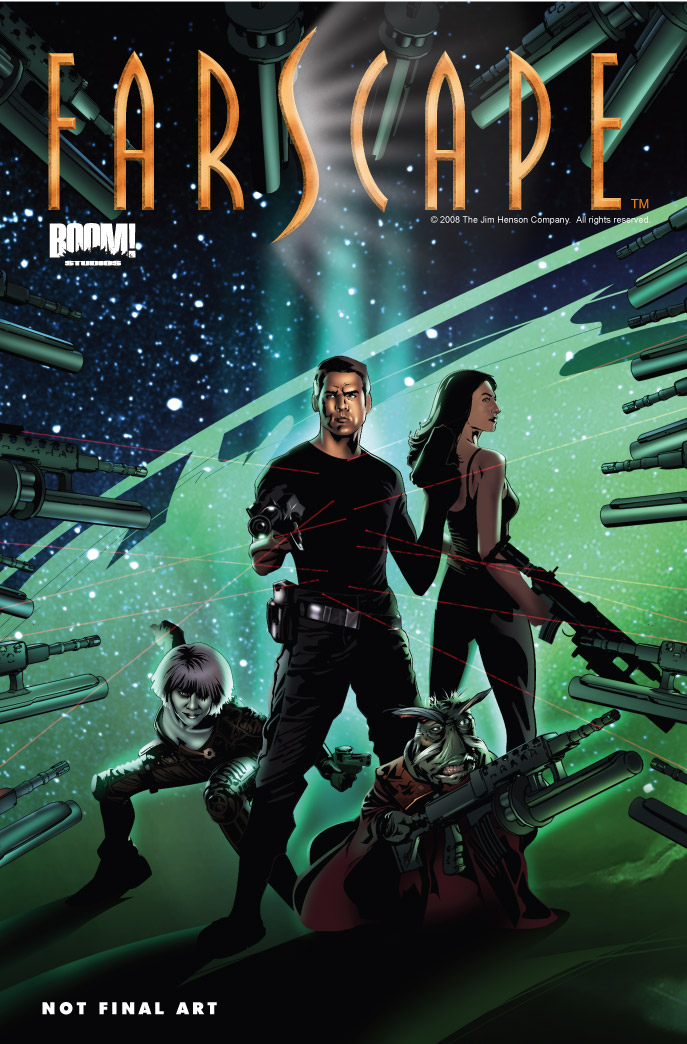
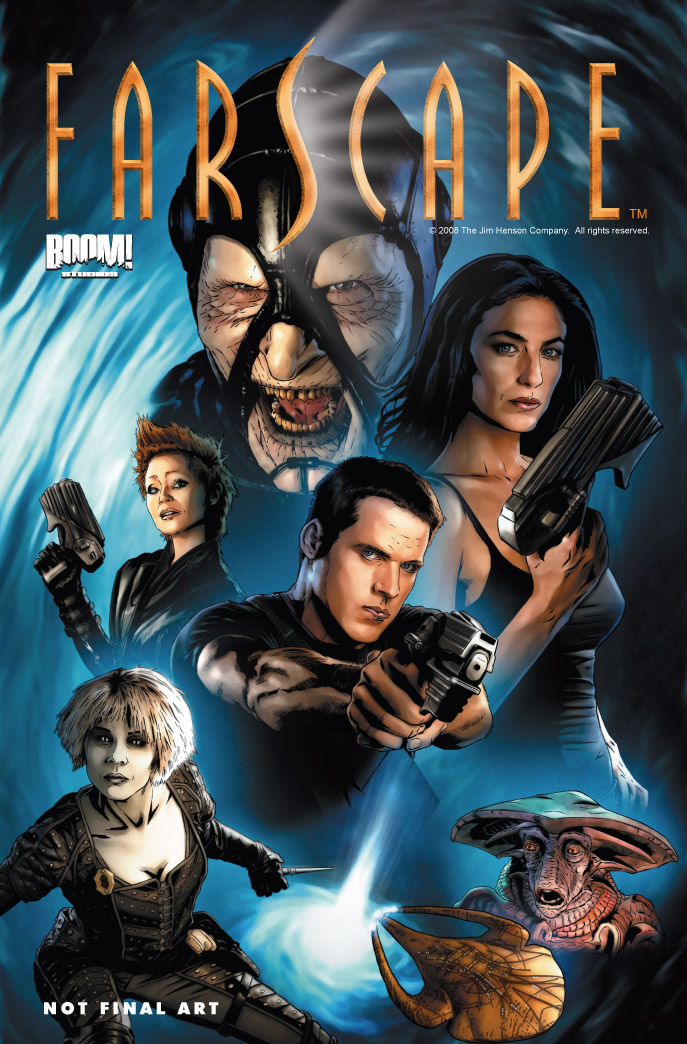
Farscape goes BOOM!

Well, now I have officially passed my 100 posts mark. That went fast. Anyway, BOOM! Studios are just about to release the Farscape 4 ish mini-series in conjunction with the Jim Henson Company, who helped launch the fan fave TV show back in 1998. Also on board is the show’s creator, Rockne O’Bannon and veteran novelist Keith R.A DeCandido, who worked in the Farscape universe in his 2001 book, House of Cards. From BOOM!’s press release, for those of you who are unfamiliar with the sci-fi show:

Debuting on the SCI-FI Channel in 1998, FARSCAPE follows the adventures of astronaut John Crichton, who has a freak accident during an experimental space mission that catapults him across a thousand galaxies to an alien battlefield. Suddenly, he’s trapped among alien creatures wielding deadly technology – a battle that 20th century sci-fi pop culture never prepared him for. Hunted by a merciless military race, Crichton begins his quest for home from a distant galaxy.

A groundbreaking award-winning sci-fi production, FARSCAPE has become a global favorite. Named by TV Guide as one of television’s “Best Cult Shows Ever” and most recently named by EMPIRE Magazine as one of the “50 Greatest TV Shows of All Time,” FARSCAPE is known for the overwhelming fan-based campaign that led to its miniseries production.  The show has continued to find new audiences as it airs in syndication and is available on DVD around the world.

Below are the covers for the first two issues.

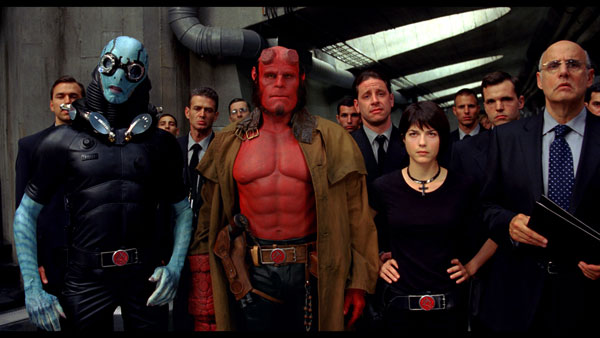
Hellboy 2: The Golden Army Review

From my review at Sight:

There will undoubtedly be more than a few concerned Christians who will dodge any film dealing with supernatural themes, especially one with , “hell” in the title. I’d suggest those people give Hellboy 2 a go however. Appearances can be deceiving, especially in this case, as there is much to recommend here.

A sequel to the first film from 2004, Hellboy 2: The Golden Army retains that film’s main cast including Ron Perlman as the titular hero, Selma Blair as pyrokinetic Liz Sherman and the dry wit of Jeffrey Tambor as their frustrated boss, Tom Manning. It is also directed by Hellboy’s helmer, Guillermo del Toro.

The most noticeable change is the absence of David Hyde Pierce’s (Niles from TV’s Frasier) voice for the amphibious agent Abe Sapien. Christian actor Doug Jones portays Abe (under all the make-up and prosthetics) as he did in the first film, and alos has the honour of voicing him. When Abe first speaks, that absence is noticeable but Jones is such a great actor, who also plays two other characters here, that it soon fades. Jones’ voice was also forgotten when he portrayed the Silver Surfer in last year’s Fanatstic Four sequel, to be replaced by Matrix actor Laurence Fishburne, so it’s about time he received his due. However Jones, along with Perlman and Blair did perform voice duties for the two fun Hellboy animated films, Sword of Storms and Blood and Iron. For those of you who are keeping track of useless trivia, here’s some more; Jones also worked with Del Toro on Pan’s Labyrinth, as did Perlman and Hellboy 2’s villain, Luke Goss in Blade 2.

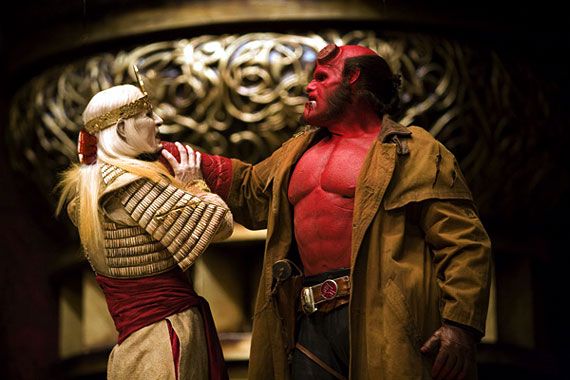
Back to the story at hand. This sequel begins in Christmas, 1955 when an amusingly young Hellboy is told by his adoptive father, Professor Broom (John Hurt) about a battle long ago between humans and creatures of myth, which is effectively relayed to us via wooden puppets. King Balor had a multitude of goblins create a Golden Army for him, comprising of “70 times 70” clockwork warriors. Due to the devastation on both sides, however a truce was called and the crown that controlled this Golden Army was shared between the humans and elves. We cut to the present where, you guessed it, King Balor’s son, Prince Nuarda (Luke Goss) wants no part of this truce nonsense and reclaims the crown in order to raise the Golden Army once more.

Much has changed since the last time we saw Hellboy and crew. “Big Red” is now living with Liz Sherman in the B.P.R.D complex, (That’s the Bureau of Paranormal Research and Defense, who the team work for) and as Abe finds out, Sherman is pregnant, which throws her relationship with Hellboy in even greater disarray. This superheroic romance, and the accidental public outing of the B.P.R.D operatives to the general populace provide the film with its numerous laughs. It is a funny film, certainly moreso than the first one, and the addition of new agent, Johann Krauss, basically a German ectoplasmic spirit in a containment suit helps. Voiced by Seth McFarlane his non-nonsense bureaucratic mindset is a great foil for the cigar loving slob Hellboy.
The characters mesh so well together and the cast seem like old friends all at ease with just being themselves. And it is simply luscious to look at. Del Toro is perhaps the most visionary director working today, (and because of such is currently making The Hobbit film, with executive producer Peter Jackson.) When the team visit the Troll Market, all manner of freaky monsters appear, reminscent of a hyped up version of the Mos Eisley cantina scene from Star Wars. The battles here are hectic, but not overly violent and the reliance on puppetry and old school visual trickery rather than elaborate CGI is a welcome bonus.

The film isn’t as epic as I thought it would be. Those expecting massive Lord of the Rings style battles will be disappointed, and the romantic scenes between Hellboy and Liz, and later with Abe and Nuada’s sister, Princess Nuala may be too much for some. However, I am a fan of this series. Different from the comics that inspired it, it may well be, but del Toro adores the source material and worked closely on this original story with creator Mike Mignola, bringing such a clear vision to this outing. The environmental message, the nature of love and sacrifice all mean that this film has more depth than its predecessor, but those themes don’t feel shoehorned. Yes, there is a lot of talking and perhaps not enough action, but with characters birthed from fantasy, there is also great realism in their interactions. No matter what we look like, or what we can do, this film subtly teaches us that there is always a greater need than ourselves, and that all differences are unimportant when trouble erupts.

Next Avengers – Transform!

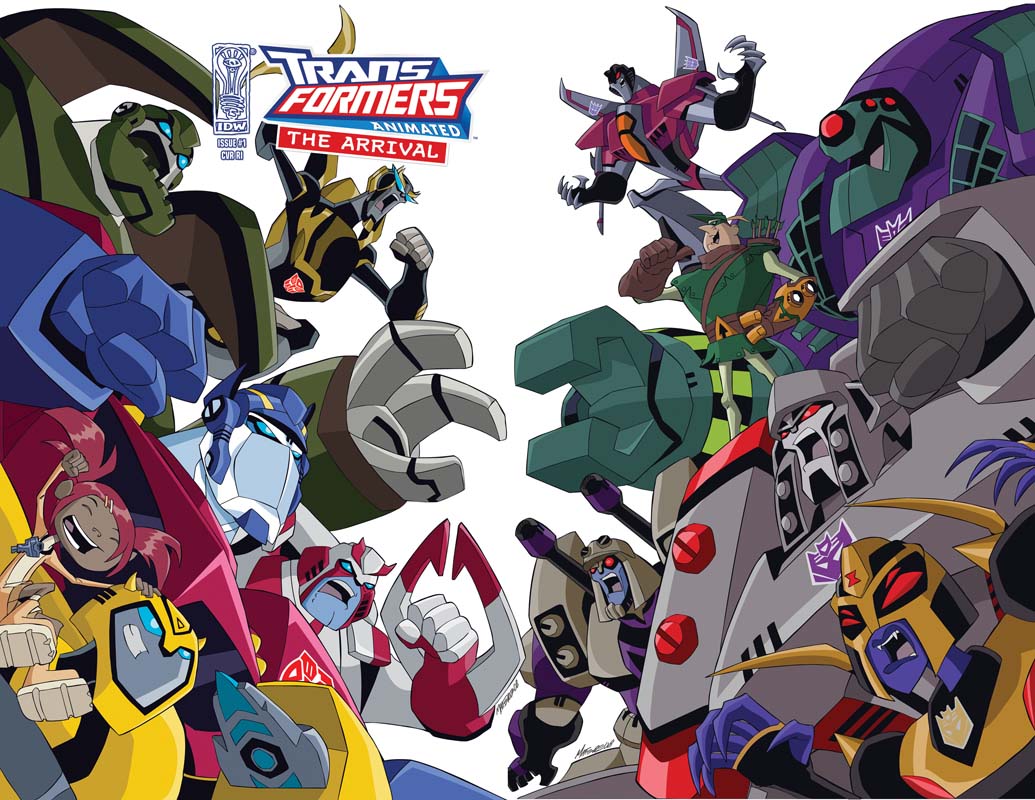
IDW presents The Transformers Animated: The Arrival #1;  the first of a series of five original comics. The story arc takes place in the continuity of the first season of the “Animated” TV show, airing on Cartoon Network.

In “Dispatches,” Animated series head writer Marty Isenberg, along with artist Dario Brizuela take a brand-new look at the story behind the AUTOBOTS’ arrival on Earth. You’ve seen the Animated movie, but do you know the whole story? You will as ULTRA MAGNUS, SENTINEL PRIME, STARSCREAM, BLACKARACHNIA, and many more tell their sides of the story that started it all! The TRANSFORMERS Animated series will also feature OILSLICK, who was originally intended to be a toy-only character, but the creators found a place to fit him into the comic.

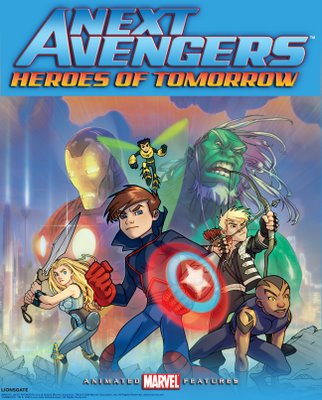
On a similar note, the Next Avengers direct to DVD animated film is now out. Getting a hold of these kinds of DVDs here in Oz is painfully difficult, but I will review it when I get a copy. For now, you can read Newsarama’s review here and ComicVine’s here. I had my doubts about this “kiddifying” of the Marvel U, but so far the reports seem positive, and the DVD looks like it has some great bonus features, including peeks at the two upcoming “Hulk Vs” films, where he faces off against Thor, and Wolverine, and a doco on the current kids roaming the streets of the Marvel U.

Son of Hulk & Web of Shadows

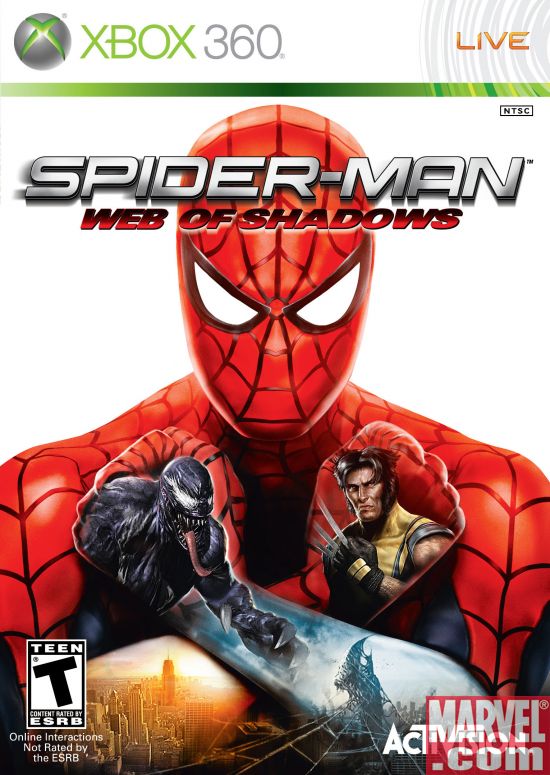
Courtesy of Marvel, here’s the box art for Spider-Man: Web of Shadows, the open world game hitting all next-gen consoles – sometime soon. It’s a darker game than most Marvel adaptations and features guest stars galore, including Luke Cage, Black Cat and Nightcrawler, and as you can see below, Venom and Wolverine.

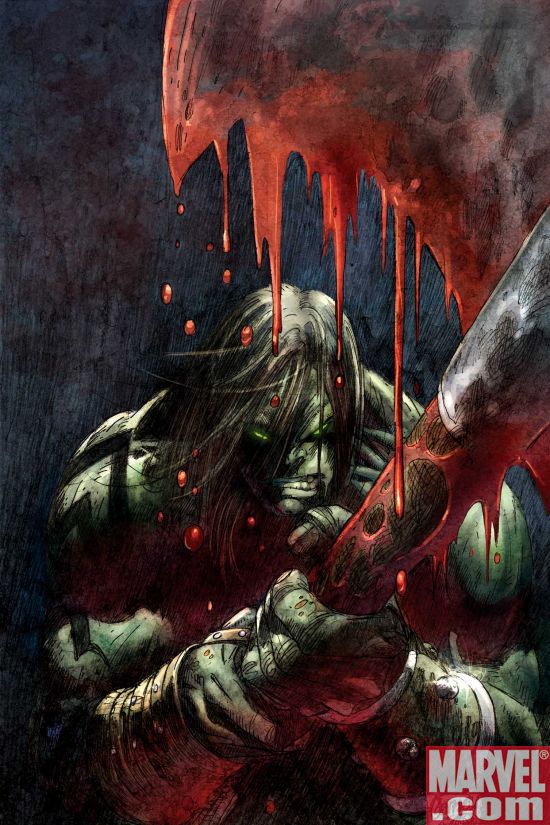
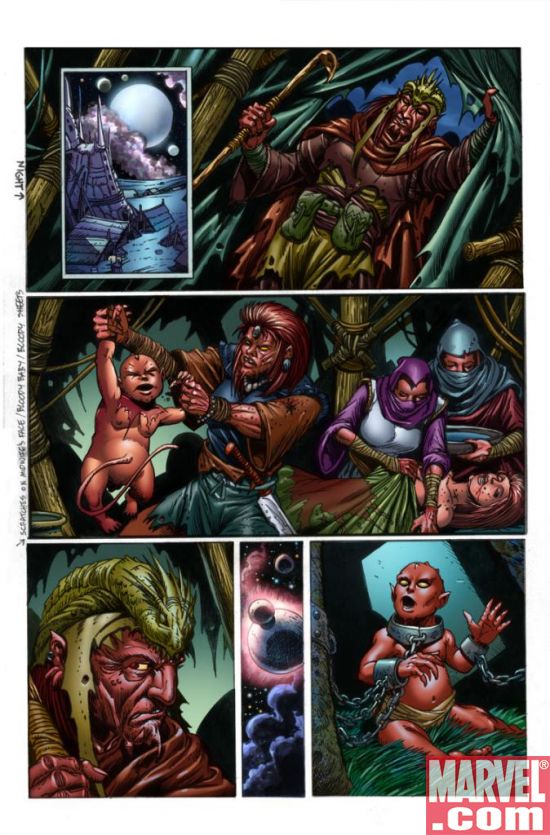
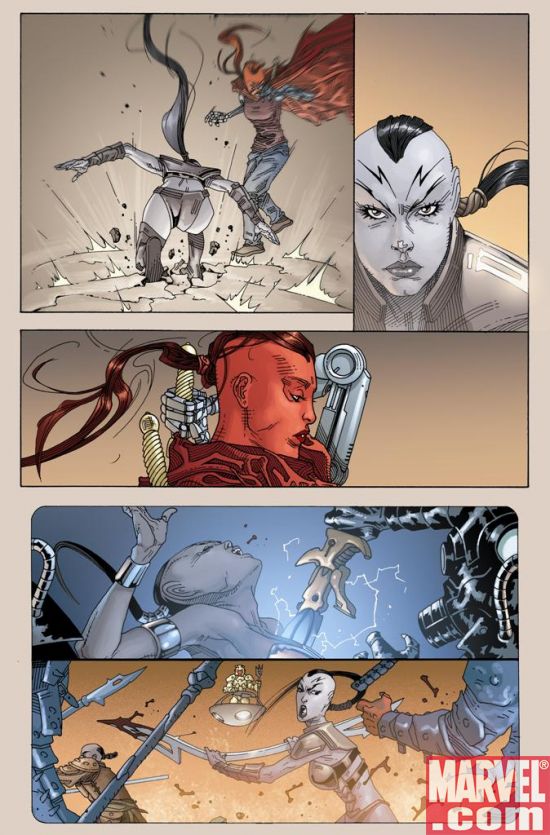
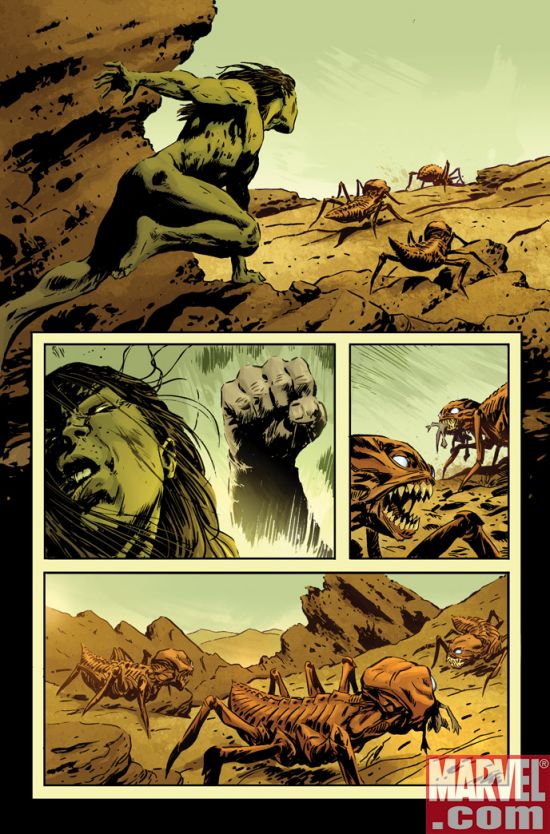
Below are a few random pages from the one-shot Skaar: Son of Hulk Presents: Savage World of Sakaar. Now, that’s a title! It’s on sale on September 24 and is presented by the original Planet Hulk creative crew, namely writer Greg Pak and artist Carlo Pagulayan, with Timothy Green, Gabriel Hardman and Tim Truman. The ish delves into Skaar’s origins, and is all held together by a gnarly Ron Garney cover.

Witchblade Volume 5 Review

I can count the issues of Witchblade that I’ve actually read on one hand, but with the TV show from a few years ago, and the relatively new anime adaptation, plus the upcoming feature film, it’s not like I’ve been unaware of the series. I guess I had unfair expectations laid upon it, as it was one of those books that began in the mid 1990s, when the bad girl craze was sweeping the comic reading public into a hormonal frenzy. Characters like the star of this book were lumped together with Lady Death, Vampirella and many more whose sole function seemed to be to titillate prepubescent readers.

Witchblade was also a character created by four different creators, so that didn’t necessarily help find its focus. However, in the last few years, publishers Top Cow have wisely started to integrate and expand their roster of characters. This move can be seen clearly in this volume, with guest stars from other Top Cow titles and the history of the Witchblade becoming deeper. Recently this series has begun revealing numerous wielders over the years of this powerful mystical gauntlet that is the ultimate girl power accessory, which opens up even more story possibilities.

This TPB is a hefty one, as it collects the Cow x-over mini-series, First Born as well as issues #110-115 of the ongoing Witchblade series. There’s also an introduction from The Walking Dead and Invincible creator, Robert Kirkman and a dazzling cover gallery. All in all this tome contains all 226 colour pages. That’s a lot, and the best thing I can say about it is that I read it all in one sitting. Believe me, that’s high praise indeed. I barely got out of my seat as I flicked through these glorious pages. It had my attention and wouldn’t let go, and that’s something I wasn’t expecting.

Basically, the first few issues of this adventure are focused on cop, and former Witchblade wielder, Sara Pezzini, as well as mob boss Jackie Estacado, AKA The Darkness, the holy warrior Magdalena, Dani Baptiste, a dancer and current Witchie owner and baddest of the bad girls, Celestine AKA The Angelus.

This book starts off with a handy one page guide, which explains all the characters in this world in a pleasantly succinct way. The beauty of this tale is that it’s intense and epic, but not overly complicated, which is more than we can say for most of what’s on offer from The Big Two. Even if you’ve never read an issue of Witchblade before, you won’t feel scared off by this volume.

Written by one of my favourite writers, Ron Marz (Green Lantern Kyle Rayner’s creator) this book details the war fought for Sara’s upcoming baby, of whom the origins are mysterious, though the details are eventually revealed. Lots of running and hiding and fighting ensues as the pregnant Sara, her lover, fellow cop Patrick Gleason (I keep thinking of the GL Corps penciller of the same name!) and sometime ally Jackie Estacado gang up to defeat Angelus’ winged warriors. As Estacado tells Detective Gleason, “In real life, the bad guys don’t always wear black and the ones with wings aren’t always the good guys.” That sums up the supernatural/spiritual/primal themes pretty well. The three manage to fight the hordes (that look like something director Guillermo del Toro would’ve imagined) and escape, after Gleason somehow survives a brutal stabbing. Jackie takes Sara and Dani straight to a secret cavern, where Magdalena shows up. Sara gives birth and the battle begins anew as the Angelus and her followers struggle to keep the baby all to themselves for the sake of the Balance. The newborn, later dubbed Hope brings a surprising victory, which also leaves the Witchblade split in two, for Sara and Dani.

After this battle concludes, things change pace somewhat abruptly. Sara adjusts to life as a new mother, Dani finds a budding romance with a shop owner called David Worthy, yet the girls still manage to find action, or rather, it finds them as they take Hope for a stroll in the park and find that evil forces still want the baby for their own purposes. Both girls also manage to run into different muggers while shopping at different times, which makes the action in the second half seem more forced than the first. The last few issues are akin to Buffy Lite; lots of girls talking casually, new relationships forming, but with short bursts of fighting interspersed throughout. Some may find all the dialogue a bit annoying after the hectic first half, but Marz is a gifted writer and handles it naturally. With this much going on, the fact that there is no lengthy exposition or narration is pretty impressive.

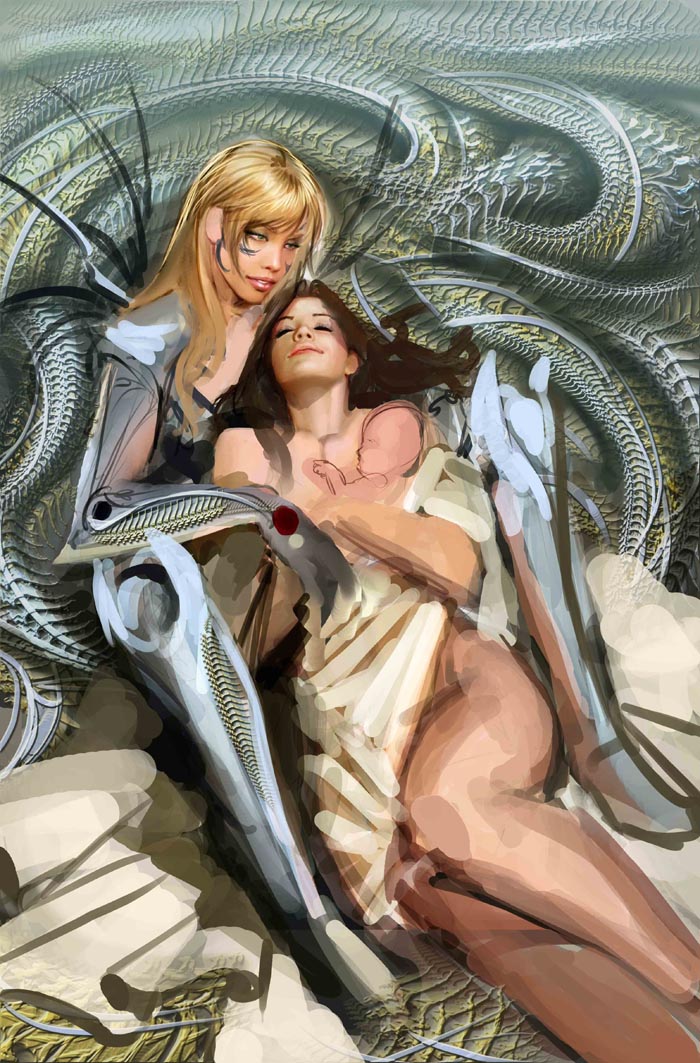
This is a light read, despite its burgeoning cast of characters and lengthy history and its very easy to keep track of what’s going on at all times. I can’t go any further without mentioning the art. It’s beautiful and I don’t mean the fact that all the girls look like supermodels (and so do the guys, come to think of it) Stjepan Sejic is the primary artist. His pages are luscious. Obviously tinkered with computer to look like paintings, he has a skill that deserves more work. Look at the cover gallery included and you’ll see what I mean. There’s enough pretty pictures (even his ugly monsters look gorgeous) to fill a Metallica fans bedroom walls. In every panel, the light, textures and backgrounds are all rendered with such detail; a rarity in the posing superheroes against blank backgrounds in a lot of comics today. If I was on the Cow’s marketing team, I’d create ads from these pages in every heavy metal mag I could get a hold of. Long haired head bangers would lap this art up I’m sure.

More traditional and seasoned pencillers such as Luke Ross, Stephen Sadwoski and Rick Leonardi fill out the remainder of this volume, but the change is not jarring from one ish to the next. There is also a preview of The Darkness ongoing series, which details its supernatural origin effectively.

There is some profanity here and themes that won’t be everyone’s cup of tea, but I was impressed by this series and would be curious to see where it goes next. All the hard work building this universe has paid off. Jaded fanboys and newcomers alike will find something to sink their teeth into here, and probably will want seconds. Surprisingly recommended.

Massive Top Shelf Sale

Top Shelf is one of the grooviest indie publishers on the planet. For those looking for something a little different, go to the Shelf. My favourite book of theirs would have to be Craig Thompson’s Blankets. It’s a hilarious, touching, life affirming phonebook-sized rumination on love, youth and faith – and now it’s only $25! Bargain! I also picked up The Surrogates and Tales From The Farm from their Comic-Con booth, but have yet to work my way towards them.

The sale is on until Friday September 12 and there are 90 comics available for only $3 too. This is a great opportunity for some diverse reading. There’s over 125 items on sale, and all the Shelf asks if that you spend a minimum of $30 before shipping.

Too easy.

You can see the complete list here.

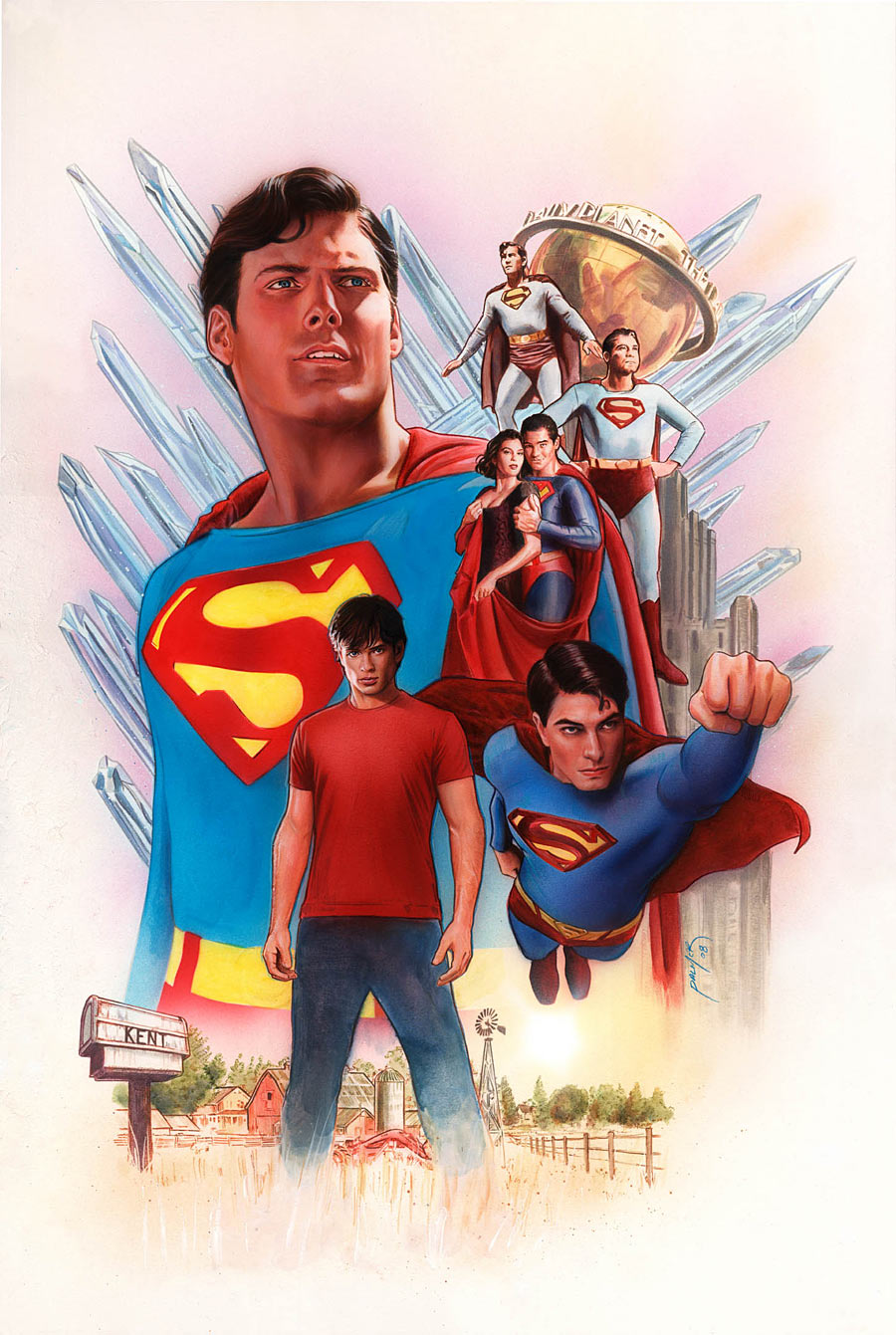
Superman/Batman #51 Review

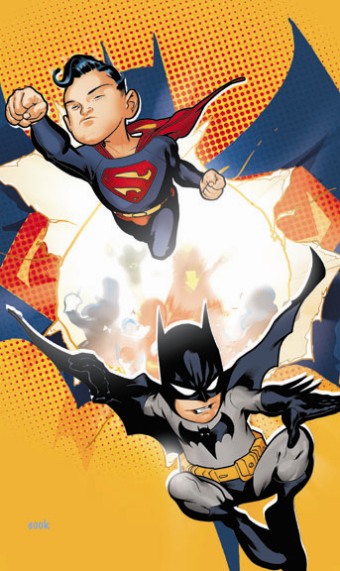
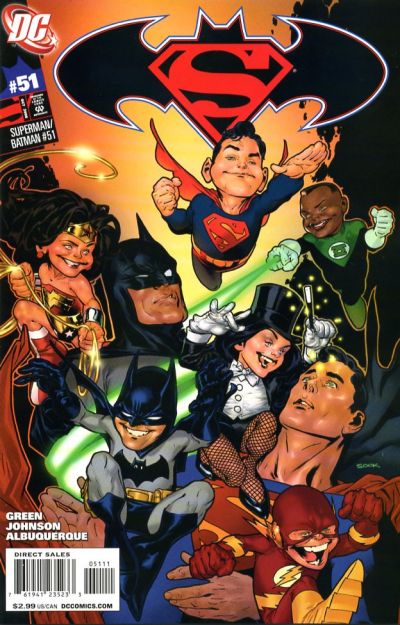
From my review at Sight. I’ve also posted the full version of the gorgeous Ryan Sook cover under the review. It’s so cute, even your girlfriend will love it! What’s that? You read comics? Um…it’s so cute even your Aunt Beryl will love it!

DC’s current gallery of books is hardcore, with more convoluted stories than usual. Final Crisis and it’s truck load of tie-in issues has our heroes facing their darkest day (apparently), and with Batman:R.I.P, which has the Dark Knight’s existence seemingly coming to an unexpected end, the DC Universe is not the simplest or happiest world to visit. However, they still know how to entertain and in recent months DC have given me much more mirth than usual, thanks in part to Tiny Titans, a simple book with short tales, chock-full of fanboy in-jokes. It always puts a smile on my face. Now there’s this Superman/Batman two-parter. I don’t think I’ve laughed out loud so much in a single issue. A pleasant change from last month’s issue #50, which presented a far-out tale where the parents of our titular heroes may have met decades ago, this story is just plain fun, with no need for previous knowledge. Mike Johnson continues his writing duties on this title, from last month, with Michael Green (who also writes TV’s Heroes) who launched an excellent story arc in issue #44 which had the superhero pair hunting down all of earth’s Kryptonite. During that run, Superman was exposed to some Silver K, which gave him hallucinations of pint-sized versions of his costumed friends. It was a brief, but amusing moment. Here, the kid heroes return, thanks to the reality warping powers of that troublesome imp, Mr Mxyzptlk. He confesses that his aim was simply to lighten up the superhero pair, as both heroes have been in dark times indeed as of late, just like us faithful DC readers.

Mirth inducing moments abound in this ish, from Lil’ Bats punching the real deal in the kneecap, to the tiny versions of the Justice League of America, including a Supergirl toddler who cries at the drop of a hat, and similar versions of Wonder Woman, Vixen and Black Canary experiencing love at first sight when the teen Robin enters the Batcave.

I’m so glad to see DC mock their own creations with such recklessness. Superman and Batman are two of pop culture’s greatest creations, and like superheroes in general, are ripe for parody, though it’s really only insiders who can do it with any sense of wit. When films or TV shows attempt to do the same, their parodies come across as cringe inducing. Us fanboys are sick of “underwear on the outside” jokes, but we can laugh at ourselves with ease. The highlight here for me would have to be the pre-pubescent versions of Superman and Batman recounting their origins. Instead of the two gunshots that killed “our” Bruce Wayne’s parents that fateful night, the younger version’s parents experienced, “Two shoves. And nothing was ever the same again. I swore that night that no one would ever be bullied in Gotham City.” Similarly, instead of seeing Krypton’s destruction give birth to Superman, his counterpart’s parents rocketed their only son to earth just to save him from a rainy day. These origins have been told many times over these characters’ 70 plus years of history, and to see them retold here in such a refreshingly different manner is great.

The introduction of similar de-aged versions of the pair’s main villains on the final page is a hoot (Two-Face has a cake covering half his face, and Mr Freeze is armed with an ice-cream gun) and bodes well for more laughs in next month’s conclusion.

There’s sheer entertainment here for both hardcore readers who’ll get the parodies, and something for newbies too. Rafael Albuquerque is the perfect choice for artist. His deft pencils make all the characters seem so adorable and aid greatly in making this issue such a joyful romp. Now I just need to start a petition for DC to create plush toys based on these Lil’ Leaguers.

Save Superman’s House

I started watching Rocky Balboa again tonight. I love Sylvester Stallone’s films, and he’s created two of pop culture’s heroes in the Italian Stallion and Rambo. Especially with Rocky, there is so much that the general public remember – the theme music, “Yo Adrian!”, meat punching, running up steps, etc. And to top it all of he got his own statue in Philadelphia.

And all that is fantastic. Really. But what isn’t is that Superman’s creators are largely forgotten. The only comic creator that the general public really know is Stan Lee, and that’s OK. But even the Marvel man himself submits to Jerry Siegel and Joe Shuster’s timeless creation. Superman debuted in 1938 in Action Comics #1 and immediately took the world by storm, and virtually created the comic book industry. His place on the landmark of fictional story telling can not be denied. Unfortunately his real life origins can be.

Novelist/comics scribe Brad Meltzer recently visited the Cleveland house in which Superman was born and was shocked by what he saw. From the article at CBR:

While conducting extensive research for his latest novel, “The Book of Lies,” (in stores today), Meltzer visited Siegel’s boyhood home, where Superman – one of the world’s most recognized heroes – was created.

Much to his dismay, the house was in extreme disrepair.

Immediately, he knew he had to do something to honor the legend.

So he called up a few of his friends (and when you are Brad Meltzer, you have some pretty cool friends) and started collecting one-of-a-kind art and memorabilia, which is available now for bidding on his new philanthropic website, www.OrdinaryPeopleChangeTheWorld.com.

The auction runs through 11:59 p.m. on September 30, 2008.

“When I saw that the house where Superman was created was in disrepair, it just seemed wrong. The house where Google was created is saved. The farm where Hewlett Packard was founded is preserved. The Superman house deserves the same respect,” explained Meltzer.

“We’ve always relied on Superman to be there when we needed him. This is our chance to be there for him.”

This is a fantastic idea and it’s awesome that fans and professionals of the comics industry can recognise a need and do something about it.

Zombie Tales #4 Review

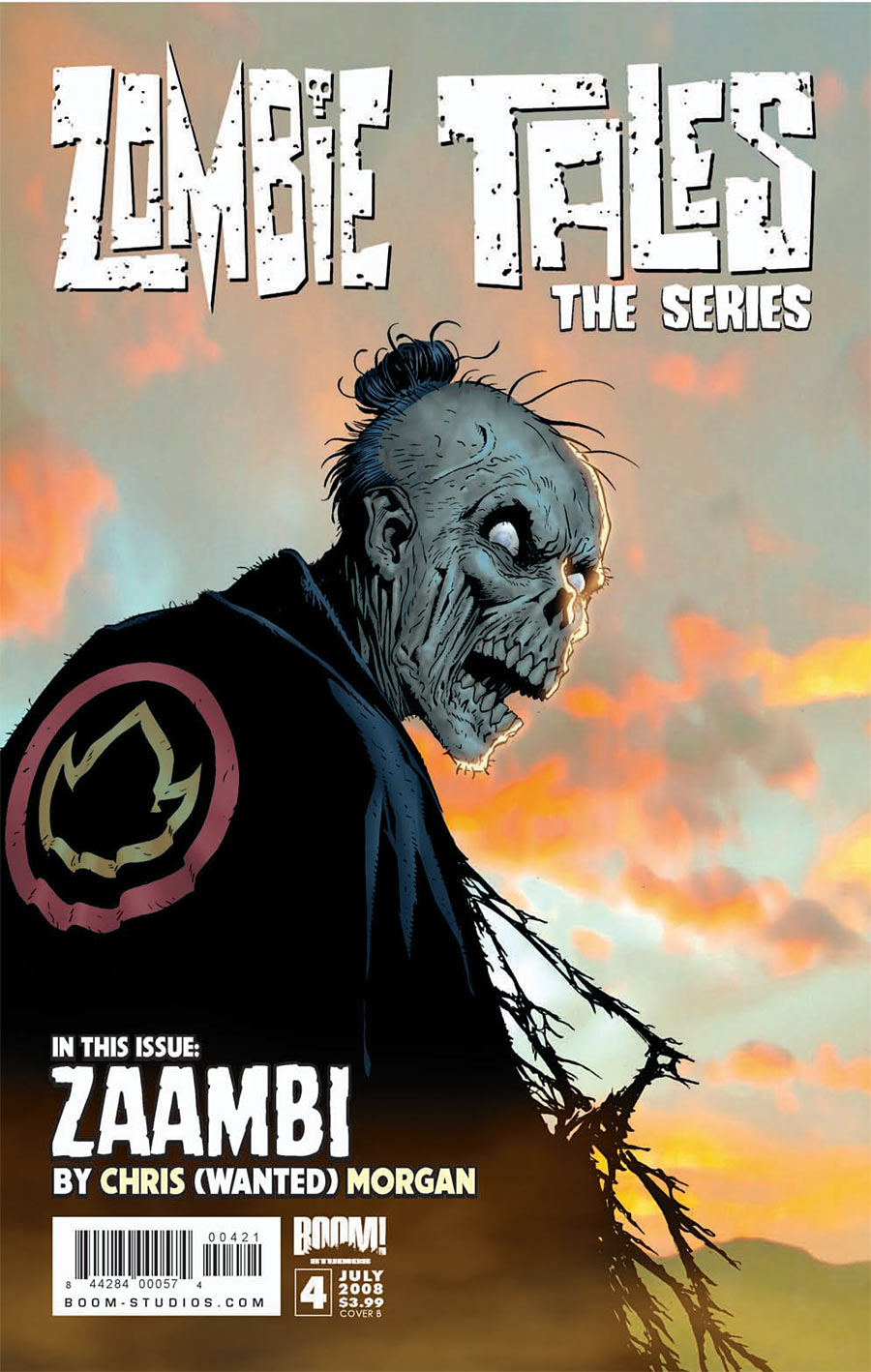
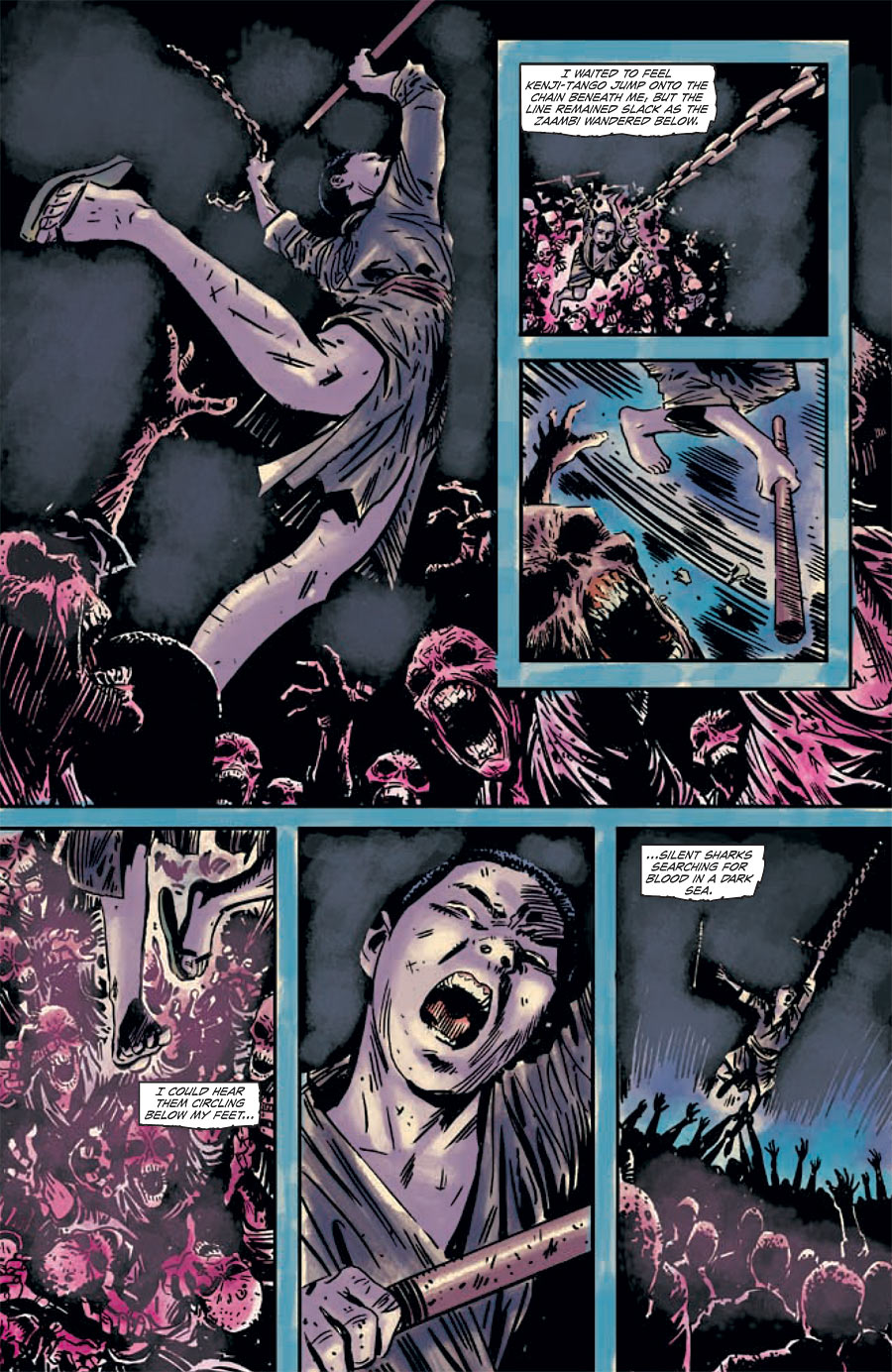
One of BOOM’s newest titles, the aptly named Zombie Tales continues to shamble to success. Those crazy undead have regaled comics (and films, games, etc) for decades and can adapt into any genre with ease, such as plain out horror to comedy. They’re a resourceful bunch, those brain hungry walking corpses, with no shortage of manic adventures to share. This issue is the first from Wanted screenwriter Chris Morgan, and his brother Terry. Entitled Zaambi it’s divided into three parts, with a different artist for each. Set in a remote village, young Toshiro, wishing to become a man becomes more adept at zombie killing, proudly presenting a bag full of heads to his father to prove his worth. His father is displeased however at his lack of honour for the dead and his training continues, as it does with the other boys of Honchu village, whom must graduate from the harsh school of zombie killing. Toshiro and his rival, Kenji-Tango soon realise how serious the encroaching flood is.

Part 2 shows us the nineteen year old Toshiro who is now a weary zombie destroying machine; a man who hates the forever growing horde almost as much as he does the evils of his fellow man. The final part involves Toshiro as he follows advice from a Chinese captive, seeking to kill the zombie menace once and for all. As his crew travel the countryside, they come across the famous terracotta warriors of old, and must make a heart wrenching decision (literally) to see their goal come to pass.

One of the marks of a great writer is brevity. The Morgan brothers certainly have that. There are a bundle of great, blood soaked ideas in this stand-alone issue, but the story never comes across as overwhelming or convoluted. It’s tight scripting with descriptive narration, and an ending that I didn’t see coming, but one that works beautifully. The artists, namely Gabriel Hardman, Minck Oosterveer and Jason Ho have very similar styles. Having three artists in less than thirty pages is usually jarring, but BOOM! have chosen these three well. They all sketch in a rough fashion reminiscent of Joe Kubert or Lee Weeks, perfectly complimented by Cris Peter’s muted colours and Marshall Dillon’s subtle calligraphic lettering. I was gladly surprised by the effective crafting of this adventure. Zombies in an ancient eastern setting is a concept I haven’t seen before, and with its “I Am Legend” one man’s POV against the world vibe it’s a perfect fit.