Gina Torres is Superwoman

So Justice League: Crisis on Two Earths is available now, in the US at least. Here in Oz we have to wait a little longer, but by all accounts it’ll be worth it. The 7th animated DC film has been getting great praise for its epic story and dazzling fight scenes, and the 70s-flavoured bonus short focusing on The Spectre is getting lots of attention too. Expect a full review once I get my impatient hands on a copy. Hopefully that’ll be soon. For now, here’s an official interview with Gina Torres from the film.

ACTRESS GINA TORRES PUTS A SEXY SPIN ON EVIL AS SUPERWOMAN IN JUSTICE LEAGUE: CRISIS ON TWO EARTHS

Gina Torres mixes equal parts evil, sexy and powerful of conjure the hypnotic voice of Superwoman in Justice League: Crisis on Two Earths, an all-new DC Universe Animated Original PG-13 Movie arriving TODAY, February 23, 2010 from Warner Premiere, DC Comics and Warner Bros. Animation.

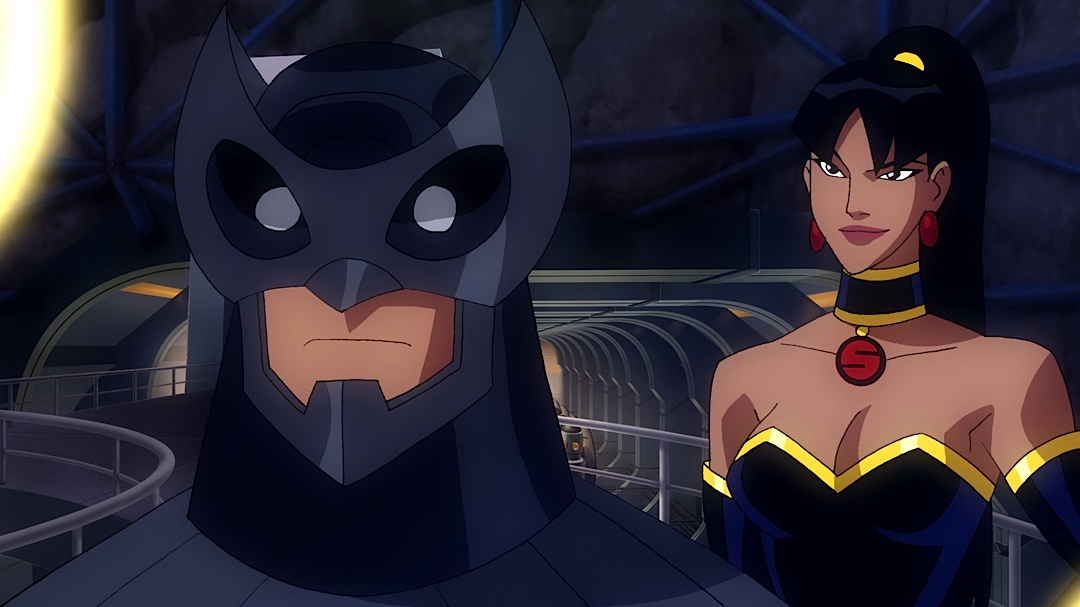
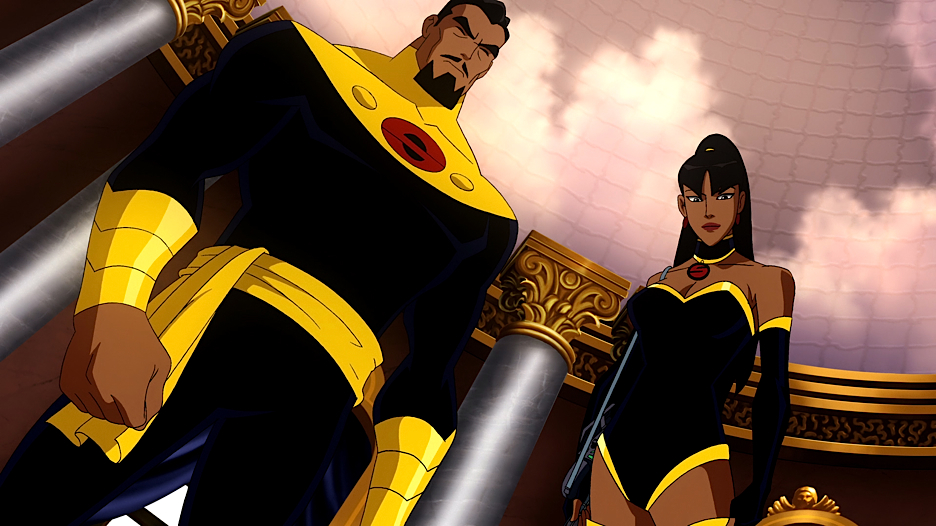
In Justice League: Crisis on Two Earths, a “good” Lex Luthor arrives from an alternate universe to recruit the Justice League to help save his Earth from the Crime Syndicate, a gang of villainous characters with virtually identical super powers to the Justice League. What ensues is the ultimate battle of good versus evil in a war that threatens both planets and puts the balance of all existence in peril. Torres plays Superwoman, the evil doppelganger to Wonder Woman and one of the leaders of the powerful Crime Syndicate.

Torres had an unanticipated assist in bringing about the powerful, yet sultry voice of Superwoman, coming into the booth in the final days of a bad flu that slightly lowered her vocal range and added a smoky sexiness to the outstanding performance. Even more impressive is her perfect match with the voice of Owlman, James Woods – considering the two actors recorded on opposite coasts, weeks apart, and have never met each other.

She is well known throughout the fanboy realm for her standout roles in Joss Whedon’s Firefly/Serenity and Angel, her performance at Cas in The Matrix Reloaded and The Matrix Revolutions, as well as 28 episodes in Cleopatra 2525. Torres has since been a mainstay across primetime television with recurring roles on 24, Alias and Standoff, in addition to guest appearances in CSI, Without a Trace, Boston Legal, Bones, Eli Stone, Pushing Daisies, Criminal Minds, Dirty Sexy Money, The Unit, FlashForward, Gossip Girl and The Vampire Diaries, to name just a few. Torres has also spent some time in the animated world, working with Warner Bros. Animation as Vixen on Justice League.

Justice League: Crisis on Two Earths is an original story from award-winning animation/comics writer Dwayne McDuffie (Justice League). Bruce Timm (Superman Doomsday) is executive producer, and Lauren Montgomery (Wonder Woman, Green Lantern: First Flight) and Sam Liu (Superman/Batman: Public Enemies) are co-directors. The full-length animated film will be distributed by Warner Home Video as a Blu-Ray™ and Special Edition 2-disc version DVD, as well as single disc DVD, On Demand and For Download.

Torres spent a few minutes after her recording session – and last week during the Los Angeles premiere of the film at the Paley Center for Media – to chat about her performance as Superwoman, the importance of strong female role models, the acting strengths of Whedon alums, her childhood obsession with Wonder Woman, and the fun of allowing her evil side to come out and play. Listen up … or else.

QUESTION: As you stepped into the sound booth to voice Superwoman, were you actually feeling wickedly sexy, delightfully cruel and ultimately powerful … or was that all just acting?

GINA TORRES: I’m so glad they called me to do Superwoman, (she laughs) because I was in the mood to get back in there and be a badass. Superwoman is one of those super heroes that knows her power, and is very comfortable in her power. And it’s all cat – it’s no mouse with her. She likes to bat around her prey and she really enjoys what she’s doing. In the booth, you sort of have to become this person. When you’re not on stage with other actors and you’re not on camera, you really get to free up your body and do all kinds of things that maybe aren’t as pretty on camera. You get to have a good time getting your whole body involved in the interpretation.

QUESTION: Have you ever had a relationship with comic books?

GINA TORRES: Do the Archies count? (laughs) I was a big Archie fan. I love Veronica – I want to look like Veronica. Betty was great, but Veronica was the girl. And that whole “Sugar, Sugar” (singing) thing was great. I’m telling my age – I’m really only 28. My sister is older (laughs). I was listening to her 45s.

I don’t want to disappoint any comic book fans out there, but I’m a girl so I really wasn’t reading the super hero comic books much. But it’s done great things for my marriage. The husband loved the idea of me playing Superwoman. And my girlfriends said, “Well, that’s just kind of you every day, isn’t it?” So I’m happy.

QUESTION: So there was no super hero role playing games when you were a kid?
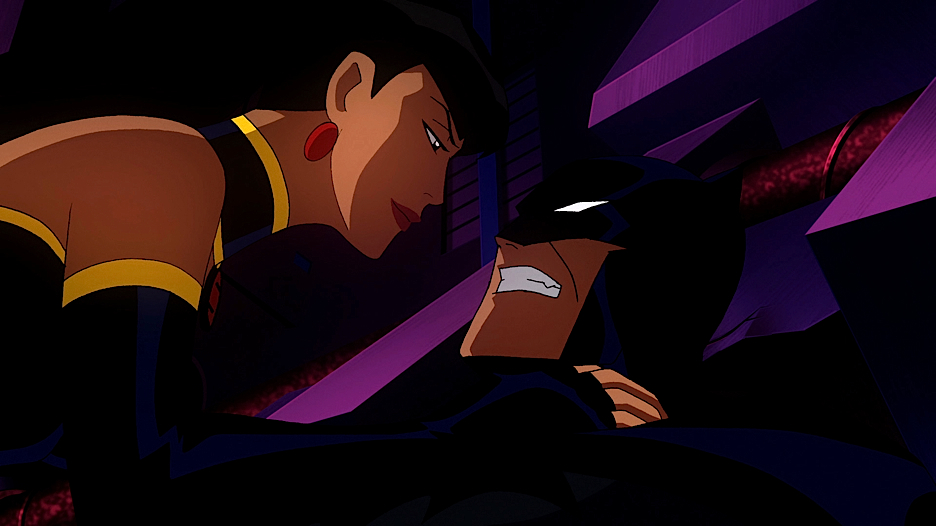
GINA TORRES: I absolutely played Wonder Woman when I was a kid. I had the lasso, the whole bracelet thing, I even had my twirl down. I just knew that I was going to be taken back to Paradise Island, because that’s really where I belonged. I was this small little Amazon just waiting to express myself, waiting for my true mother to come and get me. (laughs)

QUESTION: Can you give me an idea of what Superwoman’s motivations are in this film?

GINA TORRES: Let’s see. Superwoman is motivated by power and money and sex, and sex and money and power. Who can’t relate to that?

QUESTION: Good answer. Not that Superwoman is a role model, but do you feel like women have enough super hero representation these days?

GINA TORRES: What do you mean Superwoman is not a role model? Isn’t she a role model? She rules the world (laughs). She’s Superwoman! (laughs). What I love about super heroes, and Superwoman in particular, is that in that comics world they’re all curvaceous. There aren’t really any skinny bitches in the world of comic books. They’ve got muscle. I like that. I appreciate that. They’re strong. And it’s important to have strong images of women out there, women who aren’t afraid of expressing themselves, women who aren’t afraid of taking chances, women who aren’t afraid of their own power. Unfortunately, being a woman in society means that sometimes you have to sort of quell what is instinctually broad and magnificent and magical about you. I think a lot of people feel that way. I don’t know if that’s necessarily relegated to being a woman, because we’re all so worried about fitting in and not sticking out. So what’s great about this whole genre is that it’s all about sticking out. It’s all about being magnificent to the highest power.

QUESTION: You’re a terribly nice person by everyone’s perception. What’s your trick for turning on the villainy in a performance?

GINA TORRES: Oh, there is no trick to capturing villainy. (laughs) The rumor is that I’m a nice person. I love that rumor. Everybody has different sides to them. Everybody has that inner villain that you want to break out and express. It’s a good time going out there and letting her come out. Lock good Gina in the closet … and have evil Gina come out and play.

QUESTION: You’ve been in this universe before, most notably as Vixen for Justice League. Do you have an attraction to the medium or just when the situation presents itself?
GINA TORRES: I love voiceover work. It’s wonderful, it’s expressive. It’s a way of using a part of my instrument that I’m comfortable and familiar with. The voice is such a vital part of crafting a character. I’m so pleased that I have the kind of voice that prints well and that people want to hear. I’ve had friends actually say, “You know, I was in the kitchen, and the television was on and I heard you.” I love hearing that there’s something familiar about my sound, and that to some people it’s soothing.

QUESTION: The DC Universe animated original movies have been blessed with numerous members of the Joss Whedon alumni association – from Adam Baldwin and Nathan Fillion to David Boreanaz and James Marsters, to name just a few. Is there something about the Joss experience that lends itself to this universe?

GINA TORRES: Joss has an attraction to a certain kind of actor. Obviously, we’re all so very different in our own way. But when he’s choosing a world, he really does inhabit it quite completely. I mean, it is an entire universe. It is a Whedonverse, which is why I believe he’s so successful when he creates these worlds that one can get lost in.  All the inhabitants in it require, without sounding self-serving, a kind of intellectual whimsy. You have to understand where you are and be true to it and at the same time let it go and let it fly and enjoy it for what it is – for the maniacal, for the fantasy, for the tragedy of it. I think all of these actors have lent themselves to these kinds of projects because we’ve been in that place. And so we can come here and say, “Yeah let’s have fun. I know where we are and let’s just go and have a good time.”

QUESTION: You’ve got significant sci-fi fantasy experience. Is that by choice or happenstance?

GINA TORRES: I would say that I was dragged into the sci-fi genre. (laughs) I wouldn’t say kicking and screaming. I actually went willingly. But it wasn’t something that I sought out. I grew up in New York, born and raised, and cut my teeth in the theatre. I did a lot of off-Broadway, and some Broadway. Sci-fi was certainly not where I thought I’d be making my bread and butter for this period of time. It’s been a pleasant surprise, certainly. I find that it’s a niche that I’m comfortable with. What else are you going to do with a strong, almost six-foot girl? Give her a gun. Give her superpowers. (laughs) And you give her a hefty belt with things attached to it. Yeah!

QUESTION: Can you quantify the passion of the fanboys out there?

GINA TORRES: That passion of the fanboy is immeasurable. And it is priceless. And it is necessary when you’re doing these things because you don’t quite realize while you’re doing the work that you’re in a bubble. And it’s not until you’re released into the world that you realize that you’re making an impact and that you’re making somebody’s day brighter and someone’s universe broader. It is great fun to be confronted with these guys and gals.
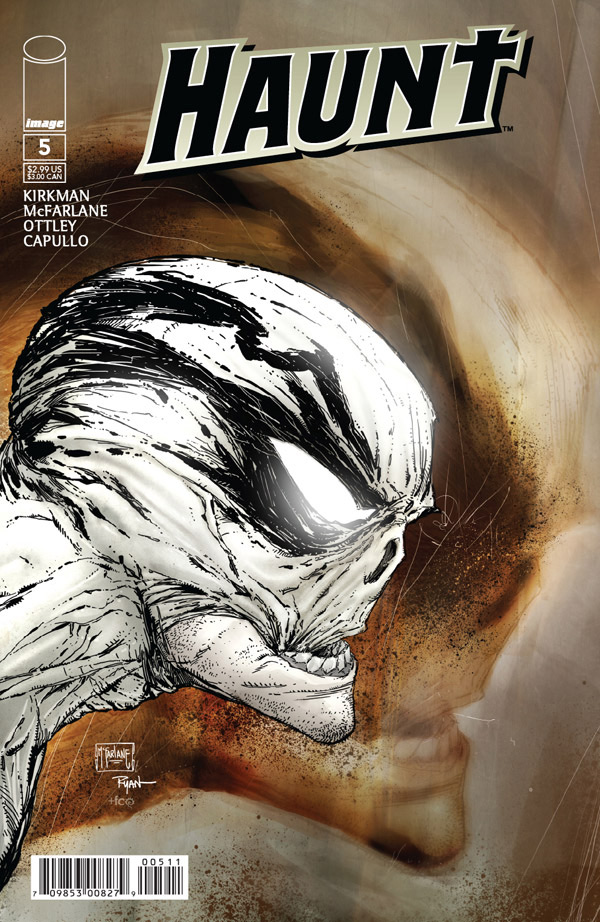
Todd McFarlane on Broken Frontier

The famous creator of Spawn and writer/artist on Spider-Man, and so much more is now a regular contributor to comics site Broken Frontier. The Image co-founder speaks about his gig on the Image series Haunt, the absence of long-term creative runs these days, and more in his first column right here. Here’s a snippet that’s sure to cause a stir in fanboy circles:

But for me, I don’t think and never believed you needed to define everything about a character within the first 10 issues or so.  I actually think it’s a detriment at times.  If you give the complete origin and background and motivation to a character in the first three issues, then What are you doing with the next 60 or 70 issues?

This is why Superman was never really that interesting to me.  He came out of the womb perfect, he was perfect, and he kept acting perfect.  Now keep that going for 500 issues.  It’s entertaining to a certain extent, but I would never name him in my top 10 heroes.  There were no flaws, no inconsistencies, and it never seemed like his character ever grew much.  He was prebuilt right from the get go, there was no mystery to him.

That argument is also one of the reasons why Wolverine was so popular in my heyday of collecting: we were screaming for more answers.  “What’s his origin?  Who does he belong to?  Why won’t you ever talk about him instead of Phoenix and Cyclops?!!”  And Marvel kept with that and after a while he became the most popular member of the X-Men because, in part because they were able to make his story engaging for a long time before they actually spilled the beans on him.

I’m hoping that Haunt has that same mystery about him where people don’t get to issue #15 and think they know all the answers. Because then it would devolve into superheroes punching each other for 60 more issues.

President Deathstroke Speaks

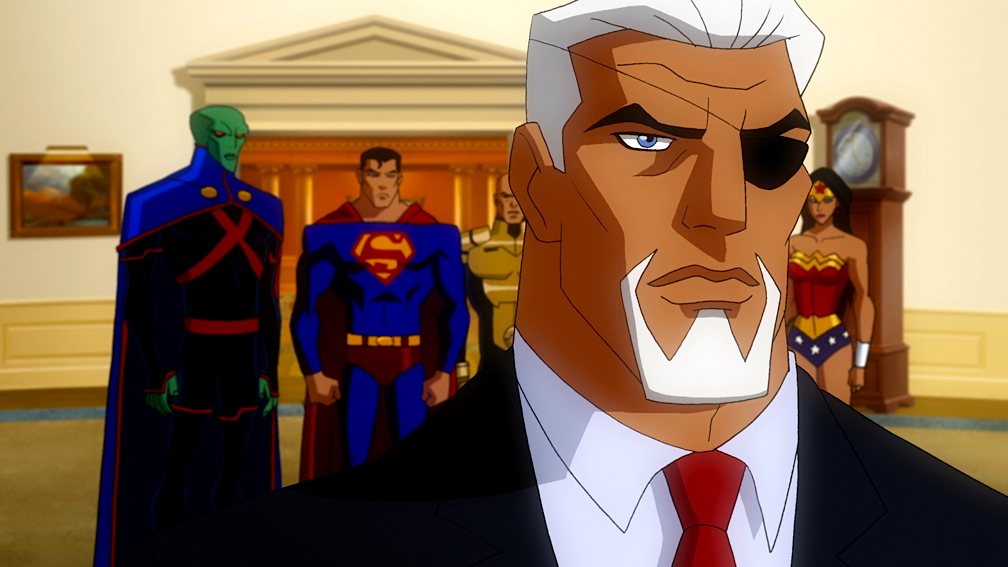
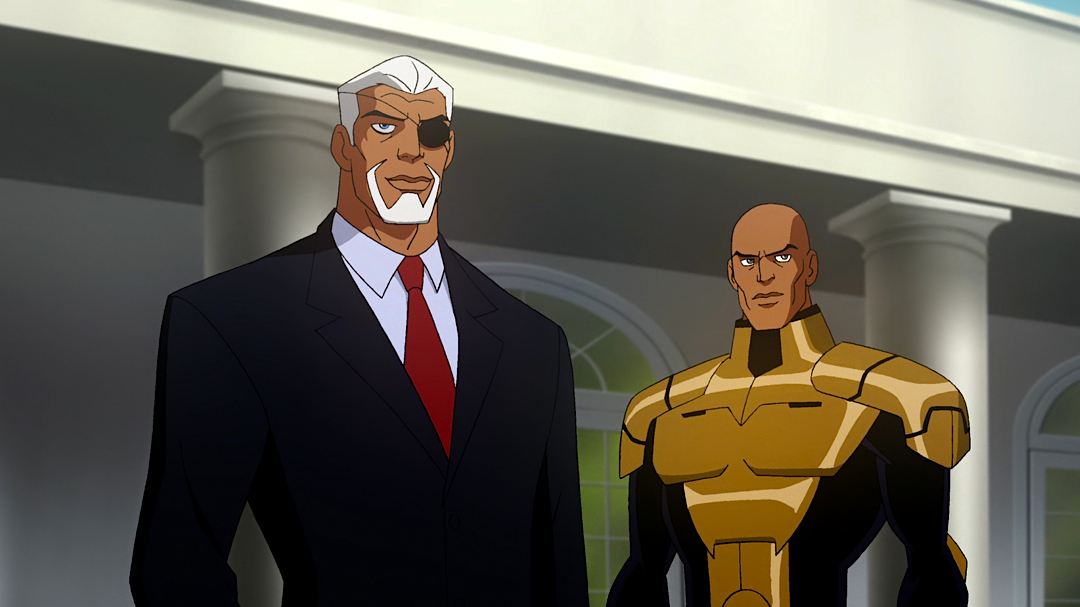
Thanks to Warner Bros. for their interview with actor Bruce Davison, who plays President Slade Wilson aka Deathstroke in Feb 23’s animated film, Justice League: Crisis on Two Earths. Having one of the meanest hombres in the DC Universe as President in an alternate earth is an awesome move.

VETERAN ACTOR BRUCE DAVISON MAKES ANIMATION VOICEOVER DEBUT IN JUSTICE LEAGUE: CRISIS ON TWO EARTHS

Bruce Davison is no stranger to political office – at least in a fictional situation. He’s played an ambassador, senator, congressman and judge, but Davison steps up in class – in his first voiceover for animation – as President Wilson in Justice League: Crisis on Two Earths, an all-new DC Universe Animated Original PG-13 Movie coming February 23, 2010 from Warner Premiere, DC Comics and Warner Bros. Animation.

In Justice League: Crisis on Two Earths, a “good” Lex Luthor arrives from an alternate universe to recruit the Justice League to help save his Earth from the Crime Syndicate, a gang of villainous characters with virtually identical super powers to the Justice League. What ensues is the ultimate battle of good versus evil in a war that threatens both planets and puts the balance of all existence in peril. Davison’s President Wilson is caught in the middle of the battle, attempting to find a balance between leading the human citizens of the parallel Earth and not being crushed by the powerful Crime Syndicate.

Davison’s credits stretch through film and television to the tune of 160 different movies and series roles, catching the world’s attention in 1971 as the title character in the benchmark rat-attack thriller Willard. He has since been a regular on primetime series, covering the gamut from The Waltons, Murder She Wrote and thirtysomething to Seinfeld, Lost, Close to Home and Knight Rider. Davison’s film career has featured memorable and critically acclaimed roles in X-Men and X2, Six Degrees of Separation, Short Cuts, Grace of My Heart and Longtime Companion, the latter performance garnering an Academy Award nomination, a Golden Globe Award, an Independent Spirit Award, and top honors from the National Society of Film Critics and the New York Film Critics Circle. Though he has recorded numerous books-on-tape, Justice League: Crisis on Two Earths represents Davison’s first foray into the animated world.

Justice League: Crisis on Two Earths is an original story from award-winning animation/comics writer Dwayne McDuffie (Justice League). Bruce Timm (Superman Doomsday) is executive producer, and Lauren Montgomery (Wonder Woman, Green Lantern: First Flight) and Sam Liu (Superman/Batman: Public Enemies) are co-directors. The full-length animated film will be distributed by Warner Home Video as a Special Edition 2-disc version on DVD and Blu-Ray™ Hi-Def, as well as single disc DVD, and On Demand and Download.

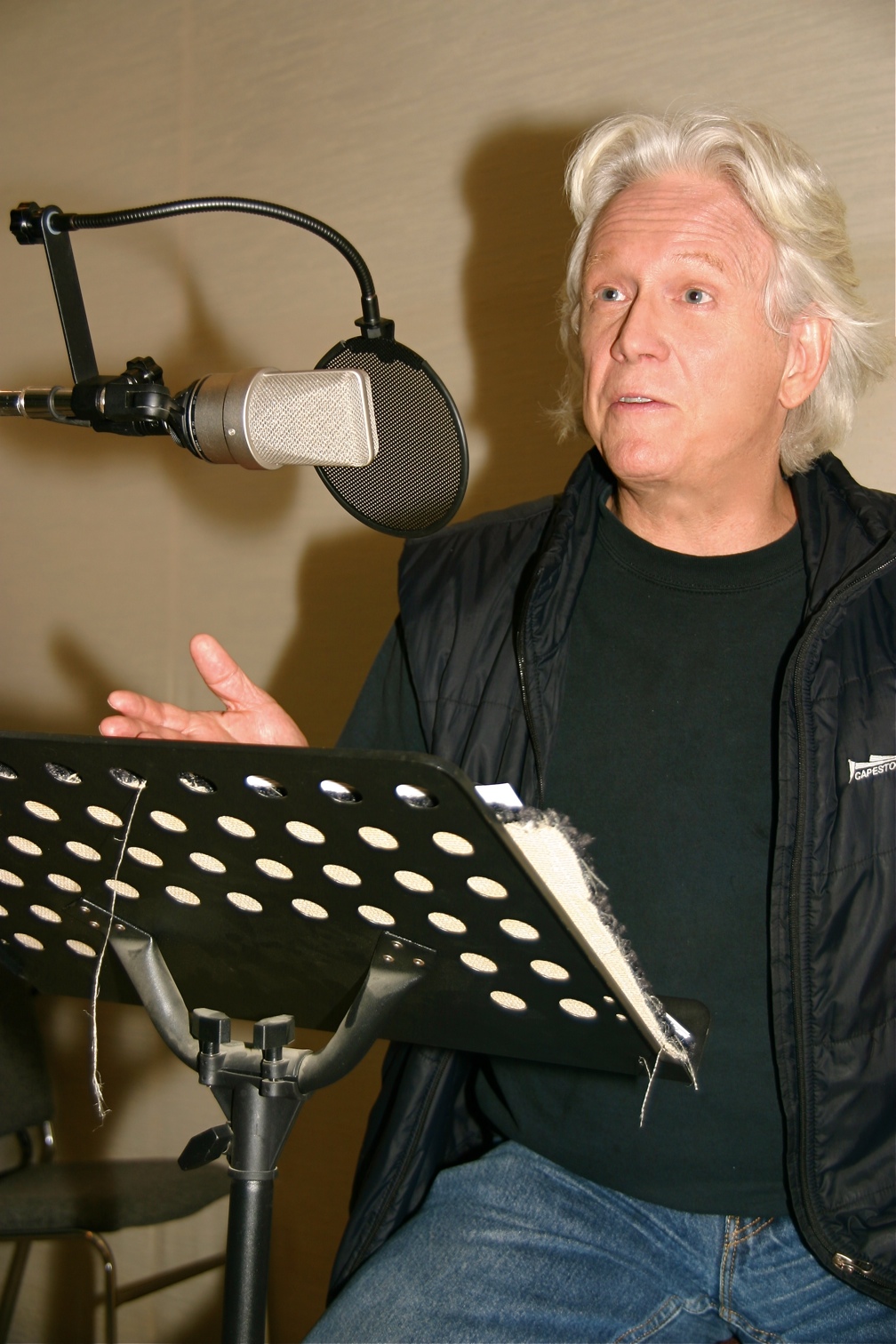
During his recording session, Davison had a few minutes to discuss his inaugural animated role, his personal history with super heroes, an early adoration for EC Comics, and his ascent up the fictional political ladder. We’ll let his words take it from here …

QUESTION: What’s it like being one of two characters without super powers in an all-super hero movie?

BRUCE DAVISON: Well, it’s par for the course. In X-Men, I played Senator Kelly and, as my son likes to say, I didn’t really have any powers – I just melted. It’s tough when your action figure can’t stand up. I had to stick it in a glass of water because it didn’t have any feet, just this sort of drippy stuff off the bottom (he laughs). So I’m used to not having any real strength powers. But President Wilson is a pretty macho guy, which is great.

QUESTION: And you’ve got a nice progression here. Marvel makes you a senator, DC makes you President …

BRUCE DAVISON: Yes, I AM the President (he laughs). And I actually have feet in this one, plus an eye-patch. So I’m definitely moving up in the super hero world.

QUESTION: How did you enjoy your maiden voyage into animation voiceovers?

BRUCE DAVISON: I’ve done books-on-tape, including a Stephen King book and a few other things. But it’s really interesting to be a character that will then be created as opposed to trying to fit in. I’ve spent a lifetime voicing over (looping) myself in films over the years. But it’s a lot easier to just create something and then let the animators put it together. Oh, and it’s just a blast doing the recording – it’s like being six years old again.

QUESTION: Were you picturing the character in your head while recording, or just focusing on conveying certain emotions?

BRUCE DAVISON: Well, I always try to look at my characters as being better than I am. That’s one of the reasons I guess I became an actor – because you get to create a persona that’s bigger or better or more interesting than your own. I sort of found President Wilson to be like Dale Dye, the guy that does all the military shows on History Channel. The guy who gets in the trenches. He’s been there, done that. So, I’d better shape up.

QUESTION: Did super heroes play a role in your youth?

BRUCE DAVISON: I hate to date myself, but my earliest memories are Flash Gordon. I would love playing Flash Gordon in the neighborhood. We lived outside of Philadelphia in Drexel Hill, and I would be Flash Gordon and my friend was Dr. Zarkov – and we’d get beat up by the Catholic kids, who were the clay people, on the way home from school. And then we’d have auditions for Dale Arden. So that was sort of my childhood fantasy.

QUESTION: Do you remember any first experiences with Superman or Batman?

BRUCE DAVISON: Oh, yeah – George Reeves working with “Truth, Justice, and the American Way” – you know, in the ’50s when there were just three channels on the TV, and you watched the Indian on the Test Pattern until nine when things started coming on. I did have a cape and I did jump off my stairs – and survived (laugh). I really loved running around the hill, trying to do the whole “Truth, Justice and the American Way” thing (hums the theme song). I’d try to take off just like he did, and end up sliding on my face down the hill. But that was always off camera for me and I figured they didn’t see that part, just the great take off (laughs).

QUESTION: How did comic books influence your upbringing?

BRUCE DAVISON: I was a major EC Comic freak. I just loved them all. “Tales Of The Crypt,” “Weird Science” … all of the older stuff. I just really loved the artwork – Wally Wood and all of those great artists. But they scared the bejesus out of me as a kid. I remember one very vivid comic in which a baseball player would spike people, sliding into everybody, so they cut him all up and played baseball with his head and used his legs as the bats. I think they used his trunk as home plate. That really scared me (he laughs). It was a really interesting time. They used to run articles in the comics about how people in Congress were trying to make it a Commie plot to ban EC. I found that really interesting – that was really the dawning of my first understanding of politics and censorship.

QUESTION: Why are superheroes important for us?

BRUCE DAVISON: I think it gives us a sense of idealism and strength that we don’t have but we wish we did. It’s like, why do we create religion? Because we need super heroes to take care of us, to live up to.

QUESTION: You’ve done so many different things. What do people most often recognize you for?

BRUCE DAVISON: Well, if they’re my age, probably Willard, because that was an impressionable movie when you’re young. The younger people know me from X-Men. And then if you’re 12, it’s Knight Rider. It’s as though every few years something comes along and then I’m sort of remembered for that. But people don’t really know that I can do anything else until the next time.

QUESTION: Did you learn anything from your first animation voiceover experience?

BRUCE DAVISON: I learned it’s a lot of fun. It really is. And you just have to sort of wing it with the other actors. You do have to work within the iambic pentameter of the technical world of the medium. You can’t pop things and you can’t get too close to the microphone and you can’t get too breathy. You really have to sort of create a character vocally within a framework of technology. So you can’t step out of it in order to do something that maybe you would do as an actor on film or on stage. When you’re on stage, even a whisper, you have to reach very far away. In film, you can be much more intimate. But just using your voice, you have to create something that’s somewhere in the middle so that it paints a picture and yet it’s not intimate enough to get lost.

For more information, images and updates, please visit the film’s official website at www.JUSTICELEAGUECRISIS.com.

Arcana #1 Preview

Arcana #1, the new full colour quarterly mag that’s a print extension of the Extra Sequential on-line mag I co-created, goes on sale at comic book shops on January 27. Here’s a preview of our 96 page first issue! You can also see it here.

View this document on Scribd

David Mack Interview Preview

The fine folks at davidmackguide.com have a preview of our 8 page David Mack interview from next month’s Arcana #1 magazine. Go here and click on the pics to see them nice and large.

Angelus And Toy Story

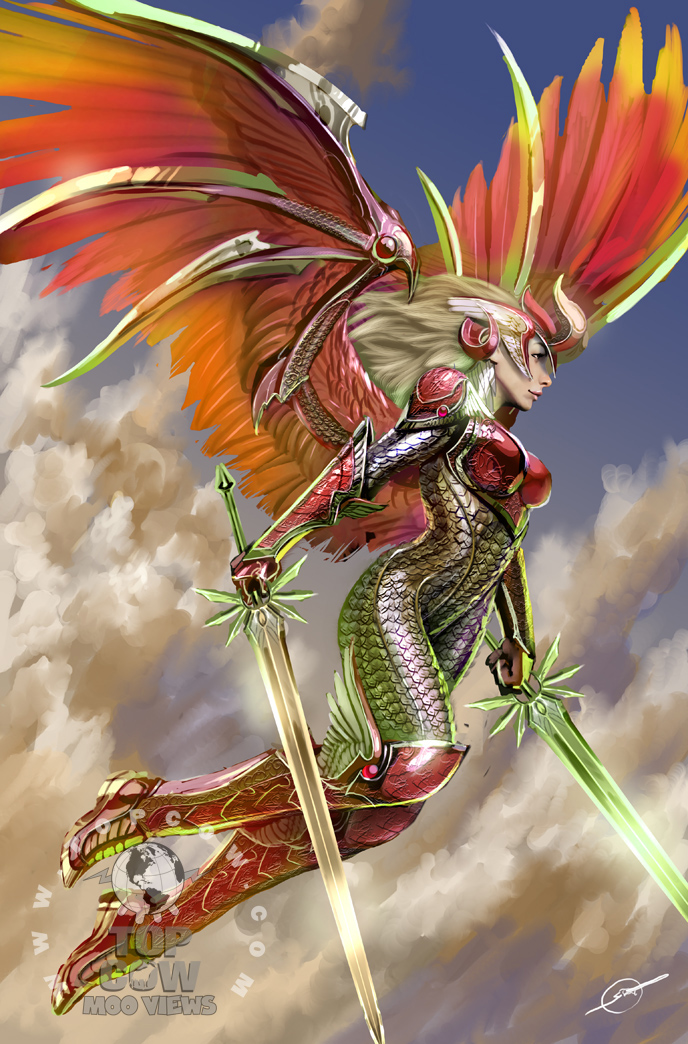
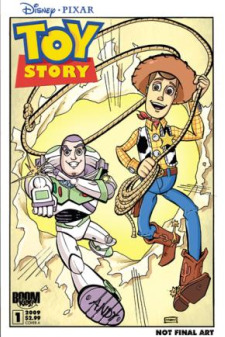
Now up at Broken Frontier are two new interviews of mine. One is with writer Ron Marz (Green Lantern, Witchblade) primarily about his new mini-series from Top Cow, Angelus. The other interview is with writer Jesse Blaze Snider (Dead Romeo) about his new gig writing Toy Story for BOOM! Studios.

Also up at Broken Frontier is my review of BOOM! Studio’s Irredeemable #9.

Nathan Edmondson Interview

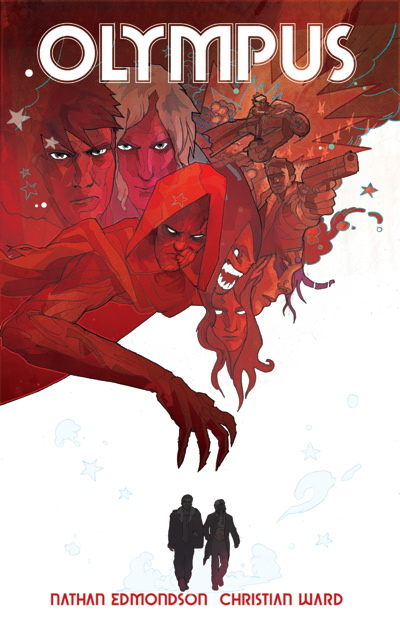
Up now at Broken Frontier is my interview with Nathan Edmondson, writer of the excellent Image series Olympus. The TPB of the series exploring Greek mythology in the context of a modern action film is now out. Check out my interview here.

Steve Mannion Interview

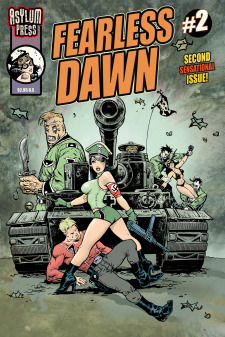
Now up at Broken Frontier is my interview with Steve Mannion, from Asylum Press’ Fearless Dawn series, for which words like “cheesecake,” “romp” and “madcap” would be suitable descriptions. He’s a great artist too.

His The Bomb TPB is out now and the Fearless Dawn mini-series has just begun. If you like Tank Girl-like heroines fighting Nazis with tongue-in-cheek action and humour, then it’s an enjoyable romp.

William Baldwin Is Batman

I can’t really conceal my excitement for this film. It’s a great time to be a DC fan! The latest in DC’s growing line of animated films involves the Justice League and their evil counterparts from an alternate earth. I’ve chosen this film as one of the must haves for the first quarter of 2010 in next month’s Arcana mag.

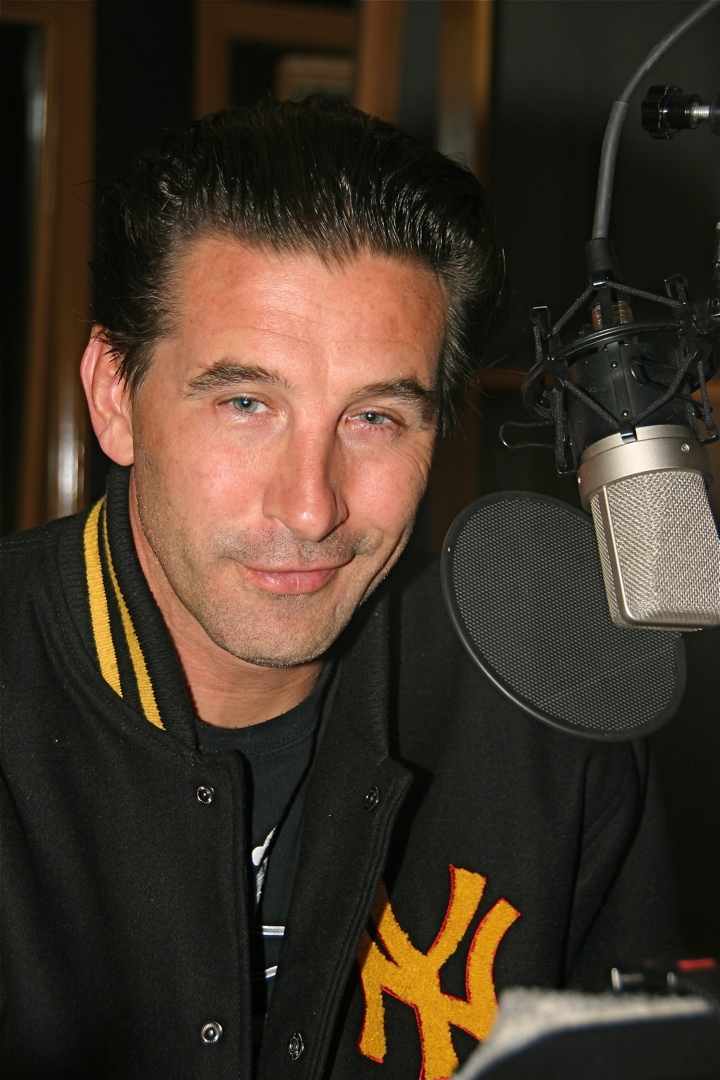
Thanks to Warner Bros, below is an interview with William Baldwin, the actor portraying Batman in the film,w ho reveals he almost played the character on film before George Clooney beat him to it.

DIRTY SEXY MONEY STAR WILLIAM BALDWIN ASSUMES THE ROLE OF BATMAN FOR JUSTICE LEAGUE: CRISIS ON TWO EARTHS

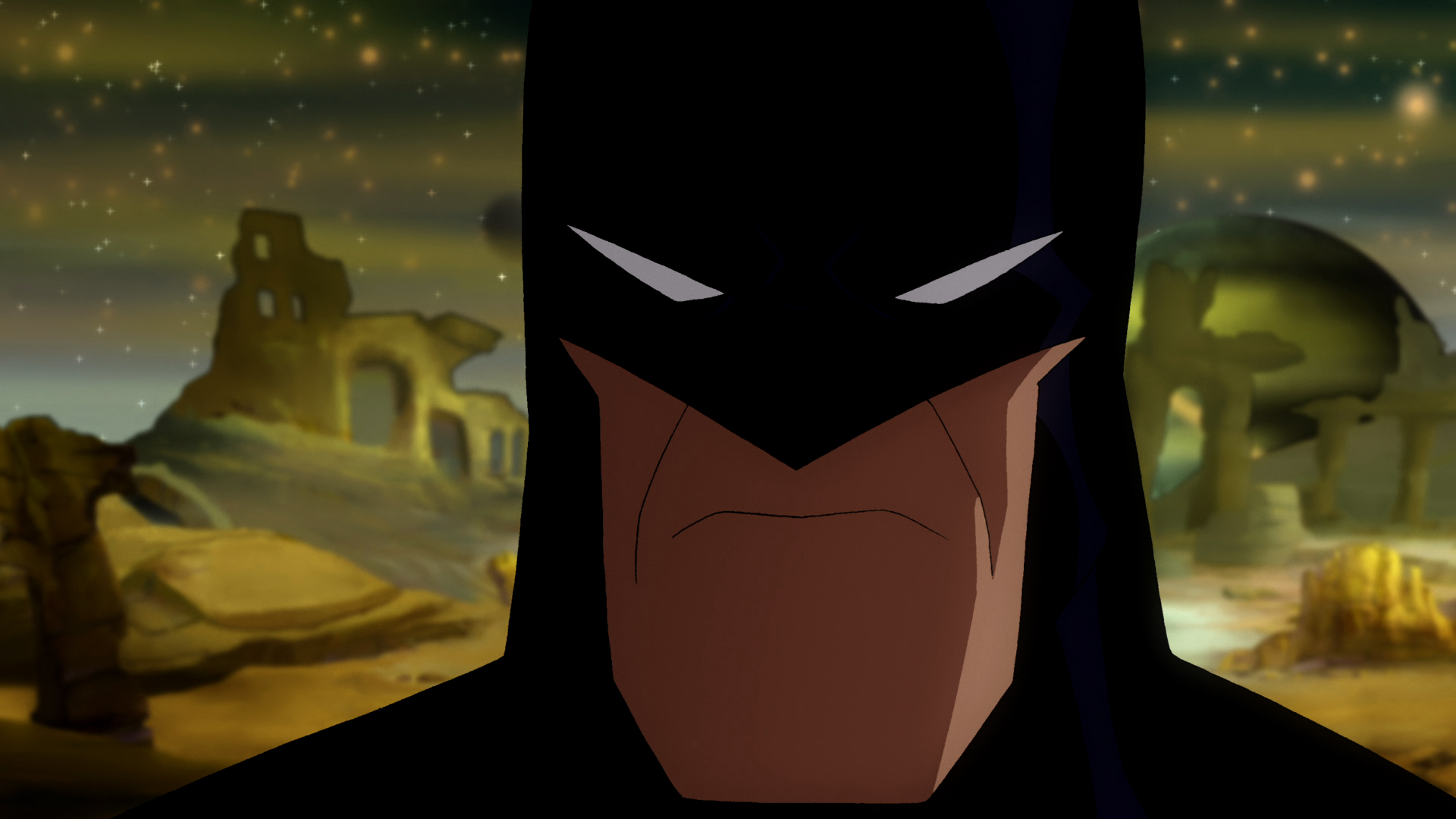
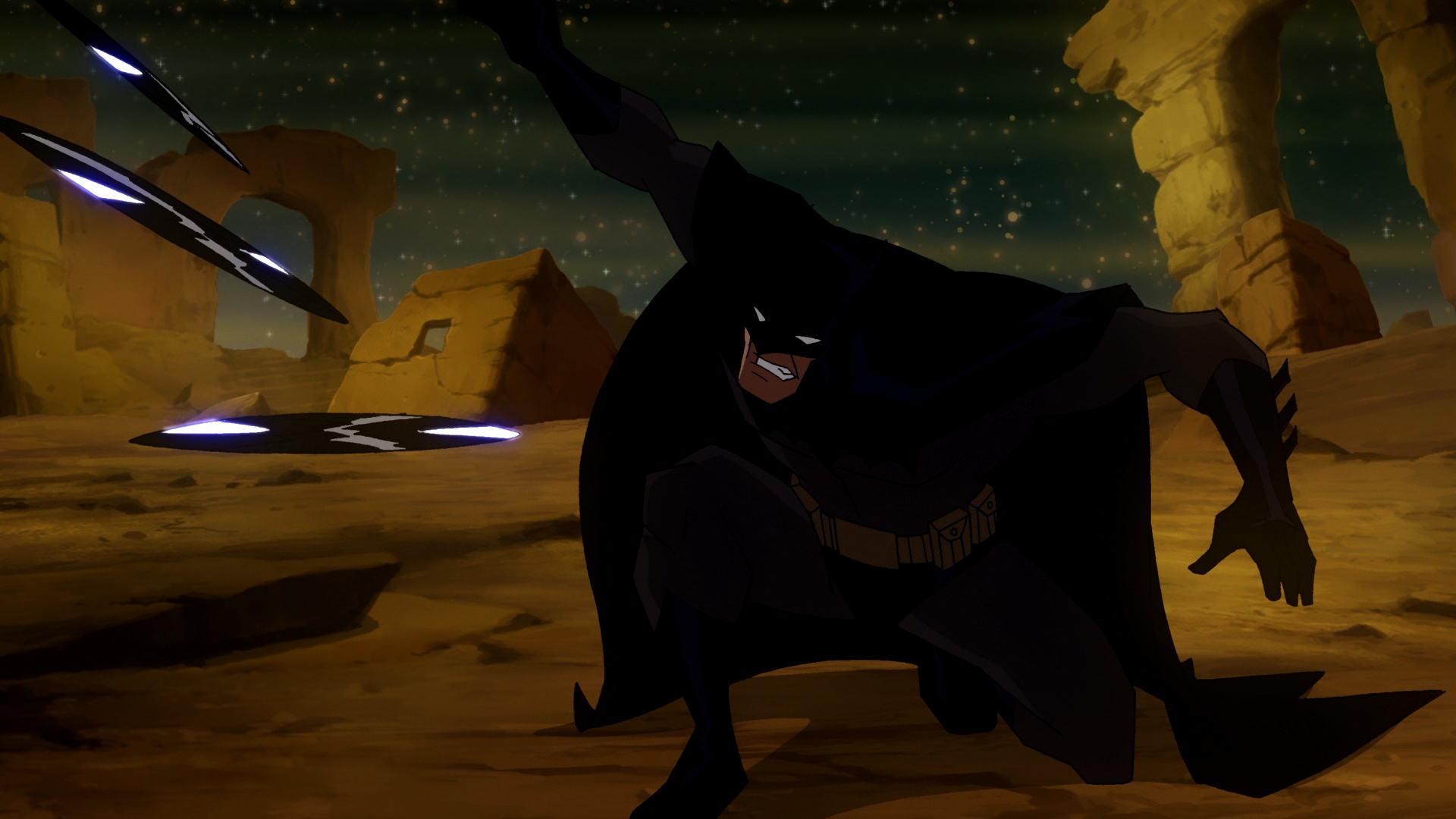
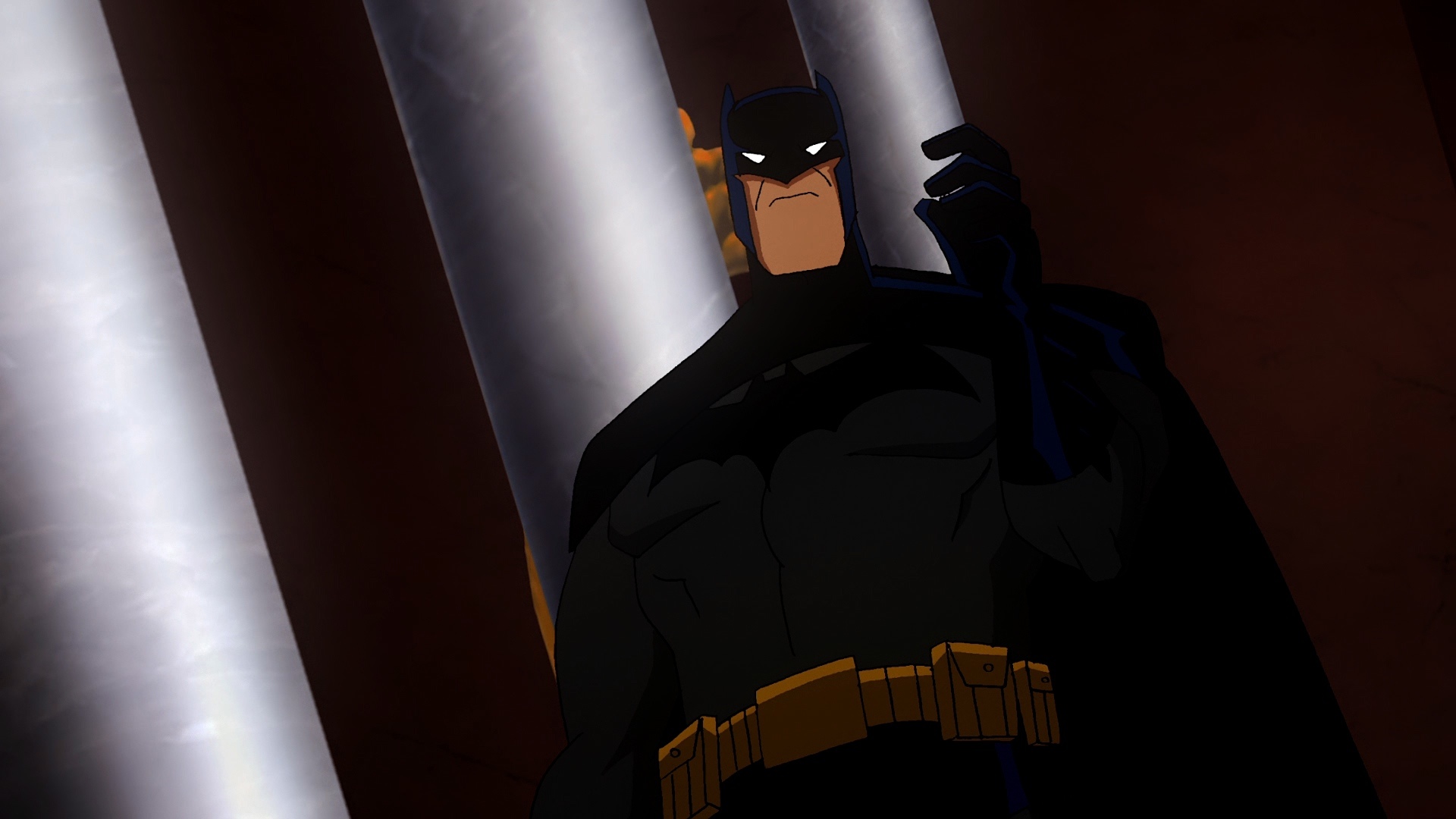
Dirty Sexy Money star William Baldwin slides easily into the famed cowl as the voice of Batman in Justice League: Crisis on Two Earths, an all-new DC Universe Animated Original PG-13 Movie from Warner Premiere, DC Comics and Warner Bros. Animation.

A fan of the super hero genre since his youth when the Baldwin brothers would role play in their backyard, William Baldwin has proudly, enthusiastically undertaken the deep, gravelly vocal tones of the Dark Knight. While Baldwin has crafted a fine career in live-action film and television, Justice League: Crisis on Two Earths represents only his second foray into voiceover for animation, having recorded a few episodes on the Nickelodeon series Danny Phantom.

Beyond ABC’s Dirty Sexy Money television series, Baldwin has offered memorable turns in the feature films Forgetting Sarah Marshall, Flatliners, Backdraft and The Squid and the Whale, the latter of which earned (ironically) a Gotham Award for Best Ensemble Cast.

Justice League: Crisis on Two Earths is an original story from award-winning animation/comics writer Dwayne McDuffie (Justice League). Bruce Timm (Superman Doomsday) is executive producer, and the film is co-directed by Lauren Montgomery (Green Lantern: First Flight) and Sam Liu (Superman/Batman: Public Enemies). The full-length animated film will be distributed by Warner Home Video on February 23, 2010 as a Special Edition 2-disc version on DVD and Blu-Ray™ Hi-Def, as well as single disc DVD, and On Demand and Download.

Baldwin took time after his recording session to chat about visualization techniques in the sound booth, his children’s influence on his choice of roles, the super hero roughhouse role play by the Baldwin brothers (particularly Alec Baldwin) in their youth, and his very nearly being cast in the live-action role of Batman. Now let the man speak …

QUESTION: What are your thoughts about joining the list of actors from Adam West and Michael Keaton to Val Kilmer and George Clooney to Kevin Conroy and Christina Bale – that have played Batman?

WILLIAM BALDWIN: I almost did join that group – I was one of Joel Schumacher’s top choices when Val Kilmer wound up playing Batman. Tim Burton and Michael Keaton had left, so Joel had the luxury of replacing Michael Keaton and he told me that his four choices – which was an eclectic, diverse array – were Daniel Day Lewis, Ralph Feinnes, Val Kilmer and me. I didn’t even know it at the time – he told me when I had a meeting with him later. The next time, when George Clooney did it, (Schumacher) said, “You were on my original short list with those other three actors, but the studio went with Val and this time I’d like to go with you.” And that Friday afternoon, I thought I was playing Batman – and then Monday morning, the headlines in the trades said that George Clooney had gotten the part. So apparently, I did actually come very close.

I was very excited to do this. I wasn’t really thinking about any past Batmans, but more of letting the material sort of dictate the choices that I make as an actor. What’s happening physically, what’s happening emotionally, what’s happening in the writing. That’s what really drives your performance.

QUESTION: How did you choose to interpret the character? And was there anything you wanted to do differently than what had preceded you?

WILLIAM BALDWIN: I was mostly influenced by whom I perceive Batman to be, with the possible exception that I think sometimes I allow a certain sensitivity or an emotional dynamic to give (the character) maybe a likeability or an accessibility. That’s almost an insecurity of mine as an actor – to want to breathe a little bit of those types of emotions into characters. I think I find them more appealing and more likeable and more human. What I didn’t choose to do is to go towards the darkness of the way the original Batman series was intended. Because Batman, in the original comic series, was a lot darker than the character that was brought to life in television.

QUESTION: Are there any personal attachments to Batman that make voicing this role special for you?

WILLIAM BALDWIN: It’s a number of things – certainly the history of the character. The people that have been lucky enough to portray Batman on screen, or provide his voice, is a short list and it’s pretty cool. I’m in good company. I enjoyed it as a child, and the character still resonates for me. And I’m a father of an 8-year-old, a 7-year-old, and a 4-year-old – my boy is sandwiched between his sisters, and he just loves the super heroes. We watch Justice League together. I try not to let him overdo it too much with television, but there’s great, wholesome messages that come out of that series. When I told him that I was playing Batman, his jaw dropped. I almost took him out of school today to have him come down here (for the recording session).

QUESTION: How many times have you said “I’m Batman” in the past week?

WILLIAM BALDWIN: Probably about a half a dozen, usually just joking with my kids and my wife. I was in the studio about a 9-iron from here, where my wife (Chynna Phillips) was recording, and all the band members were giving me different lines to say as Batman. Or having me improvise some lines. And we were having some wicked, twisted fun with it (he laughs).

QUESTION: It seemed you were quite focused in the booth, conveying all the physical and emotional traits as Batman. How immersed in the role did you feel?

WILLIAM BALDWIN: I take it seriously. And I enjoy it, especially recreating the sound effects of the fight sequences and stuff like that. One thing that was interesting to me was how clean they need the lines and, thus, how specific I had to keep my relationship to the microphone, and making sure there weren’t any other sort of ancillary sounds. When I’m doing looping for a film, I guess it’s sort of a method approach. I’ll put things inside my mouth and try to recreate the circumstances or the emotions that existed while I was performing. There’s nothing better than when you’re grunting from lifting something to try and create that sensation. I do a lot of visualization, too. So when you’re having the confrontation with Lex Luthor or Superwoman, sometimes I’ll look through the mike into the booth to somebody in the room. I’ll look at them and just sort of imagine it in my mind, to just pick somebody and lock into that, giving off this energy to them. It’s very helpful for me to have that specificity to lock into.

QUESTION: Did the Baldwin brothers play super hero games growing up?

WILLIAM BALDWIN: You’ll have to get my brother Alec in here sometime – he’s got the scars to prove it. Back in the early ‘60s, he tied a bathroom towel around his neck as a cape and was doing his Superman (impression), and he went through a plate glass sliding door. He ran right through it. He has these big V-shaped scars under his bicep and his forearm from all the stitches that he took when he was five or six years old.

So yeah, we did play super hero games. And my family was pretty rough. I mean, when we were playing super heroes, if there was a cartoon where somebody got thrown off the roof and they landed on the ground with a thud, then Stephen or I got thrown off the roof – into a pile of leaves, or into somebody’s swimming pool.

QUESTION: You rode along with the Chicago Fire Department to prepare for Backdraft. What kind of research went into this performance?

WILLIAM BALDWIN: First of all, some parts lend them self to that type of research and preparation more than others. Secondly, I had a fairly deep understanding of this character because I’ve been watching the shows and films and the character for 40 years. So if I felt like I didn’t have enough of an understanding, I probably would have postponed (the recording session). But when I was looking at the script on a plane a few days ago, I felt it was kind of a piece of cake based on my understanding of the character, and really fueled my attraction to the character and the piece. There’s a lot of two- and three-line exchanges rather than two- and three-paragraph exchanges. There weren’t a lot of monologues that required a lot of line memorization, or anything incredibly challenging emotionally. I just had to get into the rhythm of how the character speaks.

Batman’s spectrum of emotion is fairly narrow – for a number of reasons. He’s always in command, he’s always in control, he’s always holding it together, and he’s pretty tough relative to the rest of us in this room.

QUESTION: Does the Gotham City/New York connection hold anything special for a lifelong New Yorker?

WILLIAM BALDWIN: There’s always been something cool about (Gotham City) being based on New York – it’s where I’m from, where I grew up, and I’ve spent my whole career there. I remember referring to it as Gotham – not Gotham City, either – more often than I called it Manhattan or New York. I’d be on the West Coast finishing a meeting, and somebody would ask, “Where you going?” And I’d always say “Back to Gotham.”

QUESTION: Did having children that enjoy the genre influence your desire to give voice to an animated character at this point in your career?

WILLIAM BALDWIN: That definitely motivates a lot of the choices that I make as an actor now. I’m looking to be involved with projects that are family oriented. Not exclusively, but I’d like to do some things that my children can see. My brother Alec has done a series of films over the last couple years – Madagascar and Thomas (the Train) and things like that – and the kids got really, really excited about that. And we’re good friends with Chazz Palminteri, and Chazz does a lot of animated voiceover work. When they hear his voice, they really get excited.

I was doing a television series for two seasons, so we would watch that together as a family. Sometimes I would let the kids stay up, and they really got a kick out of it. I did a film last year with Henry Winkler called A Plumm Summer that won a couple of family film festival audience awards. So yes, I’m definitely looking for some choices. Because the films in my past, like Flatliners and Internal Affairs, Three Of Hearts and Backdraft and Sliver, Fair Game and The Squid And The Whale and Forgetting Sarah Marshall, these are all films that my kids aren’t quite ready to see.

QUESTION: You’ve tackled this legendary comic character. What other roles would you like to fill?

WILLIAM BALDWIN: I’d like to surprise some people maybe and do the voice of something that’s much more charactery. It could be much more ethnic. Jewish or Irish or a New Yorker. I have a lot of fun with that stuff. I’d even like to sing. I wouldn’t want to sing in the way that you would need Mariah Carey to sing, but just have a character sing and have fun with that, too.

QUESTION: What were your impressions of this animation experience versus some of your previous experiences?

WILLIAM BALDWIN: I’m getting better at it. I’m very tough on myself, so I’m never quick to say that I felt like it was great when it wasn’t. I usually have my own sort of standards that I set for myself. It felt like I was able to achieve my objectives more quickly. I think that comes with maturity as a performer and, uh, it’s nice to know. Because there’s been times where I’ve done voiceover work where they would normally allot two hours for someone who can bang it out, and they would have to allot three or three and a half or four hours. It’s not that I couldn’t do it quickly, it’s just that I’m such a perfectionist. I tend to be saying “Let me try that again. Let’s do one more … one more … one more.” I think I said, “Let me do one more” about 10 times today, which wasn’t a lot. Sometimes I say it 100 times. I think everybody thought that it felt right, it felt good, it sounded great. It’s always fun, but I want to get it right.

QUESTION: Is it difficult acting alone in the booth?

WILLIAM BALDWIN: It forces you to hone in and focus on the performance aspects and the emotional aspects of what you’re trying, and visual them in your head. Acting is not acting, it’s reacting. You’re reacting to what somebody’s saying and how they’re saying it. That was great about the television show that I just did (Dirty Sexy Money) because the props department would tie me in when we would do something like a telephone conversation. When I had one with Donald Sutherland, I didn’t have to come into the studio to do it. They would just have me call on my cell phone from my home in Santa Barbara, and I would call in when the camera was rolling and I would literally have the conversation with him. In the old days, sometimes you would have the other actor come in on his off day just to read that telephone conversation off camera. Then that changed and you would wind up reading this telephone conversation with the script supervisor who (A) is not an actor, and (B) does not know what the choices of the actor are going to be when they shoot his side of the telephone conversation in two weeks. That can be very difficult and very stilted when they cut that telephone conversation together – sometimes you can tell by the way someone’s reacting to a line that they weren’t hearing the actor do it on that day. They just interpreted what they thought the actor was going to do on that day, and they were wrong. I’m talking about stuff that’s very subtle, like someone raising their voice a little bit in the reaction to the other person. Little things. But that’s acting. You’re not just reacting to the words, you’re reacting to the way the words were said. Was it threatening? Was it menacing? Was it intimidating? Was it submissive? It’s all based on little layers and subtleties.

QUESTION: Can you compare acting on camera to acting in the booth, and how Andrea Romano was able to guide you through those differences?

WILLIAM BALDWIN: It’s sort of a mixed bag. On camera, you’re usually acting to another actor who you’re looking at, who’s in the room with you. Today, I was in the sound room and Andrea was behind the glass. And she’s not an actor. But for a director, from a performance standpoint, she was giving me more than enough. What really helped was the specificity of her notes. When something wasn’t right, she would give me a note that would 180 it, or she would give me a little subtle note. That was great. “You’re forgetting to add in this layer” or “Give me a little bit more urgency.” At one point, I throw a punch and Superwoman catches my fist and starts to squeeze my fist. And I said, “Do you want me to wince and scream in pain when she’s crushing my fist? And am I supposed to fight the temptation of revealing to a woman – because wouldn’t Batman wouldn’t want to give away that power that a woman is causing the pain.” I mean, it would be different if Lex Luthor or Superman were doing this, right? So we sort of hashed that out and found those sort of things as we were going along.

Marvel Gods

Or “gods,” actually. Seeing as I rarely mention the Jesus of this blog’s title, here goes….CBR have just uploaded their latest interview with Marvel’s head honcho Joe Quesada in which he answers fan questions as part of his regular Cup O’ Joe feature. Most comic publishers have various gods, demi-gods, and supreme beings all mixed up in a giant blender, so it won’t be any surprise to see how Joe mentions Marvel’s approach of religion in their comics. It’s an interesting discussion nonetheless. Read the highlights below.

Mad_Man_Moon asked a question a while ago that I’ve wanted to get to, which was, “I’m interminably curious about this subject and how it’s addressed at Marvel…Gods, and Christianity, Muslim, Judaism (etc, etc) in particular. The many different pantheons and beliefs are played out multiple times, and yet the Christian God and Devil are never seen (unless I’m mistaken*) in modern times. It seems odd that we acknowledge many gods and see depictions of them (more often than not), but the Christian, Muslim, Jewish (etc, etc) gods never come in to play. Why is this?”

I think there are probably multiple layers to this, Mad_Man_Moon. First of all, the gods of mythology lend themselves more to the superhero genre. They’re much more colorful, they are imperfect and their exploits were really more akin to the exploits we’ve seen done by heroes like those within the Marvel U. All the classic heroes we see in many ways share many traits with the gods of mythology, so it’s an easier transition. Also, in most monotheistic religions, you’re dealing with an all powerful and infallible deity, which, from a dramatic storytelling point of view, really handcuffs you because of their perfection and ability to solve problems as they desire.

And there is the sensitivity issue. These are religions that are practiced by the majority of the planet, regardless of where you fall, whereas the gods of mythology are not. I think it’s a sensitive issue, but more than anything, it’s just that the construct of the mythological gods makes for better dramatic storytelling within the pages of a comic book.

That said, from time to time, some aspects of today’s modern religions do find themselves into modern comics. I created the Santerians which are characters based upon the Orisha from the religion of Santeria. The Orisha lend themselves beautifully to the comic genre, as does the idea that priests who practice Santeria can become possessed by Orishas. Still, knowing that, I had to be very careful in creating them, because I wanted to be sensitive to those who follow the religion and I wanted to portray the characters in a way that wouldn’t be found offensive, but more aspirational. And, while we aren’t publishing them, I do know that there are comics out there that use aspects of Islam and Hinduism.

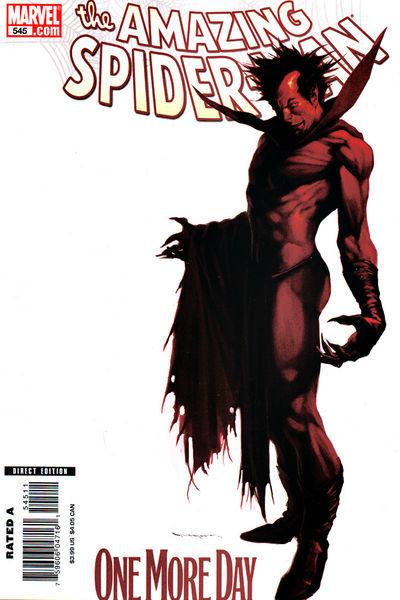
It does seem that there’s a little bit of crossover, particularly with characters based on the devil. Something like “One More Day” is built on the folklore aspect of monotheistic religions in stories like “The Devil And Daniel Webster.”

Yes it is. In OMD, it’s built around the classic Faustian pact.

However, Mephisto is an interesting character within Marvel, I remember reading Stan’s account of creating Mephisto. And while he had some of the trappings of Lucifer or Beelzebub, he is not meant to be Satan or have any religious implications. Stan built Mephisto as a super villain, but used the archetypes of the traditional iconography of the devil from classical literature and illustration. He always stopped short of making or naming him Lucifer, Satan or Mephistopheles or saying he was the devil. I get why he would create a character like this; it’s low hanging fruit. The devil, or the idea of a devil, has been one of the greatest villains and mischief makers in literature for centuries. But, Stan most likely didn’t want to start digging in and entrenching this super villain character that would interact inside a superhero universe within Christianity or any other religion. Also, there were probably greater sensitivities to doing this during the ‘60s than there would be later, as we created characters in the ‘70s like Daimon Hellstrom: Son of Satan – who incidentally is not Mephisto’s kid. So, while some may look at a character like Mephisto and say, “Hey, he’s Lucifer,” I would venture to say that he is something else.

Crisis On Two Earths Interview

The 7th entry in DC’s excellent animated films is focused on 2 things near and dear to any true DC fan’s heart – the Justice League and multiple earths. We’re featuring February’s Justice League: Crisis on Two Earths as one of our so-called Objects of Desire for the first quarter of 2010 in the debut ish of the Arcana magazine. Thanks to Warner Bros. below is an interview with the directors of this film.

DIRECTORS LAUREN MONTGOMERY & SAM LIU DISCUSS JOYS & CHALLENGES OF JUSTICE LEAGUE: CRISIS ON TWO EARTHS

When you’re dealing with a story so huge that it spans multiple Earths, it’s sometimes a good idea to arm yourself with multiple directors – as did the production team behind Justice League: Crisis on Two Earths, an all-new DC Universe Animated Original PG-13 Movie from Warner Premiere, DC Comics and Warner Bros. Animation.

Lauren Montgomery and Sam Liu, the animation directors of the past three DC Universe films, have combined their talents to bring Justice League: Crisis on Two Earths to the screen as a blockbuster tale of super heroes and super villains engaged in the ultimate battle of parallel worlds and, through a diabolical plan launched by Owlman, puts the balance of all existence in peril.

Montgomery has been an active member of the directing team behind several of the DCU films, initially guiding the middle section of Superman Doomsday before accepting the sole directorial role for both Wonder Woman and Green Lantern: First Flight. After directing several Hulk and Thor ventures for rival Marvel, Liu made his long-form directorial debut for the DCU series on Superman/Batman: Public Enemies.

As the film’s lead characters are armed with similar talents while coming from distinctly different perspectives, the same can be said of the two directors of Justice League: Crisis on Two Earths. Both Montgomery and Liu are relatively soft-spoken individuals, yet both are opinionated in their approach to animation, diligent in their work ethic, and dedicated to achieving the best possible outcome. Over the
course of making the film, they came to learn a great deal about the other’s vision, and the result is even greater than the sum of their talents.

Justice League: Crisis on Two Earths is an original story from award-winning animation/comics writer Dwayne McDuffie (Justice League). Bruce Timm (Superman Doomsday) is executive producer. The full-length animated film will be distributed by Warner Home Video on February 23, 2010 as a Special Edition 2-disc version on DVD and Blu-Ray™ Hi-Def, as well as single disc DVD, and On Demand and Download.

Montgomery and Liu paused from their current DCU projects (shhh … it’s a secret) to discuss their thoughts on the creation of Justice League: Crisis on Two Earths. FYI: The interviews were conducted separately. Montgomery’s answers are listed first because, well, decorum dictates that ladies go first …

QUESTION: How did you two go about co-directing Justice League: Crisis on Two Earths?

LAUREN MONTGOMERY: We kind of just went over the whole film together and it was really good to get two different points of view as a check and balance for
each other. If we disagreed, we found compromises that would work. If one of us felt strongly about something, we just traded off – Sam would take a sequence he felt strongly about, then I’d take one I wanted. But for the most part, we agreed. We both work in such different ways, it was interesting to see how someone else works and learn from it.

SAM LIU: We went through the film front to back, and if we ran into a problem or an area where either of us had an issue, usually where we thought it could be stronger or could be playing better, we usually solved it right on the spot. If we got to a section that was requiring a lot more revisions, one of us would jump on it and the other would move the rest of the film forward until we hit another rough spot. So that was our process.

QUESTION: What have you learned from each other?

LAUREN MONTGOMERY: Sam breaks things down a lot, he’s very analytical. I tend not to. He spends a lot of time thinking about the story and getting into all the
nooks and crannies of it, and I like to work with the general story. He’ll read the whole book, I’ll read the back of the book. I try to get the emotional points down so people can understand them, but Sam will go even deeper to use shots and set-ups to drive the point home, sometimes metaphorically. He thinks harder than I do.

SAM LIU: Our processes are very different. I like getting into a script and breaking things down. Maybe I don’t have the best ideas, but I’m pretty good at recognizing where things are needed. I really liked the back and forth process (with Lauren), talking about ideas and batting it back and forth to find a good solution. Lauren is more instinctual, she works more from the gut. And I think she works off reaction rather than an intellectual breakdown. I’m the other way by process. But I do feel like sometimes I over-analyze things, when sometimes it’s almost like the emotional flow of the movie is good enough. Lauren gets that. Sometimes logic can be bypassed if the scene is engaging enough, or interesting enough. It’ll bridge gaps and you don’t need to analytically fix all those gaps.

QUESTION: What do you think you might have taught each other?

LAUREN MONTGOMERY: I think Sam stresses out slightly less when I’m around. He stresses and I don’t. I think I calm him down a little bit. But when he’s
alone, he stresses out just as much. Hopefully I helped with that.

SAM LIU: I don’t think I taught her anything (he laughs). She’s a free-flowing,
shoot-from-the-hip kind of person, and I’m kind of an angster – I nitpick things. I like getting into the story, and from there some things do need working out – things related to the emotional journey of a character that need to be highlighted or punctuated to set something up for later. I’m a stickler for things like that. And I
think she saw those things.

I do stress, though – and there are times when I’m freaking out about something and she puts me at total ease. And then there’s times when I’m freaking out and she’s fighting me on it, and it makes it worse. I think we’re both control freaks in our own way, it’s just a difference in approach. I fixate on a lot of things, and she thinks things are just good enough, so let’s move on. We have an innate concept about the overall picture, but she focuses more on the acting and poses and timing and movement, and I think more on structure. I guess there’s a good balance.

QUESTION: Do you have a favorite scene in Justice League: Crisis on Two Earths?

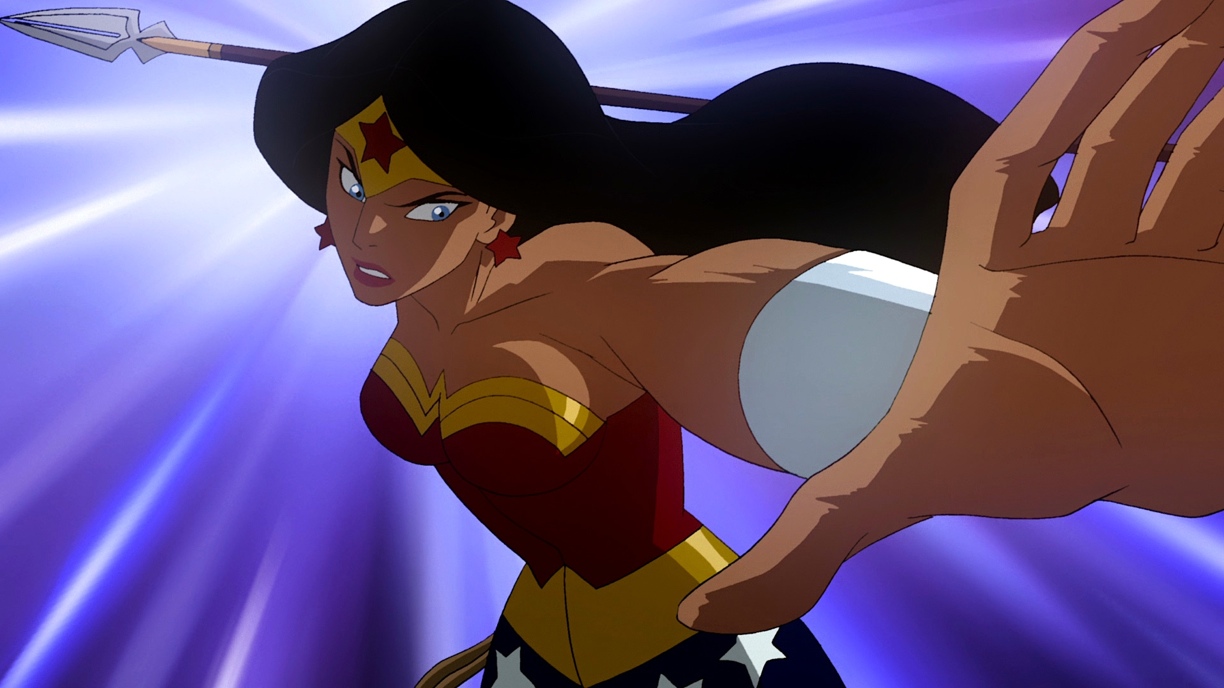
LAUREN MONTGOMERY: There’s a fight between Wonder Woman and Olympia that I thought was really beautifully animated. That’s always fun to watch. It was
boarded well, but the overseas animators took the drawings from the boards and really plussed it out. I think they just enjoy animating girl fights overseas because those scenes always come back looking good.

SAM LIU: More than one scene, I like the overall relatability of the Justice League characters. There was great character interaction. When I watch movies, I like something that has an emotional connection, and this film definitely does.

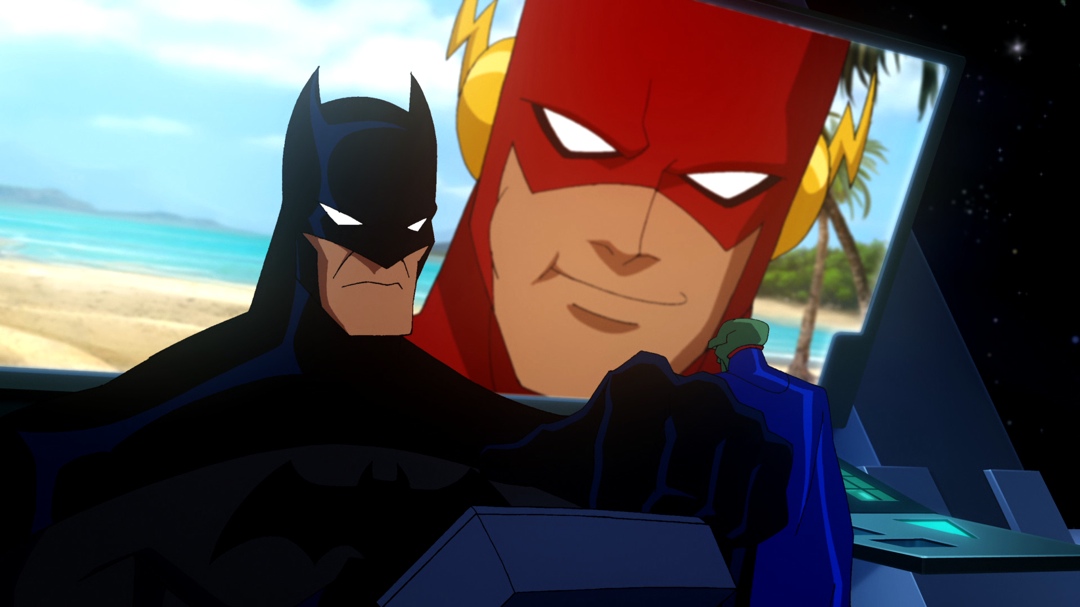
Specifically, I think the spectacle of these evenly matched supers fighting was really cool. Superman versus Ultraman. Flash fighting someone equally as fast. Strengths against strengths. Jay Oliva boarded the last fight sequence and the Superwoman-Wonder Woman fight is great. They’re both strong, super powerful women and I think it was brutal enough as is, but the way Jay made Wonder Woman use the lasso to slam Superwoman to the ground is pretty amazing.

The battle between Owlman and Batman is awesome, too, because it’s sort of this weird intellectual standoff. Owlman is so far into his psychosis as to how the universe operates, it’s very existential. His concept is crazy, but the way he reasons out the technology of how things work and the way he thinks, it gave us great room to improvise Batman’s reaction. And then when they actually fight, it’s brutal. They do these gadget fights, sort of a modern ninja battle. The sound effects on the planet, the colors, the way it’s animated, it all works really well. And James Woods’ voice is perfect – most of the Crime Syndicate is very thuggish, they’re all about stealing money. But Owlman has created the ultimate plan to annihilate everybody, and James Woods does this great build-up. It’s great acting. He plays
Owlman as a little bit off and kind of creepy, but not sinister creepy. His cadence is great, and his voice is almost charming in a way. It was a good mix of all the things I thought we’d have a problem with if we went too far one way or the other. It’s a great, tight sequence and I’m very happy the way it all came together.

QUESTION: What were the challenges of directing this film?

LAUREN MONTGOMERY: It was a challenge because we had a really large cast of characters – lots of main characters – and they all needed a decent amount of
screen time. Both the good guys and the bad. We had to make sure the audience got to know each of those characters and make sure they had a presence in the film that was important, and that was a challenge.

SAM LIU: Definitely the size of the cast and how to give enough screen time to
everyone. At one point, Green Lantern was a little light on having enough important things to do. We needed to add a bit for Lex Luthor, too, and I still don’t think we did enough. We added a fight to show that Lex can fight, too, and tried to beef him up a bit. But there just wasn’t enough screen time to accommodate everyone.

QUESTION: Do you have a favorite character?

LAUREN MONTGOMERY: Superwoman … just because she’s so wrong. She’s a bully, but she’s got the muscle to back it up. She’s everything you shouldn’t be, but is fun to work with.

QUESTION: What skills you learned or developed on past projects were you able to apply to this film?

LAUREN MONTGOMERY: We had the same animation studio that did Wonder Woman, so we were able to draw from the work done on Wonder Woman and improve on that. Overall, the animation was good in Wonder Woman, but there was some poor stuff, too.  I think they really improved – they saw what we
responded to in Wonder Woman and they tried to do what they knew we liked, and it was good.

SAM LIU: I think, this whole process was better for me this time, especially working with Bruce (Timm) and Lauren. I was able to let go a little bit and not have to over-think things, and still know that things would work out. I generally stress over everything until the very last minute. With Lauren, I sort of learned that you can say “that’s enough” and move on to the next thing. I appreciate Lauren and her patience, and that we’re still friends. In the end, you take care of the important things and everything will work out.

QUESTION: So, are you happy being an animation director?

LAUREN MONTGOMERY: It’s never been an easy job. It can be draining. But it’s still a really fun job. I mean, we get to work on great stories with iconic characters. I know people who would kill to work on Batman and Superman. When you think of it that way – well, if I weren’t working in this job, I’d definitely want to. A little bit of the excitement is taken off because I’ve done it so many times, but it’s still a really cool thing to do.

SAM LIU: I love doing long-form animation. I’ve been offered to go back to TV
series, but I like this better. Direct-to-videos are hard – you have a short amount of time to create a world from the ground up every time and, once it’s done, it goes on the shelf and you move on – but I’m so glad I don’t have to deal with BSP (Broadcast, Standards & Practices – the network’s content watchdogs). What I love most is that you get to tell stories people can love, you can have emotional pain and great action, and you get to work with things that are too adult for
children’s broadcasting. That’s the stuff that I like – telling full stories. So I’m very happy.

QUESTION: What’s your favorite part of the job?

LAUREN MONTGOMERY: The best part is when you see the film start to come back (from overseas animation studios) and it’s looking good. That’s a really
nice part. When you see it coming together to be something good, that’s very satisfying. You know all your hard work has paid off.

SAM LIU: I think it has to be working with the story and the characters. I love
the development of the characters and how they fit into the story, helping their growth, even if it’s subtle or small. I like finding the core of what our story is about and trying to push that story. I think most of the time it’s about the characters and their conflicts in the beginning, and how they resolve those conflicts. On this film, we were able to do that a lot even after production had been underway – particularly with Batman’s motivation, and showing why it was important for him to stay behind and get Watchtower online. Superman believes one thing; Batman has a different opinion. It’s a conflict, and it pays off later.

QUESTION: You’ve been living with this film for well over a year. Can you still watch and enjoy it?

LAUREN MONTGOMERY: I enjoy it most with a new audience. You get to see their reactions, and it makes me look at it in a new light. I enjoy watching all of our movies, which is a good thing – it’s nice to be able to watch what you’ve done and feel good about it.

SAM LIU: It’s hard sometimes, because when you’re making a movie, there’s so
many things you want and wish for, and you still tend to see the things that are missing. In this case, I’m comfortable watching because there are so many things that were done right. I’m not comfortable watching some of my older stuff. But this is one of the best movies I’ve ever worked on, and it’s very satisfying. I think
there’s the right amount of action, good conflict, good closure, and intelligent characters. They’re not just one-dimensional characters. So it’s satisfying to watch.

QUESTION: What’s the DC Universe film you hope to direct some day?

LAUREN MONTGOMERY: I want that Aquaman project, but I doubt we’ll every make it.

SAM LIU: I’d love to do Sandman from the Vertigo line. I don’t know what kind
of story that would be, but I’d love to work with Neil Gaiman because I really loved those comics.

QUESTION: Now that you can see the final product, how do the voices match their animated characters?

LAUREN MONTGOMERY: Gina Torres and James Woods are probably my favorites. Everybody loves Owlman. He’s such a unique character. Gina is really good as Superwoman – she has this strong, seductive, confident voice, and it makes you fear and respect her. Mark Harmon is really good as Superman. At first I was worried because I thought his age might come through, but his voice really works well. It’s funny because when we started watching the voice with the animation, it struck us how you could hear little tones of George Newbern and Tim Daly – two of our regular Supermans – in his voice, which is pretty cool.

SAM LIU: I really liked Mark Harmon – he’s got a gentle streak and it goes
really well with the strength of his voice. When he was in the recording booth, I thought he might be too gentle, but it works even in the scenes where he has to be more assertive or powerful. I think it works really well because it never crosses that line of him being mean or not genuine or sneaky. It’s very pure, just as Superman should be.

I also thought Josh Keaton did a great job as Flash. He’s hilarious. So much of these movies are based on the acting, and Josh really sold it.  The chemistry between characters was good, too. James Woods and Gina Torres have this strange relationship, and their acting makes them real characters. They really engaged their personalities. That’s what good actors do. The voices in this cast really flesh out the characters and give them texture.

David Mack Speaks

Awesome artist David Mack was kind enough to send me these two links relating to his work. Last Saturday he gave a talk at the Salt Lake Library. There’s some beautifully massive pics and two great videos right here.

There’s also an insightful interview with the man himself here. Mack is always generous with his interviews and are definitely worth reading and I don’t just say that because we have an interview with him in next month’s Arcana magazine! Yay!

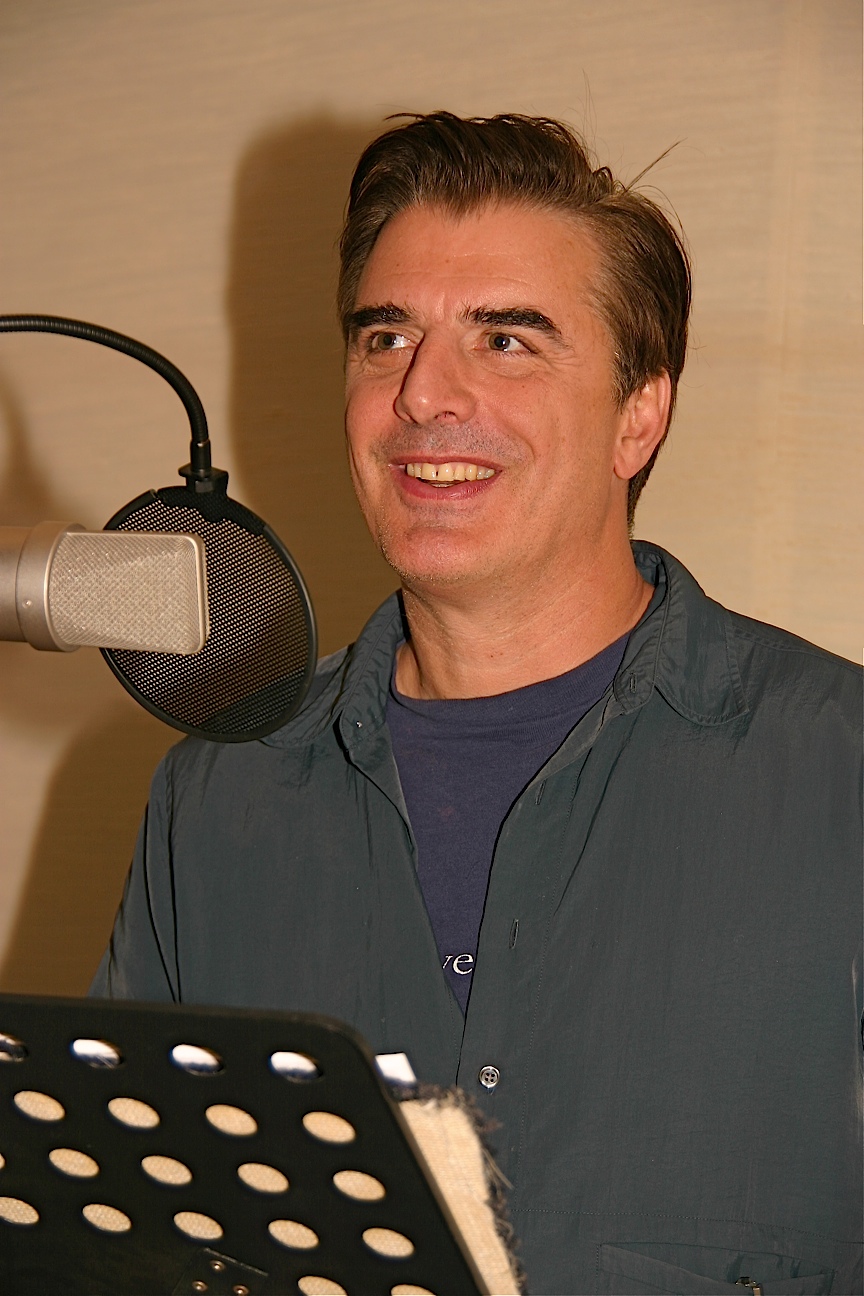
Chris Noth Is Lex Luthor

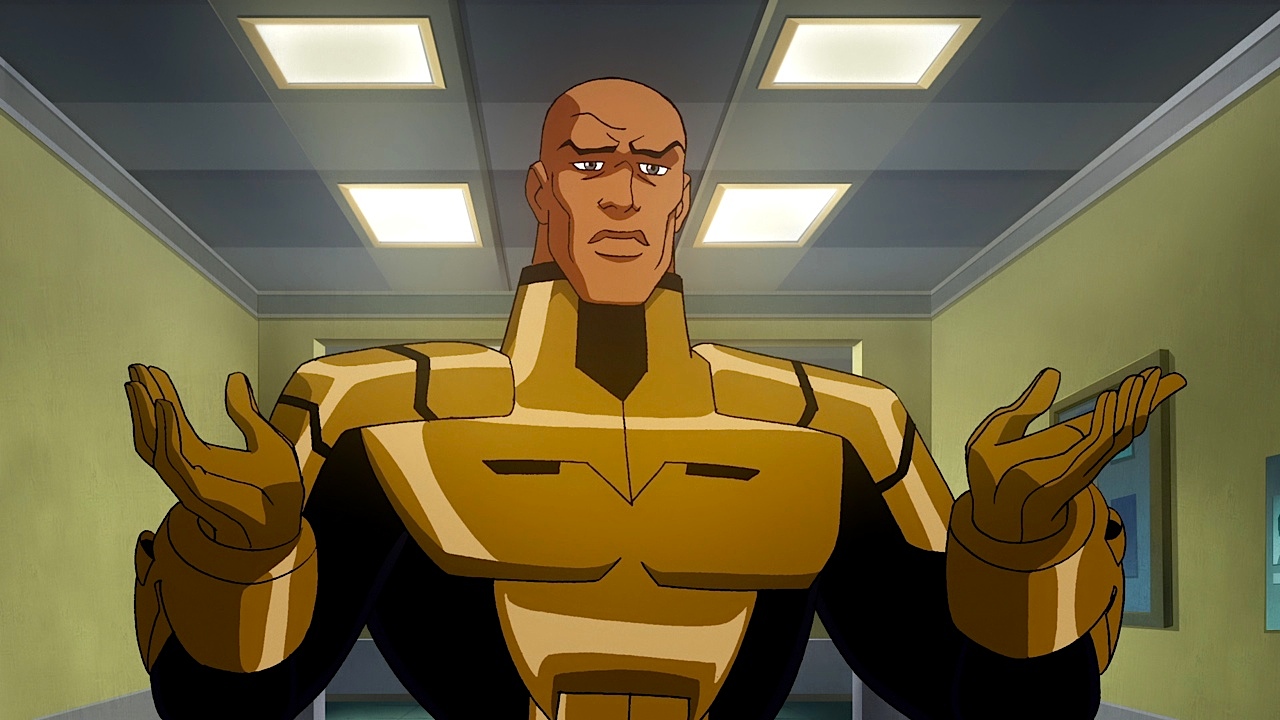
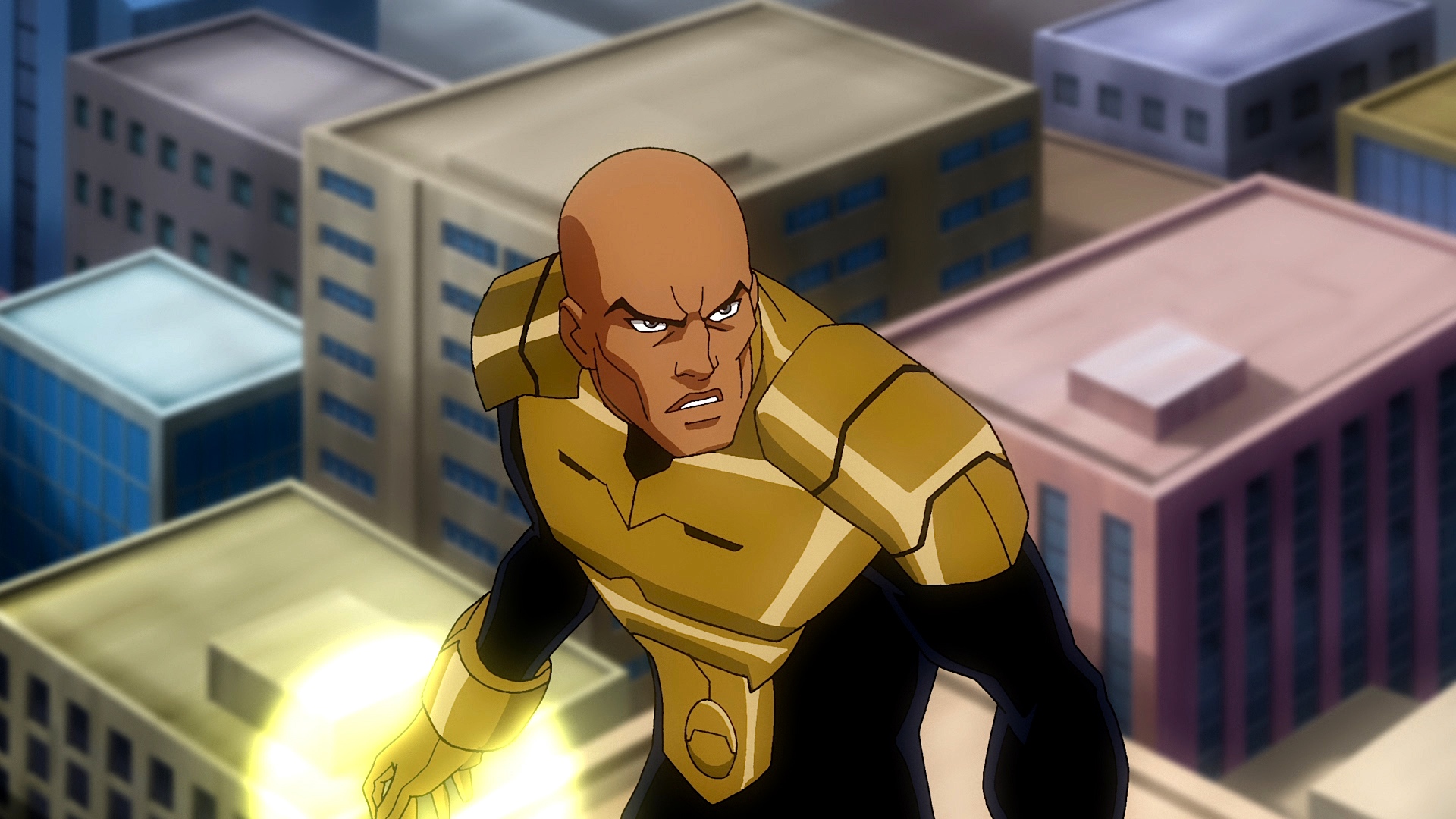
Not that fanboys would necessarily be familiar with the actor’s portrayal of Mr. Big from Sex and the City (though that does sound like a Warren Ellis superhero name, doesn’t it?) but actor Chris Noth’s geek stakes are improved thanks to his voice acting of the good Lex Luthor from February 23’s animated DVD, Justice League: Crisis on Two Earths. Thanks to Warner Bros. below is the official interview with the man himself and a few new images of the heroic Luthor.

If Sex In the City fans were confused over their see-saw love affair with Chris Noth’s Mr. Big, comics fans will endure an equal amount of trepidation over Noth’s latest performance – as the voice of a “good” Lex Luthor – in Justice League: Crisis on Two Earths, an all-new DC Universe Animated Original PG-13 Movie coming February 23, 2010 from Warner Premiere, DC Comics and Warner Bros. Animation.

In Justice League: Crisis on Two Earths, a “good” Lex Luthor arrives from an alternate universe to recruit the Justice League to help save his Earth from the Crime Syndicate, a gang of villainous characters with virtually identical super powers to the Justice League. What ensues is the ultimate battle of good versus evil in a war that threatens both planets and, through a diabolical plan launched by Owlman, puts the balance of all existence in peril. Justice League: Crisis on Two Earths is an original story from award-winning animation/comics writer Dwayne McDuffie (Justice League). Bruce Timm (Superman Doomsday) is executive producer, and Lauren Montgomery (Wonder Woman, Green Lantern: First Flight) and Sam Liu (Superman/Batman: Public Enemies) are co-directors. The full-length animated film will be distributed by Warner Home Video as a Special Edition 2-disc version on DVD and Blu-Ray™ Hi-Def, as well as single disc DVD, and On Demand and Download.

Noth has had a lengthy television presence as both Mr. Big in Sex and the City and as Mike Logan in Law & Order and Law & Order: Criminal Intent. He can currently be seen starring opposite Julianna Margulies
in the CBS drama The Good Wife. Justice League: Crisis on Two Earths represents Noth’s inaugural dip into the animated pool. In Los Angeles to record his 100-plus lines as Lex Luthor, Noth took time during the marathon session to discuss his first animated role. Without further ado …


QUESTION: You’ve had an extensive career in a number of acting mediums – is this
really your first animation voiceover experience?

CHRIS NOTH: I think I did about three lines of Mike Logan on Family Guy. That was a quick little gig. The character (Stewie) on the show carries a picture of Mike Logan in his wallet, so I was very flattered by that.
But that was just a few lines – so Lex is pretty much my first real animated role.

QUESTION: In that case, can you describe what your first “actual” animation voiceover experience was like?

CHRIS NOTH: I felt I had an instinct for it, and it was a lot of fun. It’s an interesting technique and, like any medium, whether you’re doing radio or certain kinds of narrative voiceovers for stage or movies, it has
its own sort of rules and performance values. I think the choices had to be bold and succinct and clear. To me, it appears that super heroes have to be powerful, but it also has to be real. You have to make bold
choices and go all the way through with them. That’s true with a lot of acting anyway. But with animation, it seems to me there’s nothing coy about it. The acting has its own subtleties. So you have to find that balance. And as long as you go with that instinct, it’s a blast.

QUESTION: Did you take a different approach to this Lex Luthor – a good guy Lex – than you would’ve taken with a typically villainous Lex?

CHRIS NOTH: I was extremely excited to be playing the ultimate villain from my youth. I remember how Gene Hackman portayed Lex Luthor with such great delight in the films, and I thought I’d be getting that Lex. So I was surprised to see that in this script, Lex is actually on the right side of the law. It required a whole new thinking on my part on how to approach him. I mean, he’s a super hero who’s in this very complex, parallel universe.  He’s actually trying to save all of reality from being destroyed. So I just took that adjustment and said, “Wow, I need to get up to date on my super heroes.” I’m guess I’m a little bit retro. (he laughs)

QUESTION: Do you feel any special significance to be joining the canon of actors – Gene Hackman, Kevin Spacey, Michael Rosenbaum, Clancy Brown – to have brought Lex Luthor to life?

CHRIS NOTH: Initially when I heard about the role, I thought about that great tradition of actors associated with Lex. And I really feel honored to be a part of that group. But this is a complete departure from those
performances. This time, Lex is on the right side of the law. He’s worlds away from the old Lex.

QUESTION: You’ve done your share of Shakespeare. Can you characterize Lex within the context of some of the great literary or stage heroes/villains?

CHRIS NOTH: Not this Lex. I find super heroes to be more archetypes of values of courage and fortitude and things like that. It’s interesting to me that the new world of animation, compared to when I was growing up, is so much more diverse in its characters. There’s so many more of them, and it’s a much more complicated world. The old comic books that I grew up on had these characters that were in many ways Shakespearean.
They were very big with their evilness in the same vein as Richard III in Shakespeare. Those characters relished being bad, and that’s always fun to play.

QUESTION: How did you find working alone in a sound booth versus playing off other actors?

CHRIS NOTH: It presented a different challenge in the same way that a radio play is different from being on stage, and being on stage is different than being in the movies, and the movies are different than being on a TV series. They all have different values that are fun to explore and to take a crack at. So I found it challenging and interesting to jump into that world.

QUESTION: Did it get easier when Bruce Davison joined you at the microphone?

CHRIS NOTH: That was even more fun because I know Bruce and it’s always more fun to work off another person. Sandy Meisner, the great acting teacher, used to say that what you do doesn’t depend on you. It depends on the other fellow. In other words, they make you respond. So when Bruce came in, there was a new kind of energy that I sort of relished. I didn’t have that many scenes with him, but he was a lot of fun and I think he made a great President.

QUESTION: As you are new to animation voiceovers, you’re also new to the direction involved. How did you find Andrea Romano’s direction?

CHRIS NOTH: (Animation) is very quick, it’s to the point, and very on message, and you have to just go with it. Andrea was extremely helpful to me to get some of the tone and in knowing what you have to keep in mind with what’s happening to the character in the scene. Whether it’s an intimate scene or there’s a lot of action, she keeps you on point. So she’s a very good field marshal.

David Tischman Interview

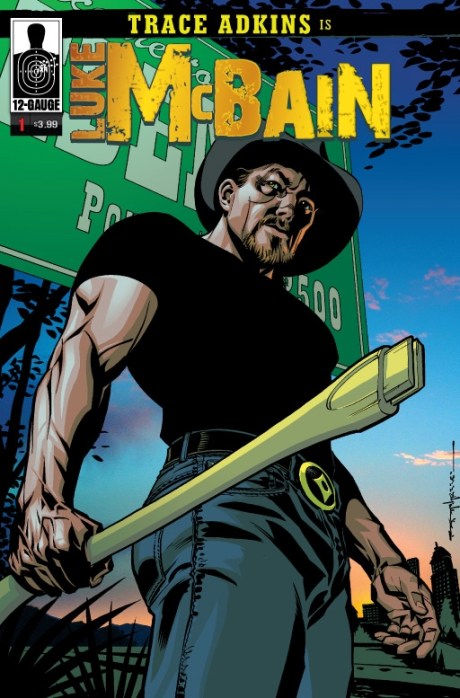
Up at Broken Frontier now is my interview with writer David Tischman. He’s responsible for series such as Bite Club, and the current Red Herring from Wildstorm. Also released this week is his new series from 12 Gauge Comics, called Luke McBain,with artists Kody Chamberlain and Brian Stelfreeze. It’s a 4 ish mini based on country singer Trace Adkins. Now before you shake your head, give the series a go as its action packed, justice touting story sounds pretty cool. You can read the whole interview here.

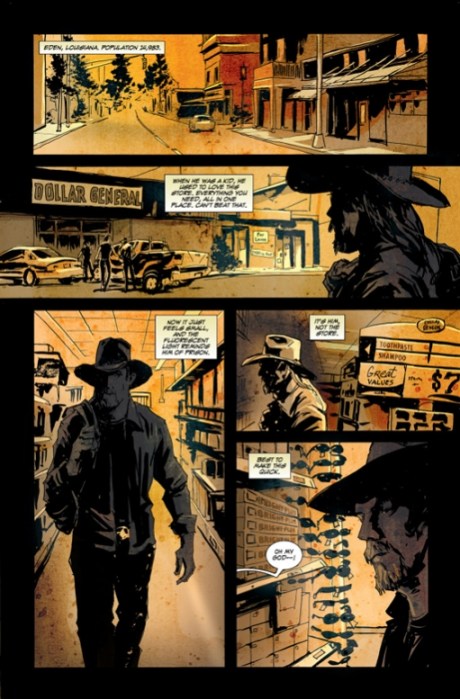
Luke McBain #1

Luke McBain #1 p1


  • Calendar

    • January 2026
      M T W T F S S
       1234
      567891011
      12131415161718
      19202122232425
      262728293031  
  • Search