
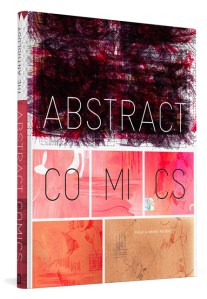
 Abstract Comics: The Anthology is an impressive collection of old and new work with unique pages covering exactly what the title says. Fantagraphics’ bold book covers the years from 1967 to the present, with a selection of abstract comics from over 40 artists.
Now I think I’m a pretty open comics reader. Having primarily grown up on superheroes however, it’s only been the last 5 years that I’ve expanded my reading habits to include indie titles. It was Craig Thompson’s masterwork, Blankets that woke me up to the world beyond spandex and ever since then I’ve pretty much bought an indie title every week.
Abstract comics is a foreign concept to me though. I’m surprised that I’ve never thought of the genre before. It makes complete sense and after pouring through this hardcover from Fantagraphics I have a greater understanding and appreciation for the form. This intriguing 208 page tome includes some of the best work from pioneers in the field, as well as new work created for the anthology by artists including James Kochalka.
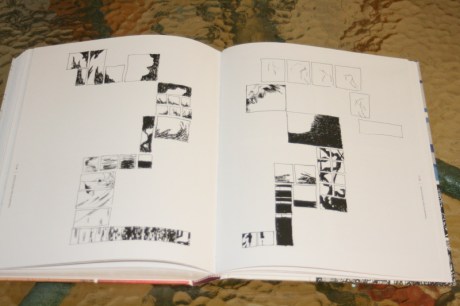
The introduction of the book is the only piece with words strung together that actually form an obviously coherent thought. Andrei Molotiu is the editor of Abstract Comics, and quite an authority on the subject. His work as an artist is reflected here and his introductory summary of what abstract comics actually are, as opposed to the use of the word in other art forms, is insightful. Even this obligatory introduction is treated with a loose abstract veneer, with plain text comprising the bottom half of each page, while above it sits the same words through the lens of simple shapes, which reminded me of the Kryptonese language. Yes, even with abstract comics, I can’t help but see things through my fanboy glasses. (There’s also a look at the history of abstract comics here). Molotiu defines the term thusly;
abstract comics can be defined as sequential art consisting exclusively of abstract imagery, and indeed most of the pieces in this volume fit that definition squarely. But the definition should be expanded somewhat, to include those comics that contain some representational elements, as long as those elements do not cohere into a narrative or even into a unified narrative space.
Whew. It’s the kind of talk that gets art students all sweaty. His 8 page introduction is littered with great work as he shows us the history of abstract comics, with examples of a bunch of artists unfamiliar to me to those who I didn’t expect to see, such as Wassily Kandinsky, Willem de Kooning, Winsor McCay and Steve Ditko.
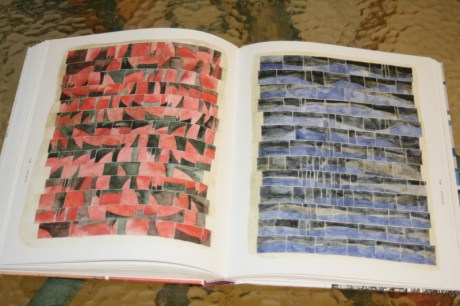
 Things kick off with a great piece from 1967 by R. Crumb, as originally seen in Zap #1. As you’d expect, it’s only 3 pages, but packs a lot of zest, with rounded figures, cheeky expressions and wild imagery. For the next 200 plus pages I was bombarded (in a good way) with every form and technique imaginable. I never knew what each turn of the page would bring. Black and white, pencil sketches, colour paintings and more – it’s all accounted for. Most of the works are only 3 or 4 pages long, with little or no text and some semblance of structured panels. I found myself treating the book like a portable art gallery as I let the images wash over me and tried to grasp their meaning. With close looks, there are stories of sorts to be told here, but as Molotiu mentions in the intro, abstract comics don’t have a narrative. I couldn’t help myself though and on some occasions examined the shapes in an attempt to form one. However, like all art the point is the enjoyment of the work first and foremost, rather than a desperation to cram it through out structured reasoning.
 Molotiu’s work, The Cave was definitely a “wow” moment for me with its bold colours and gem like qualities, as was Andres Pearson’s work, with its swirling organic structures. Through some pages I could see how the panels, or the shapes within those panels, related to each other, which gave clarity to Molotiu’s introductory definition as to why this is different from abstract work done in other fields, such as cinema. James Kochalka’s (American Elf) work is exuberant and playful, as is Mike Getsiv’s. Blaise Larmee’s I Would Like To Live There is simple yet elegant while Life, Interwoven by Alexey Sokolin is 6 pages of increasing fury.
It’s hard to describe the experience of reading this anthology, but it must have been that much harder to choose the artists whose work would be shown here, especially considering this is the first book of its kind and it covers 4 decades. Book designer Jacob Covey must also be mentioned as there’s an undeniable sense of purpose that holds these pages together, from the cover to artists’ credits to last few pages. It’s subtle which allows the abstract comics to own the spotlight.
The book concludes with handy artist biographies for those that would like to discover more about them, and there’s also a useful accompanying blog which features work from the anthology and elsewhere.
I’ll admit that it was sheer curiosity that made me read this, and after enjoying its diverse offerings it brought me back to my art school days when I was exposed to a wide array of artists. It’s obviously a difficult book to review as well, especially as there’s no Good Guy A punches Bad Guy B action, but it was a treat for my often superhero consuming eyes. This is a book for readers who like fine art or those who would like to expand their sequential art experiences. A hearty slap on the back for Fantagraphics for choosing to create this marvelous example of a widely unknown artistic expression.

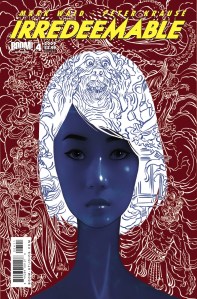 There’s a real weight behind this title thanks to the power of the name behind it. I grew up on many Mark Waid written comics. He was one of the creators that cemented my love for sequential art, and primarily superheroes. I can picture Waid typing away at the keyboard with an evil cackle, twirling his moustache and then perhaps tying a damsel to the closest railway tracks while he creates this series. Irredeemable is the product of Bizarro Waid.
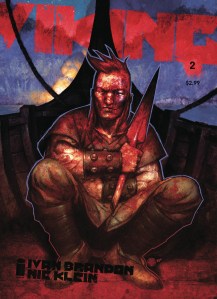 The first issue of this rather special 9th century crime series from Image sold out, which was no surprise. This follow-up is not a suitable jumping on point for newcomers to the title, as they’ll be scratching their heads over what exactly is going on. Even regular readers may be too, with its bi-monthly release schedule. Saying that, this was almost as enjoyable as the debut ish. A lot less actually happens, and there is very little dialogue in the first half of the book, but that serves the desolation of not only the environment but also Egil’s loneliness well.
 In a focused effort to give new readers an opportunity to discover Archaia’s unique library of titles, the publisher announced today a program to offer one new hardcover every quarter for the recession-friendly price of $9.95. Kicking off the venture will be the Vol. 1 hardcover collection of the acclaimed science-fiction thriller mini-series, The Engineer: Konstrukt, which will be available this August.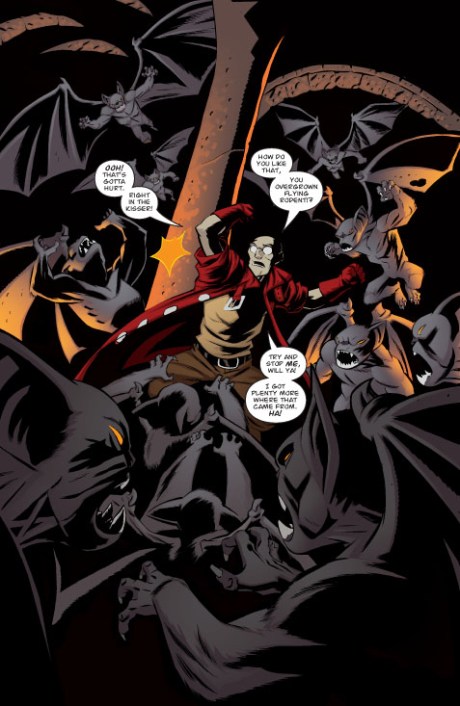
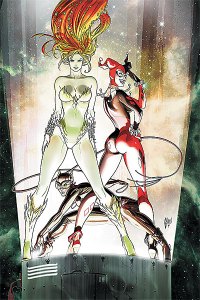
 I’m looking at my hefty haul of new comics this week, including the cheaper edition of the 2007 DC Comics Covergirls, which is a very pretty coffee table book focused on DC’s female stars from the last 7 decades. I’m also looking at three issues with strong female leads. Justice League of America #34 is the last ish written by Dwayne McDuffie, which is kind of a shame, especially since he’s just starting to introduce his Milestone characters into the DCU. However it’s no surprise, as he was getting
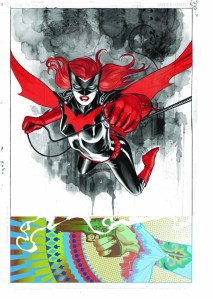
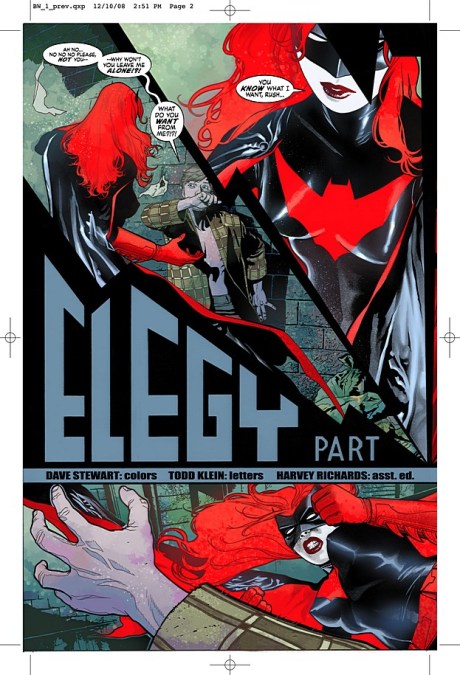
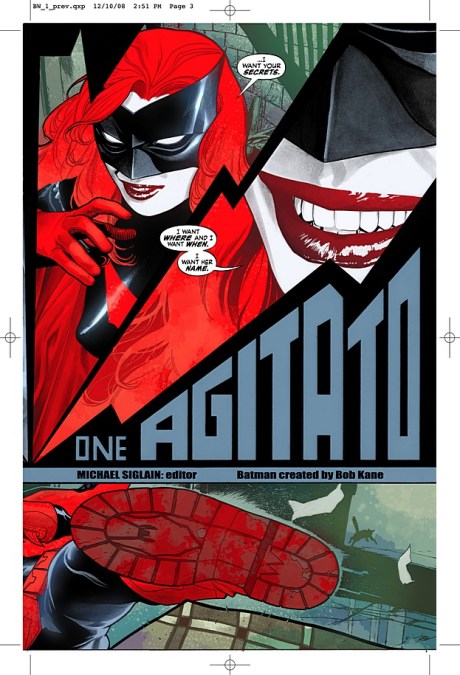
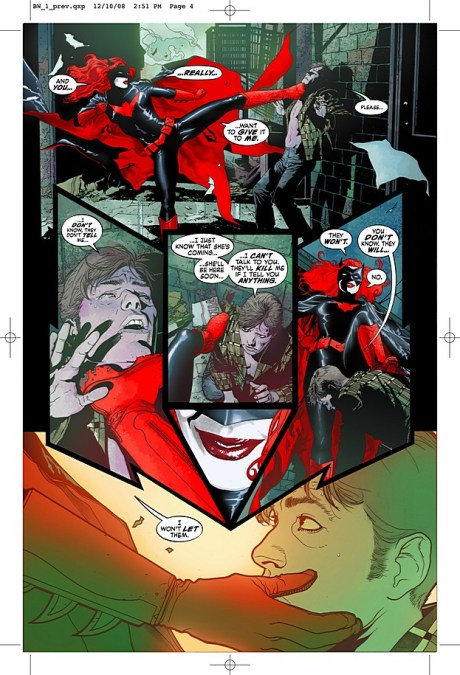
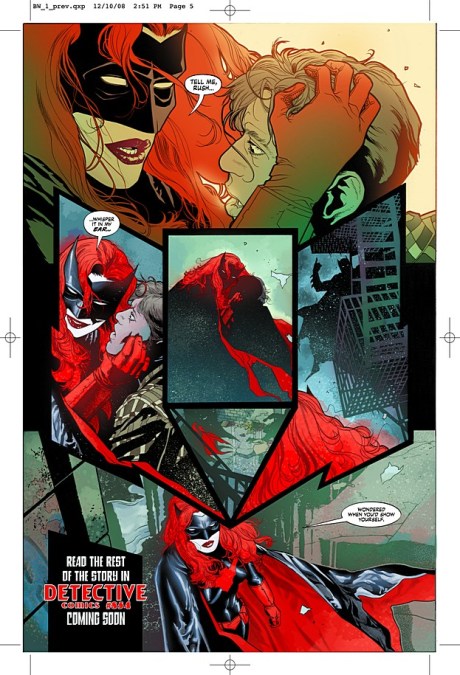
  It begins with the leather clad redhead chasing a crim called Rush for information, before a brief encounter with the new Batman, ie, Dick Grayson, who gives her an unnecessary hair care tip. We then see Kathy have a breakup at a cafe before she talks to her stepfather, a Colonel who seems to be her Alfred stand-in. With the visit of pale Alice to Gotham, the new leader of the Religion of Crime and a gun-toting Batwoman staring her down it’s obvious that something odd is being set up. Odd in a good way though. With this new direction, it seems like a Vertigo book in the middle of Gotham. Williams’ fight scenes are beautifully choreographed and he makes the pages his own. When Batwoman kicks butt, wow is the only appropriate response. The dialogue and exposition scenes are designed with more restraint which makes the action scenes pack even more punch.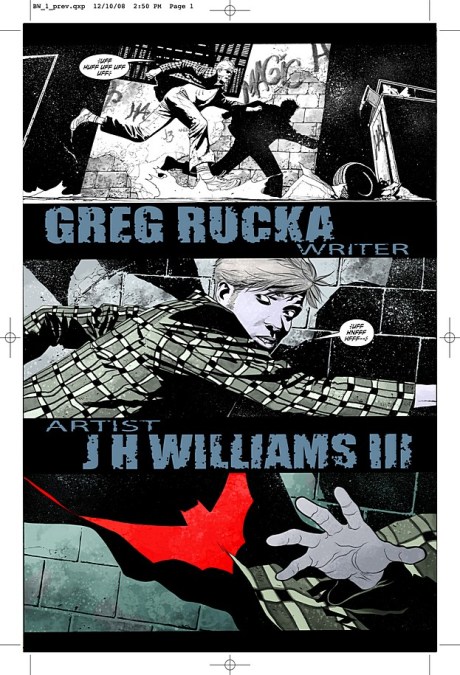

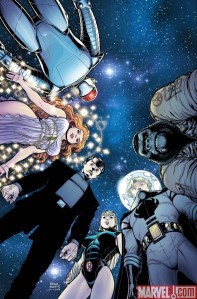 Marvel is proud to announce the debut of Agents of Atlas #0 today, available free to all fans courtesy of Marvel Digital Comics Unlimited! Collecting three new-reader friendly short stories from Secret Invasion: Who Do You Trust, Dark Reign: New Nation and Agents of Atlas #7, all written by critically-acclaimed scribe Jeff Parker, you’ll get the answers to your questions! Who are the Agents of Atlas? What role did they play in Secret Invasion? What’s their new mission during Dark Reign? And just what’s it like to take a peek inside the mind of the enigmatic Mr. Lao? Find out
 Relevant Books was a spin off of the
 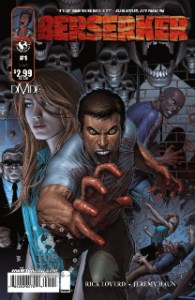 You know what Berserker is like? It’s like a Rob Zombie film on paper. This first issue will make sense if you’ve already read the excellent #0 primer, but there’s enough going on here to not be completely perplexed.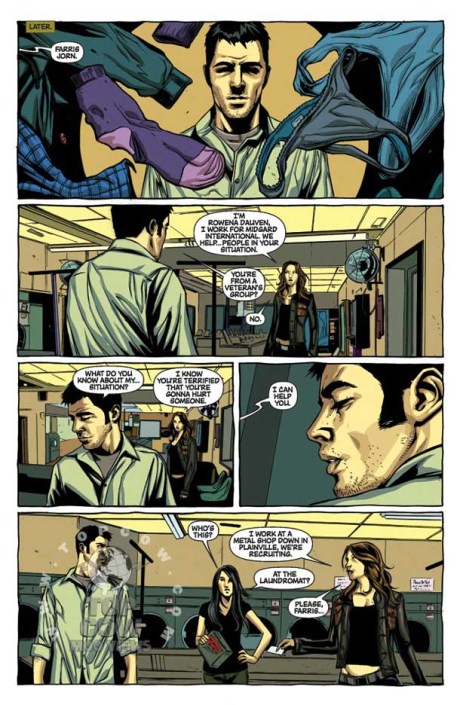
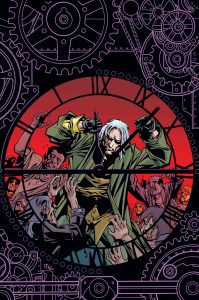 With an eye toward recruiting top creators as part of their exclusive partnership, Archaia and
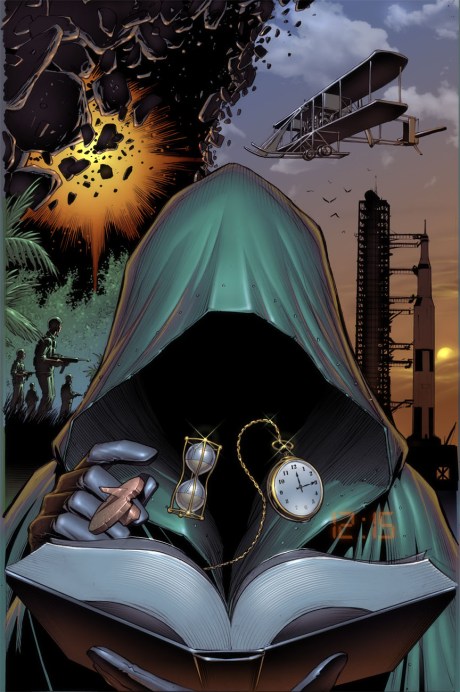
 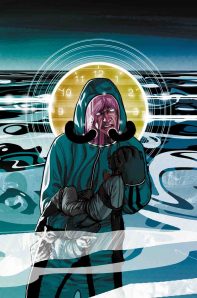 Adding to the fan buzz and excitement surrounding Days Missing, Archaia and Roddenberry Productions are bringing together four all-star creative teams to each work on a standalone, reader-friendly issue of Days Missing that ties into the overall mini-series storyarc.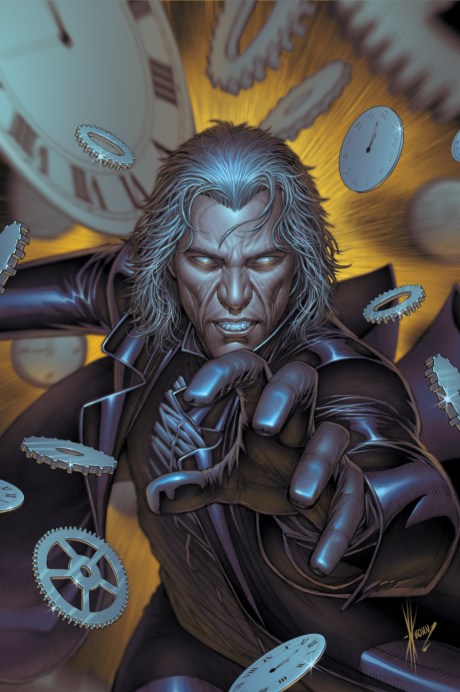
 I met self-taught artist Cassandra Reyes through
  comicbookjesus