Joe Chiappetta Interview

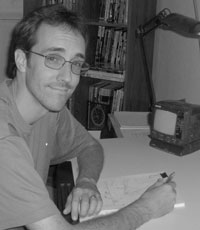
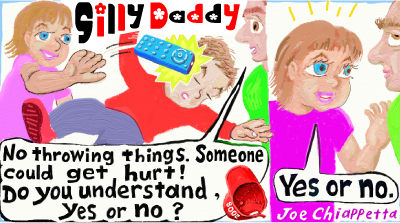
He could’ve quite easily been a wrestler or chess champion if he followed his high school gifts, but ultimately Chicago resident Joe Chiappetta chose to become a cartoonist. And he’s been doing it for a remarkable two decades. After becoming a father Joe launched his Silly Daddy comic in 1991, starting in print and then working his way to the web in 2004. Along the way, he’s gathered Harvey and Ignatz nominations, as well as a Xeric Award in 1998. His deceptively simple, usually one panel gags seem to be inspired by both reality and fantasy. They are sometimes groan inducing, sometimes thought provoking and more often than not, just simply funny.

Was this always going to be your dream job, rather than part-time wrestler/part-time chess champion, or were you always going to be some sort of artist?

Not exactly. At the age of four I wanted to be a police car when I grew up. I’m serious. The black and white blocky cop cars from the ’70s were so impressive to me. And they had such important duties –carrying guns and bad guys. However, by my early teen years, the idea of being an artist became more of a drive for me. Yet in retrospect, I do acknowledge that both the career paths of an artist and a police car were equally obnoxious. It still baffles me today that many of my key teachers in high school and college encouraged me to get further into fine arts as a career. And that’s what I did, completely oblivious to the fact that the demand for new fine artists was microscopic compared to high growth industries like the healthcare field. Yet I was willing and eager to drink the Kool Aid that the fine arts field was serving. I came out of Northern Illinois University thinking that becoming the next Andy Warhol was only a few paintings away. Being dangerously prolific and self-centered coming out of college, I had time to not just make great paintings, but also make comics while the oil paint was drying. I never dreamed that the mini-comics I was printing would get more praise and money than the paintings… but that is exactly what happened. And that is why today my social networking profiles say, “Cartoonist” in the occupation category rather than “Artist.”

What were the challenges and blessings of moving from print to the web as your medium of choice?

The biggest challenge of moving focus to webcomics over print comics for me is the eye strain of looking at the light emitting from the computer screen. In fact that’s why I was very slow to expand my web presence as the internet became more commonplace. Before I knew what to call this condition, I would get intense burning and aching in my eyes that I couldn’t explain. It turns out that I have something called “photophobia.” Literally it means “fear of light,” but practically, it means my eyes are more sensitive to light than the majority of other people. At first I thought it was some sort of made-up wimpy gen-x health disease, but after going to a few doctors in real pain, and struggling for years to get work done using a computer the way most people do, I finally accepted the truth of it; my eyes were not invincible. Once I accepted this, then I was able to make a number of adaptations to how I use the computer so it isn’t a pain to look at.
What are some of the adaptations you’ve made to still be able to use the computer?

It’s a lot of little things that make a big difference. Used in tandem, I can pretty much use the computer just as long as the next person. But take away just one of these and it’s like kryptonite:
1) Lower the screen contrast and screen brightness on every device you use. I even do this on my Pocket PC Phone.
2) Increase the screen font size on every device you use.
3) Lower your screen resolution. This makes everything bigger.
4) Keep desktop monitors about two arm’s lengths away from your eyes.
5) Take a lot of breaks.
6) Wear sunglasses as needed on screen.

7) Make your website background black. That is the only reason that my SillyDaddy.net site is colored the way it is. It has nothing to do with how some people say art looks good on a black background. I could care less about that. For me it’s a health issue. I can look at my own site longer without pain in the eyes because the dark background blocks a lot of the screen from blasting my eyes. So that’s the biggest challenge for me. Back to your question about what are the blessings of moving from print to webcomics, there are so many. The biggest one is ease of distribution. I scan an image, press upload and publish, and bam. It is available to the entire online population. That’s a big contrast to the laboring I drudged through: prepping the work for the printer, getting printer quotes, dealing with packaging books, paying for shipping, dealing with distributors, etc. There’s no comparison. Click — I’m done.

How has becoming a Christian changed how you view your work?

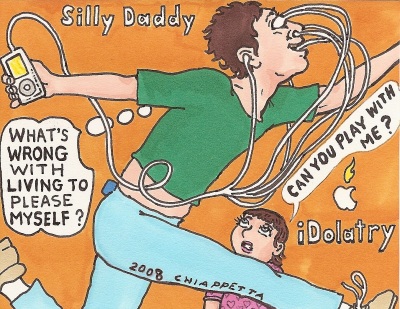
When I started in the art field, I couldn’t say this but now I can; being a cartoonist is not my main purpose for living and comics are not my god anymore. Let me explain that, because it’s not like I was bowing down three times a day to a statue of the comic god. One of the definitions of “god” is this: “one that is worshipped, idealized or followed.” And that is exactly what I was doing with my cartooning. I was devoted to it — so much so that there was little left to give to other relationships. Can you get some impressive art and comics out of such a setup –where the artist is fully committed, and in essence, worshipping his craft of making art? Absolutely. But then when you go and look at the relationships in that artist’s life, they are usually a mess. That was me. That’s where my heart was: worshipping, idealizing and following the business of comics. It should come as no surprise that this is one of the definitions of “god.” I was a practicing idolater. It should also come as no surprise that such a life may be filled with incredible activity, but that life is also terribly empty. Having other high-profile cartoonist like Jeff Smith of “Bone” plug my work is certainly an honor. But it doesn’t keep me warm at night. Again, that was me. Creative people are so susceptible to the pull of idolizing their career that many of them are simply unprepared to recognize and oppose the pull of idolatry. They think idolatry is just some sort of ancient practice that the uh… the people in that one third world country still do with statues and stuff. But it’s much more than that. Idolatry is alive and well in the entertainment industry. So becoming a Christian has exposed all these truths to me about what I was doing with my life: how unloving I had been compared to the love of Jesus Christ. That’s the kind of love that I want. And that’s the kind of love that all people really hope for, whether they acknowledge it or not. There’s a proverb that says, “What a man desires is unfailing love,” and that is so true. Who doesn’t want that? But only one person gives that sort of love — Jesus. He proved that on the cross. Everyone else, as hard as they try, will eventually fail you. But Jesus doesn’t fail. He conquers death. That’s where the real action is. So I must get in line with his plan. What that understanding does to me as a cartoonist is it puts things in perspective. Now cartooning is just another thing that I do, like riding a bicycle. But it’s not who I am. It’s like Number 6 would always say defiantly to the bad guys in the Prisoner TV series, “I am not a number. I am a free man.” In my case, I have become free in Christ. I am his disciple. That’s who I am. I also happen to make comics.
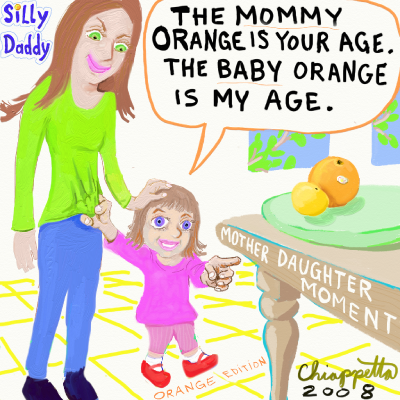
What has the response been like from your readers? Are there many other parents out there who can identify with your lessons and adventures?

The response continues to amaze me. Of course parents have a special appreciation for my work since they live this stuff every day. But most surprising is that I also gather deep interest and readership loyalty from people nowhere near having kids. They just appreciate the laughs and insight in a safe family place. Who doesn’t want that?

In a 3 year period, you received nominations for Harvey and Ignatz Awards, and then won the Xeric Award in 1998. Was that level of recognition a sigh of relief for you, knowing that people appreciated your work?

I think that’s a good way to put it. But awards and nominations are tricky, especially back then when my security was in my work and not in God. So once I started getting nominated for awards, the relief gave way to anxiety. I was looking for joy through the status that comes from awards and reviews. And so it became a point of frustration when I didn’t win or didn’t get nominated now and then. Don’t get me wrong. There’s nothing wrong with awards. In fact, if you’re giving one I’ll gladly take it. But I developed a bad attitude about them. I was the problem. I sought the praise that comes from men rather than the praise of God. And again, that is a dead end trip.

I hope you don’t mind me telling the world you are 40 years old this year, which effectively means you’ve been a cartoonist for half of your life. Is it still as scary/frustrating/rewarding today as it was when you first began?

Oh, not at all. Back when I started doing comics, all my hope, joy and faith rested on the success or failure of my comics. Anyone in the industry for more than a minute knows that this was a recipe for disaster. So now when I do comics, my hope, joy and faith is not in them. My hope joy and faith is in God. So if the Internet gets destroyed and no one can access Silly Daddy webcomics anymore, my faith doesn’t go down with the ship. What I am trying to say is that back when I started, my emotional investment was in cartooning. Think about that. I was beholden to the whims of a industry being overrun with video games, decreasing readership patterns, decreasing retail outlets and increasing corporate dominance. It’s crazy to be emotionally vested in such a situation. But that’s what I did. I can’t really say that I have a better attitude about approaching the comics industry because I am older, wiser, and have spent half my life in it. But I can say that I have a better perspective on navigation through the comics industry securely because of the clarity that comes from following Jesus Christ.
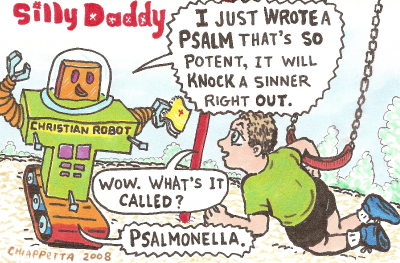
You’ve covered some pretty broad subjects over the course of Silly Daddy. Do you find there are certain themes that you continue to revisit?

Humor is huge in the series, but I don’t guarantee humor every time. Instead I go for profound or preposterous, and humor is often part of the mix. Most of the recurring themes in Silly Daddy revolve around family situations, particularly parenting, marriage and relationships. Then there is a much smaller percentage of my work that has a surreal, sci-fi, technology or Christian theme.

Those last four themes seem like an odd mix.

I think that’s why it works so well. I would boot up the Christian Robot strips as an example.

There must be times when you simply don’t feel like creating three new strips a week, and you just want to spend the day in front of the TV watching day time soap operas. How do you keep the momentum going?

Hah! My days of watching daytime soap operas (General Hospital) are long gone. But I know what you mean. Thinking in pictures really helps to keep the momentum going. You might say that is how I’m wired. I say that’s how God makes certain people. I think we all have been given some ability to think in pictures, but for most artists, thinking in pictures is a gift from God. The problem comes when you don’t acknowledge the giver. That’s when you turn the gift into a curse. Back to the question, on days when the ideas aren’t flowing like a river, I use to panic and think I was all washed up. But now I understand that there is a time for everything. On such days I might just do sketches or focus on other aspects of the business.

How do you see the future of your work, (besides perhaps Silly Grand Daddy?) Do you think you’ll ever go back to print on a regular basis?

Just to set the record straight, it’s not that I have abandoned print comics. Rather, in between big collections of my work, instead of releasing singe comic book issues of my work, which is so labor intensive, I will just release them on the web. Then when I have enough material for a solid collection of new Silly Daddy comics, a new book will come out. My next big graphic novel will most likely be called, “Silly Daddy Short Stuff” and it will be full color. In fact I am also toying with the idea of releasing the graphic novel at the same time I release a science fiction novel (all text) that I wrote. The working title on that is “Star Chosen.” But I might just call it Silly Daddy in Space. Yeah, I’m real creative — it’s about a father… in the future.

Finally, are you still a Silly Daddy after fifteen years of parenting, or have you now become Serious Daddy?

I think my wife and kids would agree that I still range between the two extremes: silly and serious. The difference now, and I do hope readers continue to pick up on it, is that reading Silly Daddy, you see the silly, the serious, plus the big deal: the everlasting joy.

New Silly Daddy comics can be seen every Monday, Wednesday and Friday here.
Jerrell Conner Interview

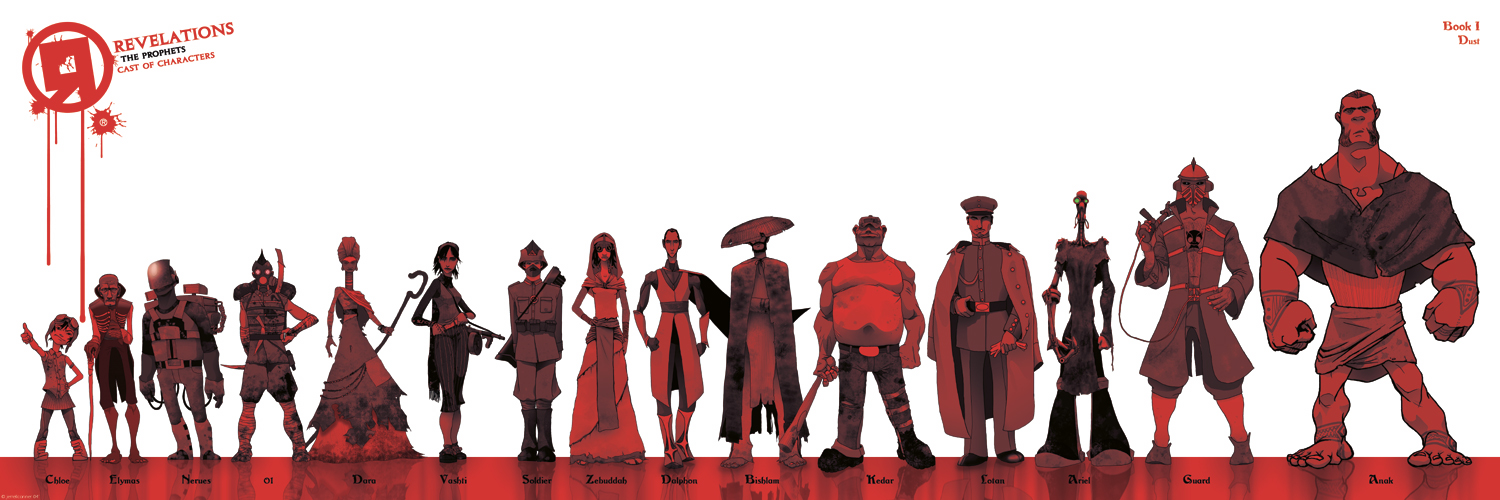
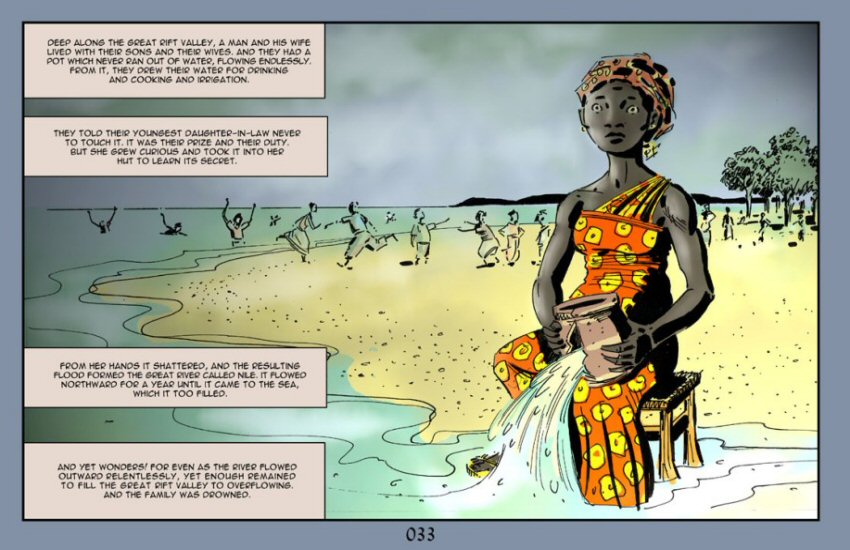
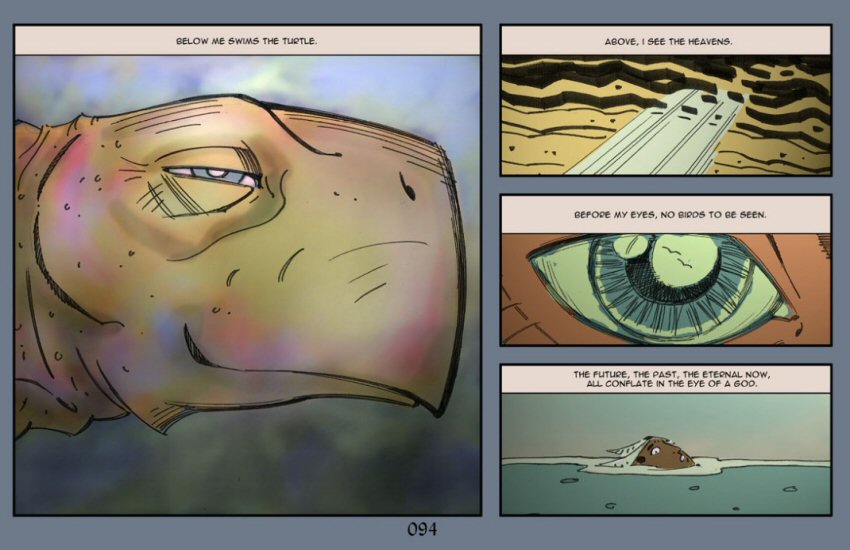
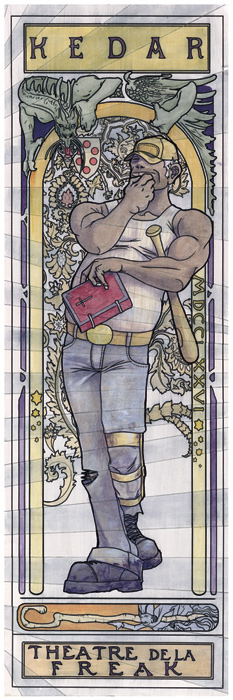
I met artist Jerrell Conner at this year’s Comic-Con. A humble, and obviously talented guy, his work has only been gaining more and more fans as of late, with exhibitions, posters, t-shirts and all manner of things focusing on his unique designs. In 2005 he released an original graphic novel, entitled Revelations: The Prophets, the first in a planned trilogy inspired by the biblical book of the same name. It’s certainly unlike most books on the stands, with certain sequences dedicated solely to prose, and uninhibited layouts. It may be too untraditional for some, and there are rare signs of a new artist’s hands, particularly in the imperfect spelling and occasional unclear art, but for a self-published writer/artist, it’s a bold debut, and shows the promise of a multi-discipline artist.

Revelations was initially your thesis project right? How different did the book end up being from your initial proposal?

Yes, it started back in 2001, in a quite different format than it’s current state. Initially it was a mock pitch for an animated feature. Not a book at all, basically a rough outline of the story (not nearly as flushed out or expansive as it has grown to be
over the years). Only 3 characters from the original project still remain (and have evolved quite a bit), there was a sculpt of one of the characters, process books, and concept
art, movie posters, and a short 3 minute animation which was essentially the center piece.

It’s quite a unique style you have. I can see touches of David Mack and Bill Sienkiewicz. Would you say they are influences on your work, or have I missed the mark entirely?

Hmmm, I wouldn’t say you’ve missed the mark, I am a fan of David Mack’s stuff and recently ran into him at a convention, but I don’t believe his work was something I referenced a lot while, or before, working on my book, same with Bill’s, but that’s more of a recent acknowledgement for me. Often people ask me about my style, and it’s hard to put in words, I don’t have a single place of reference for it. Just growing up in the time I did and in the environment that surrounded me, I seemed to soak up a great deal of influences. I’m pretty much a sponge, so there is some anime, concept art, G.I Joe, video games from the early 90’s, early X-Men and Dark Horse stuff in there, but nothing too
specific. I think two of my biggest influences when I started the Revelations series were Egon Schiele, and Ashley Wood, sooo awesome!

What’s your process for creating new artwork? Is it a combination of traditional tools as well as the computer?

Funny, I knew little to nothing about the comic industry/process. The Revelations book series just kind of threw me into the mix of it all (though as a fan, I really didn’t have aspirations in doing a comic), and I had a lot of figuring out to do, so stumbling through the process was…. interesting. The goal was to do a mix of traditional painting and Photoshop work, and that’s the way it started. I did some paintings for backgrounds for the first few spreads, going back and forth from paint to the computer, back to painting and so on. The problem was this was a 96 page graphic novel and that was taking waaay to long! So about 95% of the book ended up being Photoshop drawn on a tablet, which really worked out better in the end and was much faster. It was a learning curve to say the least, but towards the end I think the panels really began to come together and have a nice flow and color scheme.

Revelations: Book 1 was published in 2005, with plans to publish two further books by 2006. What happened that put those plans on the back burner?

I got lazy. No, not really. Actually the opposite, I got REALLY BUSY with all kinds of art work going on! The thing that sucks (I’ve learned) about self publishing is ALL
the responsibility you have to carry, and all the hats I find myself needing to wear. The first hurdle was that, once the books were published, having to do the press and promote
them, then touring and doing shows, and getting them in shops, because I was the distributor. Hustling them to as many shops and conventions as I could, the problem was that it was JUST me doing it, so there was really no time to work on the next title during that time. Secondly, everything was out of pocket, so with the bills and expenses I had just through living I needed to do other freelance jobs and art projects to pay the bills, and even make it possible to do conventions and shows, which was fine, because it was still art and I enjoyed it for the most part, but of course if all my time was spent doing those projects the next Revelations title was pretty much on a shelf collecting dust, partially
finished but still waiting to be completed. I more recently have made the commitment of not letting a week go by without finishing at least one page for the next book, moving around other projects to at least fit one day in for it every week, otherwise I fear it would never get done. Things that get put off, tend to KEEP getting put off.

Your art career seems to have taken off quite nicely, with work for clothing lines,
posters and the like. Was that always the hope for you, that you’d become a working
artist?

I’ve been drawing and doing art for what seems like forever. My earliest memories are of drawing Star Wars space battle scenes, making sound effects and the whole 9. It was like play time for me, so I’ve always known it was something I wanted to do. It kind of runs in the family, all my siblings and parents seemed to have some creative streak and artistic tendencies, but it wasn’t until I started winning competitions and contests in middle school/high school that I thought this was something that I could actually do for a living and not just for fun on the side.

How difficult is it too manage your burgeoning art career, with your comic book ambitions?

See two questions above! Pretty much those have been my main difficulties and struggles with that crazy balancing act betwixt the two. For me, Revelations is first and foremost in my mind, even though at times it has to take a back seat so I can do other projects, the main reason why I do those projects is because I feel those are opportunities for me to further the book series. They pave the way for all the stuff I do with Revelations.

My aspirations are not about becoming a famous artist or being popular. I’ve had this vision of this story in my head for years now, and telling it in a certain way. The goal is
just to finish it and get it out there in people’s hands, in a place where they can be exposed to it, get caught up in it. Whether or not they even know who the artist is irrelevant. It’s all about the story and getting across the message.

How do you think your faith influences your decisions as an artist?

I don’t think there are any decisions that AREN’T affected by my faith. It goes: God, family, then art. My passion for my beliefs is what drove me as an artist initially, and I feel this gift isn’t for my own benefit but for others. To NOT do it, to NOT give it my all would be a
disservice, not only to those who can gain from it, be uplifted, and inspired, but to the One who gave this gift in the first place.

What directions would you like your career to take in the future?

Early in college I had aspirations in the area of direction, but lately I don’t know. I really don’t look too far ahead. Right now, the focus is for finishing these Revelations books, and get them to the big screen!

What thoughts go through your mind when you look back at your previous work, and when
you see others enjoying it?

Generally i think, “Geeeeeze that’s crappy!” But we all have to start some place. I’ve seen my style and process grow a lot over the years. I do understand however that without the early work back then I wouldn’t be here now. I get a big kick out of it when someone actually likes my work or the books. It’s more of a surprise than anything. It is reassuring though, and makes me feel like maybe I am doing something right and not wasting my time following the wrong calling, like I should have been a doctor or plumber or
something.

Go here for a very well done video piece on indie artists at Comic-Con 2008, including Jerrell, and go here for his official site.

Some New Kind of Slaughter Interview

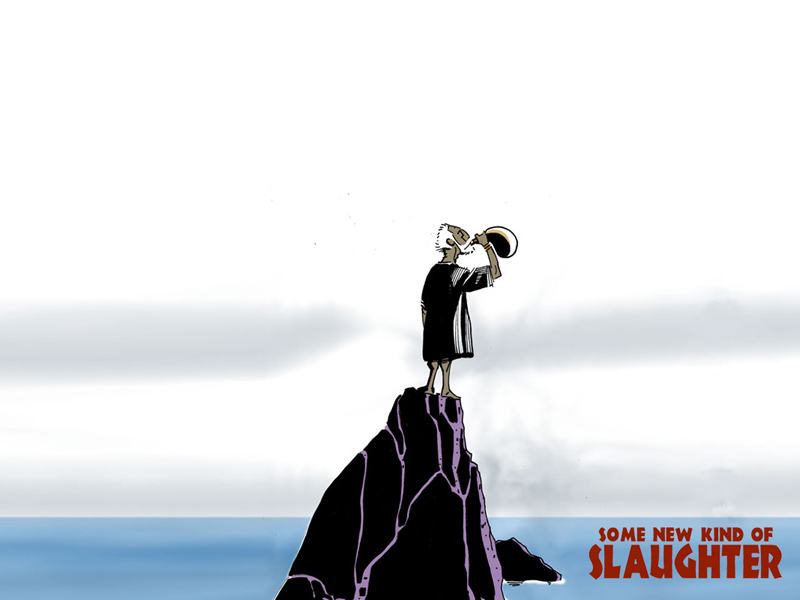
Here’s the last of my interviews that I was holding off from my INFUZE days, until its new iteration would take place, which for me, I guess is this here little blog. It was conducted in January of this year, with the creators of SOME NEW KIND OF SLAUGHTER, mpMann and A. David Lewis. Slaughter was a bold four ish mini published by Archaia Studios Press, that looked at the concept of world changing floods in different lands and cultures. Arachaia put it more succinctly: If there is one constant throughout most of Earth’s historical nations, cultures, and religions, it is the threat and the destruction of the Great Flood. In the wake of the recent Indian tsunami, Hurricane Katrina, and alarm over global warming, the award-winning creators of The Lone and Level Sands return to plumb the depths of the world’s great myths with this four-issue, all-ages mini-series, exploring how this legendary fear may be more relevant now than ever before.

It seems like quite an intricate tale. Do you foresee this book having an appeal to a mainstream comic-book fan as well as to the independent comics audience? Was there an intentional attempt to appeal to specifically either or both types of reader?

Marvin Perry Mann: It will probably appeal more to the indie/alt cognoscenti and, for that matter, new mainstream readers than to the spandex or manga fans. But there’s no small amount of overlap. Most of the writers I’ve worked with have been quite broadly read in comics, much more so than I. The complex story structure of the book should give fans of formalist comics something to bite into, and the emotional depth of several of the tales will satisfy lovers of stories about real people, despite the mythological underpinnings.

But I think it’s fair to say that neither Dave nor I set out to target an audience. Some New Kind of Slaughter fits no well-trod genre. We wanted to produce a work that would engage us, and tell stories that might open eyes. We assumed that there were like-minded readers out there. The formal structures and challenges of telling so many stories in some coherent fashion were spice to the process.

A. David Lewis: It’s no good, from a creative standpoint, to identify an audience and then, after the fact, to write for that target. I mean, unless you’re trying to make a point about that specific audience, I can’t see it going too well. Really, that’s more a concern for the publisher and its marketers. The creators, though, have to go with what hooks them to do a story, especially when they’re operating outside a mainstream character base; I mean, the purpose for writing a Batman story might just be to write a freakin’ Batman story. But, thanks to the good graces of publishers like Archaia Studios Press, Marv and I can pursue stories that interest us, for which, in turn, ASP has found terrific readerships.


I imagine the research process must have been quite intensive and enlightening. How did you choose what absolutely had to be in the project and what you could do without?

mpMann: Well, Noah had to be in. Dave did the primary work on that story, the longest in the project, nearly 1/3 of the page count in all. And as I have said elsewhere, he knocks it out of the ballpark. This is Noah as you have never seen him before.

Lewis: Aw, Marv’s a flatterer. But, yeah, I became interested in Noah the same way I became interested in the Pharaoh for The Lone and Level Sands. I mean, it really fascinates me how much people, both secular and religious, think they remember about biblical characters that just isn’t there in the text. There’s so much wiggle room, so much gray area, and exegetes over the centuries have, with good intentions, spun out a number of character interpretations. None, as far as I could find, looked to fill Noah’s Iserian “gaps” (check out that hard-core scholarly terminology!) in terms of other cultures’ Floods. So, I had a great angle at which to approach the research.

mpMann: The second one that was almost as mandatory, at least for me, was Ziusudra/Utnapishtim, the Sumerian cum Babylonian prototype for Noah. Their stories are very similar, so it was important to find ways to distinguish them. One way was to make Ziusudra the narrator. He was after all, the earliest flood hero to come down to us. And since “doubt and certainty as an approach to faith” was one of our themes, we used Ziusudra to represent doubt, and Noah to embody certainty.

The Sharon Boatwright story was something I had concocted whole cloth for an earlier project using Utnapishtim. With a little fiddling she fit right in and gave us something to tie myth to the present day. Her flood has the most contemporary resonance, but her story is told in a manner that is the most dreamlike.

The Chinese myth of Da Yu/Nuwa is really a composite of two very different myths. But together they form a unified story that illuminates how one can be inspired by the story of another.

The Hindu myth “almost” made the cut as one of the long form stories, and does get more space than the other done-in-one myths.

In tackling these myths in Slaughter but also in your previous work The Lone and Level Sands, has it surprised you how the themes and story telling techniques of these ancient tales reverberate even in today’s stories? I’m thinking the work of Joseph Campbell here.

mpMann: Heh, well, if we’re thinking of Joseph Campbell then it shouldn’t be a surprise that new stories parallel the old, or that the old tales still have power to inspire us. The underlying structures and interests of these stories speak to our human longings and fears. What can be fun is making the topical connections to contemporary life, and learning to distinguish the local from the eternal.


Comics seem like the perfect avenue for you to tell this story. Is it easier for you both to work in comics than any other art form, with the kind of stories you want to tell?

mpMann: Does it? I think these stories, constructed this way, might well have been presented in prose form, or perhaps as epic poetry. Okay, epic poetry in today’s market would surely result in fewer readers, but, historically, both prose and poetry have tackled the idea of “many-stories-in-one” any number of times. Bringing an approach like this to comics is a bit different. Think of it as bringing a classic form to this relatively new medium. Comics can to do what older literary forms have long done.

Lewis: I do tend to visualize my stories, yeah, so I suppose they could be wrought for film, television, web animation, or comics. But the comic book medium has techniques and tools unique to it that tend to mesh best with the way I like to approach telling a story. I don’t mean to disparage the purely written word – prose or poetry – which has its own strengths and magic. But I am a believer that the word-image synergy of comics has a unique effect on engaging the reader’s mind. (Go see Visual Linguist Neil Cohn on all this.) Young children can read picture books more easily because they have verbal and visual information working in unison to help them to meaning. This isn’t a simplistic interaction; it’s a relatively natural one. Whether the brain is actually hardwired for this or not, I can’t say, but I do know that this whole engagement of the visual languages in comics accomplishes things that you don’t often find in words or pictures alone.

David, in April you’ll be a part of Boston University’s “Graven Images: Religion in Comic Books and Graphic Novels.” It’s an intriguing topic. Can you give us a glimpse of what you’ll be discussing?

Lewis: Well, abstracts and presentation proposals are still coming in from across the country and abroad, ahead of the January 31st deadline. So, my co-chair and I need to work thought a selection process to finalize the program slate. I can say, though, that we’ve got educator and award-winning creator James Sturm as its keynote speaker, and the Sunday Q&A will include both him and other comic creators engaged in a wide-ranging discussion: What are “religious comics?” And what impact do they have?

There’s plenty of metaphorical application of religion and faith for any narrative medium. Neo is as Christ-like in The Matrix as Superman is. Lost seems as much like Purgatory as Peter Parker resembles Job. However, this conference is about the more overt depictions of faith and the religious in comics…which is a rapidly expanding corpus. A Contract with God, MAUS, Chick tracts, Christian publishers, Testament, Cerebus, Preacher, Mark Millar’s Chosen, or even (brace for it) Spawn, just to name a few. Even in secular terms, religion plays an important part in comic book storytelling, certainly as much as politics and perhaps moreso than sexuality, to name two umbrella topics. So, “Graven Images” is an exciting first attempt by Boston University to create a bridge between academy study and this creative upswell.

Marvin, from an artist’s point of view, was the design of the narrative difficult at all? Were there any sequences that took you a while to grasp visually?

MpMann: Since I co-wrote the script with Dave, I made a point of providing myself with different kinds of writing styles and pacing to help the reader to keep track while hopping around so much. The Ziusudra material is mostly first person narrative. Dave wrote the Noah story primarily as dialogue. Much of the Sharon Boatwright story is silent. The short done-in-one myths are all captioned, and Da-Yu/Nuwa is a story within a story. Visually, some are more naturalistic, and others more cartoonish. I relied on my natural “hand’ to provide  visual continuity. Color, of course was a real key to the sections.

How would you both describe the collaborative process and the way it shaped the story or the project? Was it very much a partnership with lots of big ideas going back and forth?

Lewis: To be honest, this is a process and an approach I would never attempt with another other than Marv. He and I already had a rapport, a solid working sense of each other, and a language on which we could rely. Moreover, it was a partnership in which I could place my trust, handing over this Flood concept to Marv and then moving back to a second banana role. Rather than feeling like Lando reluctantly giving the Millennium Falcon to Han, I got to be Chewie sitting right next to him and playing co-pilot. Perhaps I’m too domineering or controlling, but I don’t think I could have done this with anyone else.

mpMann: Dave concocted the original notion of doing “all” of the world’s flood myths. I was skeptical as first. But when it came time to put something together and Dave was consumed with his PhD program, he graciously allowed me to run with his idea and take the lead in outlining the story and doing a first draft on about 2/3 of it. But we both took a pass at the other’s work and both of us have our fingerprints all over the whole.

How do you both feel about the mainstream comics scene and how it measures up against the more independent publishers? Do you have a personal preference more for one than the other, or would you prefer the two worlds mingle more often than they currently do?

Lewis: I refuse to apologize either for having an interest Joss Whedon’s Astonishing X-Men or for not being particularly compelled by, say, Seth. I mean, I think the independent market produces more hits-to-misses than the mainstream, but that’s because the latter generally deals in quantity. And, amongst that quantity, there are some great and entertaining stories. Both groups have their snobs, their elitists, and their obsessives – that’s what turns me off, personally. So I do like it when those two worlds meet or influence each other. They’re both needed, so long as they’re not polarizing, you know?

Independent publishing obviously gives creators like Marv and me more freedom, though there is limited exposure and machinery supporting it. (No offense whatsoever to Archaia; they know they’re not Time-Warner, nor do they wish to be, I think.) The indies let us pursue these odd, atypical stories, whereas the mainstream might not be so kind. Still, I’ve got an ache in my soul to tell this one Superman story in my noggin – really for no other reason than, heck, I’d be writing a Superman story!

mpMann: The market for comics is diversifying into many markets and I can’t help but think that’s very healthy. Hopefully more of these markets will be able to provide improved living wages for creators in the future. One thing that could help would be an outlet for more 48-90 pages stories, the graphic novella.

You’ve worked with the Exodus story in Sands and now Noah and the flood in Slaughter. What is it about the Bible that intrigues you as storytellers?

mpMann: For me these are familiar stories seen in a new light, and that is valuable. Like many non-religious people, I am nevertheless fascinated by religion and the things people are willing to believe. Undercutting the sanctimonious way that so many of these stories are presented is a service in itself. Looking at the human side of them, maybe even providing a little humor, can make them fresh and worthy of reassessment.

The project currently on my drawing board is a comedy/horror western, The Grave Doug Freshley. It is a real change of pace from The Lone and Level Sands, Inanna’s Tears and Some New Kind of Slaughter, all of which deal in ancient myths and societies. But after that, I will be working on a trio of stories under the omnibus title of Ba’al. These stories blend the Ugaritic myths of Canaan with the confrontation between Elijah and Ahab and his wife Jezebel that appears in the Book of Kings. I am anticipating dense, rich stories, and I guarantee they will have a point of view. I am writing them, so as they say, “this time it’s personal.”

Lewis: Marv said the magic word: Myths. That has proven time and again to be where my interests lay. The Lone and Level Sands drew from biblical legend as does a major chunk of Some New Kind of Slaughter, but the latter also goes into mythic stories from a global variety of cultures. I found myself moving there in my Mortal Coils series as well. And, for that matter, my next project draws from the mythic fabrics of both Native American sagas and, quite separately, Western sport lore. I suppose I see myth in all stories anyways, so why not go straight to the source?

Are you planning on working together again in the future or are you both busy with solo projects?

mpMann: No plans on the horizon, but we said that after finishing The Lone and Level Sands. Dave is a lovely collaborator, smart, humane and gracious, so as I have said before, “Never say never.”

Lewis: Hey, I often say “never!” But, like I mentioned above, Marv’s the one creator for whom I readily make exceptions. I’m looking forward to Ba’al and I hope to share peeks of my next project with him as well. After that…?

Say, Marv, want to hear my Superman story?

Go here for a preview of issue one.

Jackket Knightmare Review/Interview

I admire anyone who pursues their dream with reckless abandon. During July’s Comic-Con I was impressed by the multitude of creators in the small press section who just have a go. Especially in artistic endeavours, that kind of leap of faith is a very open one and a degree of humility and vulnerability are required. Your work is out there for the world to see, and that can be a scary place for anyone.

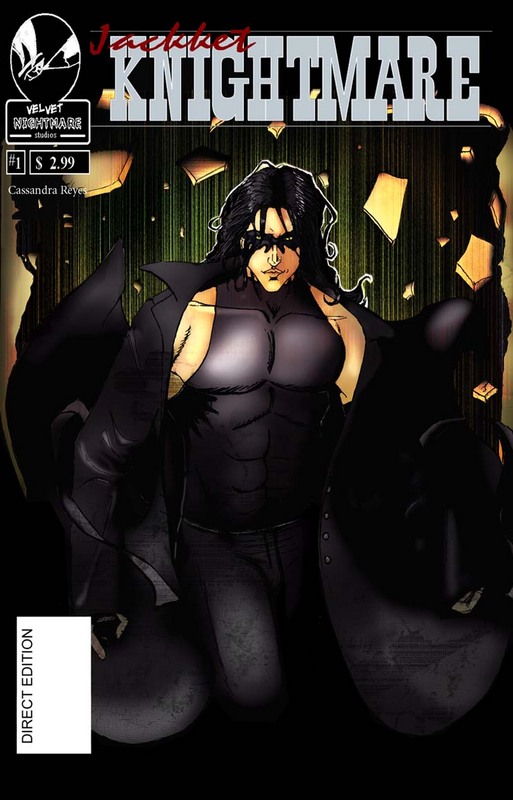
Cassandra Reyes decided that she too could be one of those brave creative minds. Jackket Knightmare is her debut comic book series. The first issue is out now, with hopefully more on the way. Cassandra has spent the last four years teaching herself to draw. That dedication shows in the first issue. Of course, it’s not as polished as other work on the stands, but for a newbie to the comics publishing world, it’s very impressive. It’s also heartfelt. With a story concerning the titular character as a trenchcoat clad defender of child abuse victims, Jacket appears to be a cross between X-Man Gambit and The Crow, but with a metrosexual vibe reminiscent of David Beckham. A scary combination, to be sure, but Jackket is the best looking piece of art in these few pages.

Not much happens here, so for those expecting kung-fu action, prepare to be disappointed. The dialogue is also sparse, but lays enough of a foundation that I can only assume will be built upon in future issues. The story is not as direct as it needs to be, with further facts from the Jackket web-site necessary to clear it up. But for a short story, and some interesting manga-inspired art my hat goes off to Cassandra. There is also a more Japanese influenced tale on the flip side of the ish, (and a page written entirley in Japanese) for manga fans that highlights the mirth that can happen with voices in your head. Basically the premise of both tales centres on young pastor Tomas Caballero as he deals not only with the death of his father, but also the emergence of the new Jackket personality within him.
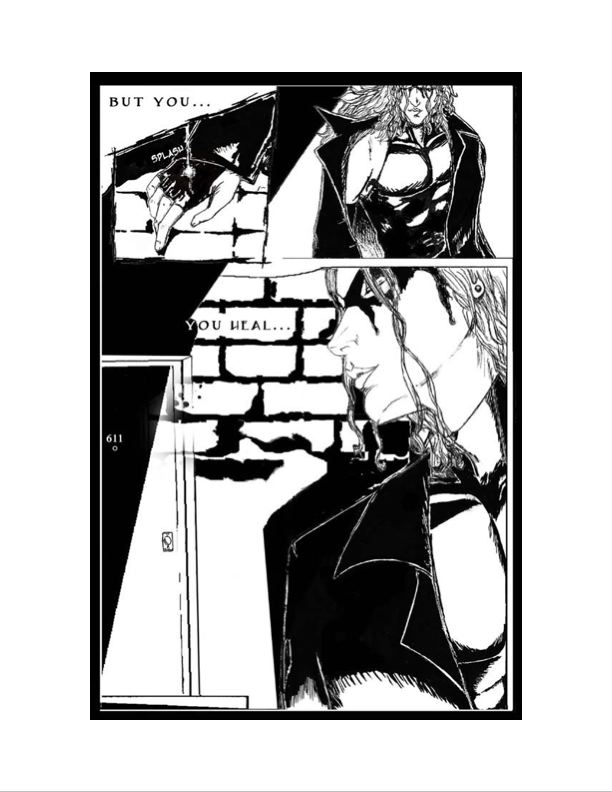
Cassandra can only get better from here, as both a writer and artist. There is definite potential here, with the interesting black and white art, coupled with grey tones for certain sequences, well designed layouts and unusual subject matter . All this means that Jackket may just carve a niche for itself yet.

Did you grow up reading comics and fall in love with them straight away?

No, I’m pretty new to comics. I did watch all the comic related 90’s X-Men, and Spider-Man cartoons if that counts. But my first official comic book was the movie adaptation of Star Wars: The Phantom Menace, and it was my brother who gave them to me.

What particular creators and characters are you a fan of?

To say that I love Gambit is a slight understatement! But yeah he’s my favorite aside from Rogue, so thank you Chris Claremont! As for artists that influenced me, Tetsuya Nomura (FinalFantasy7) is my favorite, along with Mark Bagley of Ultimate Spider-Man, and Salvador Larroca from Xtreme X-Men. People also assume James O’Barr because we get our characters compared a lot even though I never saw his work prior to JK. A little over a year I did get to meet him and show him my character, but once I did see his artwork I have come to really like his style too.

What made you dedicate yourself to creating comics over the last four years, rather than say music, or novel writing?

Actually, I pursued music for half my life at first. I really felt that God had called me into Christian music, but as I got older and I wasn’t recording albums or touring, I got discouraged and quit. For three years I brooded, feeling like I had failed God, but I also started writing stories and drawing too. Then I heard about Christian comics, and decided to try it. At first I just wanted to find an artist while I wrote the story but when I couldn’t find anyone I decided to do it myself.

Do you have any particular family members or friends that acted as your mentors and guided you through the process?

I come from an artistic family, so my mom, sister, and brother (all art majors) give me tips now and then, but a lot of my help also came from “how-to” books, and of course tons of comics!

Your Japanese influence is obvious in your art, and I know you’re also studying the language. What is it about the culture and art that comes from that country that appeals to you so much?

At first I decided to do a manga because the style is pretty simple compared to an American style comic, but that was more of a decision based on my artistic limitations at the time. But now there is a huge part of me that has grown to respect the Japanese people, and now I want to somehow use media to let them know that there is a God who loves, and died for, them. I know in my heart one day I’ll go there, but in the meantime God wants me to do something here first, and I think that’s Jackket.

The choice of child abuse as a central topic was an unusual one. Why did you choose
to focus on that issue?

When I started Jackket I wasn’t sure why he transformed, but around that time I heard the story of a child who had been starved to death while most of his family did nothing. He’s buried not too far from where I live. I pass by there still sometimes. That soon became the basis to Tom’s story, and I decided to show physical abuse rather than neglect because you can see the damage it does, and in a comic it’s important to show what’s happening.
It also was a scary decision because I didn’t know how people would take it, and it’s hard because you know what you’re drawing is really happening. So yeah I’ve broken down several times while drawing panels, but God helps me through.

How has the process of writing, drawing, printing and promoting been for you? Has it all been quite different from what you expected?

Yes, it’s crazy! I thought making a comic would be easy 5 or 6 year ago. Boy was I wrong! Coming from where I’m coming from, I had to start at the very bottom and work my way up. Jackket’s first issue today is actually the third version of it before I felt it was decent enough, and of course I’m going to keep pushing myself with each issue. The printing kind of fell into place, and God provided a great guy like Joey and the website christiancomics.net to help me out. Promoting and selling issues hasn’t been too hard either. I really feel like God has given this project supernatural favor.

How has becoming a self-publisher changed you as a person?

I haven’t felt any different, then again I haven’t really thought about it. I guess if I did I’d probably get overwhelmed because there is a lot more to go.

You’re working on issue 2 of Jackket now. Is your dream to create comics for a living one day?

I’m not sure about being a comic book artist. All I know is that I have to finish this comic series. After that I just have to trust that God has everything else worked out for me, because I still have a lot of other story ideas too.

To purchase Jackket Knightmare, visit Cassandra’s official site here.

Robert Luedke Interview

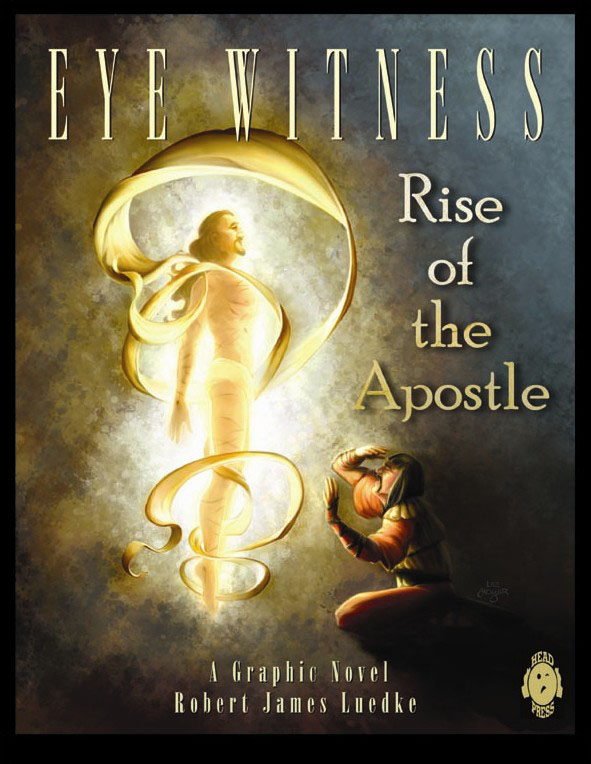
I met Robert at Comic-Con, where he preached at the CCAS Sunday service and did an inspiring job. My interview with the creator of the Eye Witness series of graphic novels is now up at Sight here. The EW books are unique in that they present a modern adventure tale, while similarly exploring the roots of Christianity through tales from the Bible. Great to look at, powerful and encouraging, they are a great resource for the interested Christian and/or comic book fan, with plenty of political espionage and military conspiracies thrown in for good measure.

The third book, Rise of the Apostle has just been released and looks at the life of that crazy man of God, Paul. It comes in at 96 pages, from Head Press Publishing, and is available for purchase here.

Ben Templesmith Interview

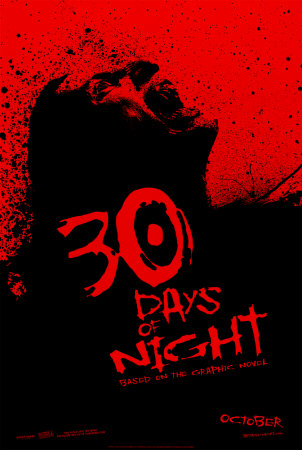
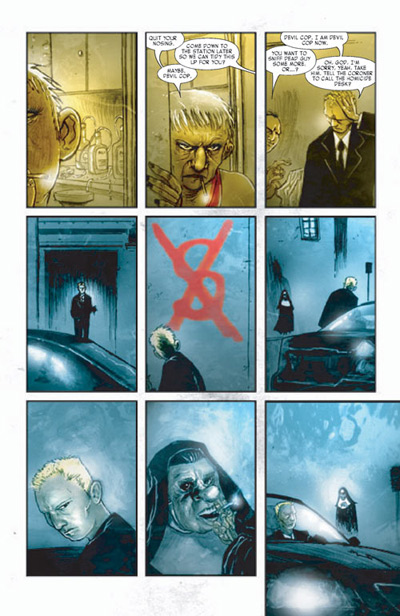
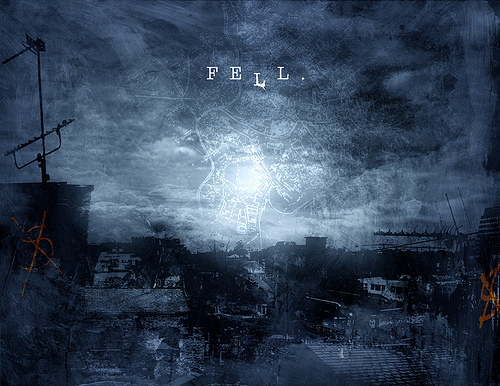
Ben Templesmith has hacked out quite an eerie niche for himself since his breakout art work on IDW’s horror comic, 30 Days of Night, and has since become a formidable creator on books like Singularity 7 and Wormwood: Gentleman Corpse, for which he received an International Horror Guild nod. He’s had two art books released, (Tommyrot and Conluvio), has been nominated for an Eisner for the last four years, and along with superstar writer Warren Ellis created a new comics format with their FELL series. And if that wasn’t enough, he’s also an Aussie. What a guy!

Ben, when you were growing up in Perth, were you an avid comic fan with ambitions to work in the industry. Was that always the dream?

Yes, my one burning ambition was to get published telling stories in Anglo-American comic books basically. Since I was about 13.

Your style is very distinctive. Was it equal parts experimentation and admiration for other artists that brought you there?

Everyone has influences and usually they’re much more prominent when you’re first starting out. I guess you could say my current style is the end product of loving people like Ash Wood, Victor Amrus, Richard Searle and Ralph Steadman, and the fact I have to do what I have to to meet a deadline. That forces you to streamline a process quite a bit too. Especially on the computer side of things.

What’s the reaction when you tell people you create comics for a living?

Usually a blank look. Then they assume I mean Superman or Spider-Man or something. Then once I’m past the “No, I create my own comics, things without the guys in tights you’ve heard of,” I have to explain how comics are actually made from the ground up as most people are largely ignorant of anything to do with comics in general. I never do, but I should probably just shut up and say “Yeah, like Batman and stuff,” and leave it at that, rather than try to fight perceptions and stereotyping.

Were you able to play much of Dead Space while working on the comic tie-in? Are you a hardcore gamer who throws things at the TV when you’re frustrated, or do you just pick up the controller every now and then?

No, I didn’t play any. I watched others. I could have played some when I was up at EA headquarters. Nope, I’m not a hard core gamer. I just got an XBOX actually. I’ve long preferred strategy games on a PC more than the console shooters, though they’re good for a bash when in the right mood for sure. There’s a helluva lot of artistry in them these days and that attracts me as an artist now as much as anything.

30 Days of Night was undoubtedly the book that gave you your first taste of huge mainstream success. With all the attention that the film bought, how did you react to that level of interest?

The movie did little to nothing for my comic book career. That was all started by the movie optioning hype 5 years before the film came out. But since the film, I’ve now got somewhat of a profile among the types that look to make movies, so it’s a good way to springboard into other media thanks to the movie I guess, but I don’t think it really made too much difference to my core work, which is comics, as I love them. Wormwood: Gentleman Corpse and FELL, with Warren Ellis have really developed that audience far, far more I think.

Moving from artist to writer, as you have done with Singularity 7 and Wormwood: Gentleman Corpse must be quite satisfying. Would you like to continue with that dual-creator role or will you always be a penciller at heart?

I was always thinking of my self as a “creator”, not just an artist who gets told what to draw. It just so happened I started out as only a work for hire artist. After that one book (Hellspawn for TMP) I’ve been doing creator owned, or part creator owned work that I own
a piece of for the most part ever since. It’s trying to create new things that you yourself own a stake in that drives me. I just like feeling personally invested, (apart from trying to tell stories and have an audience for them, which is why I love comics in general) and I’m lucky enough that IDW Publishing are willing to give me and a few like minded creators a home like that.

I should add that I’ve never been a penciller. I produce complete artwork. I’m an artist. I do the lot. Pretty much at this point the only thing I don’t do is the lettering, and I’d love to start lettering my own books too. Man, pencillers have it so easy! Especially now colourists are expected to be full painters, fleshing everything out far more than in earlier years. Colourists deserve more credit on a lot of books as far as I’m concerned.

You moved to San Diego only a few months ago, from Australia. What are the major differences that you’ve had to adjust to?

The timezone. The higher taxes. Absurd health care costs, absence of public transport, lack of intelligent planned city development and disorganized disfunctional bureaucracy, both public and private. Hey, you did ask! Perspective from other countries is a wonderful thing I reckon. Other than that though, San Diego and the US is a great place, full of opportunity, wonderful people and things I grew up with as a kid only seeing on TV.

IDW Publishing has been your creative home for the last few years. Would you like to eventually draw spandex clad superheroics for Marvel or DC at any point?

IDW Publishing have been fantastic to me and very supportive. I’d happily work on some spandex clad superheroics at Marvel or DC. They’d just have to ask. I’d still rather make up new characters though, rather than service existing ones. I could could even do that at IDW at some point, who knows.

How has working with Warren Ellis on FELL changed you as a creator?

Yes. I now cry myself to sleep every night. Warren had changed me long before I was even working in comics. Thanks to his vocal nature on the way of all things comics, as well as his work on things like Transmetropolitan, I’d already pretty much agreed with his idea of
the way things should work. Thanks to FELL though, I think I had a brand new audience get exposed to my work, some of which has followed through onto other things, which was an added bonus. I also got to grips on how comics storytelling, pacing, etc can really work, much more than before. ( FELL being a 9 panel grid thing ) I owe Warren muchly, not least for working on a book fantastically written, breaking a format in and being critically acclaimed.

I’m guessing you’re a horror fan? Any favourite films or books of that genre?

I’m more into dark sci-fi fan than horror. I don’t like to squirm. I like to think and squirm at the same time. So stuff like Aliens, The Thing, Dark City I really dig. Huge historical epic fan too though, even if they never get the history right. I really should go and see Mongol.

Lastly, are there any hidden talents you possess that the Templesmith fans of the world should know about, like do you make a mean lasagne?

Well, I make a mean powered baby chowder but I’m not meant to say that in public apparently. My lawyers get upset, what with the murder trial coming and all.

Ben Templesmith’s Blog Welcome to Hoxford Preview

Miranda Mercury Interview

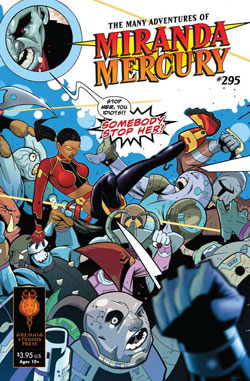
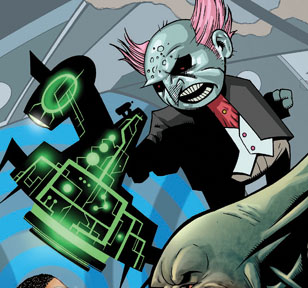
Back in the glory days of INFUZE (may it rest in peace) I had the opportunity to interview the writer and artist from a new comic mini-series, entitled The Many Adventures of Miranda Mercury. It was conducted in January of this year for the on-line mag, but never saw fruit – until now! I was waiting for the next step in INFUZE’s journey to take place, which unfortunately never happened, before I published it. Miranda was a genuinely fun book however, and I say was, because due to some recent restructuring at the publisher, Archaia Studios Press, this was one of the books to be put on the back burner. The first issue (numbered #295) is still available and is a groovy read for all ages, while presenting the world with a great heroine in some fantastic sci-fi adventures. The second issue will hopefully see print sometime soon. When it does, I’ll certainly let the world know. For now, take a peek in to the creative process of Miranda’s birth, and go here for a preview of the first ish.
Is there any particular woman, or women, that you’ve based Miranda on?

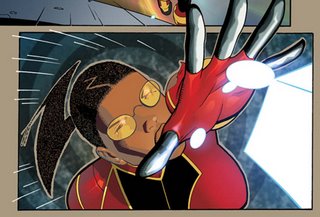
Brandon Thomas: Not really a particular woman, but probably an idea of women, and how they are and aren’t normally portrayed in modern comics. There are certainly some shining examples spread all over the medium, but just like I’m often alarmed by how minority characters are represented in superhero fiction, this deficiency (or lack of imagination) also extends to the so-called “fairer sex.” When this whole thing was developing, it was very important that Miranda Mercury not exist as the female version of another well-established character, but a complex, nuanced character in her own right that isn’t destined to become the victim in her own story. Even with her life rapidly coming to an end, Miranda isn’t going out without a major fight and she won’t be weeping in any corners, asking for someone to swoop in and save her. It’s a balance definitely, where we have to put her life in danger, but do it in a way that doesn’t make her appear weak or reliant on much more than her strength, wits, and junior partner to get things done.

Attitude-wise, she’s probably based on all of the strong women I’ve known in my life—mother, grandmother, cousin, etc. Take-charge, take-no-crap females from all walks of life should find something in common with Miranda Mercury.

Lee Ferguson: For me…honestly, it doesn’t seem as much like we’re creating something new as taking care of a character who has been around for almost 300 issues. I know that’s just one of our conceits, but…it’s so fitting. From the first time B and I talked about this, I have had a very clear picture of Miranda’s world, and I find myself reading the new scripts as they come in and KNOWING that, yes, that’s exactly how Miranda would react in a given situation. So while I can’t say that the way I try to portray her is based on anyone else, I can say that with both Brandon and I there seems to be an innate sense of what makes Miranda Mercury tick.

What do you hope readers will get from this series?

Brandon: The love of comics storytelling injected into their veins. The excitement of discovering something new that you never even thought to ask for. The possibility of experiencing stories that could only be contained and delivered by the comics medium. New heroes to root for. New villains to root against. New visual styles to be exposed to.
More than enough reasons to come back for the next installment.

Lee: A sense of what comics can be. When I was a child, I would go to the library and check out these old, beat up hardcovers that collected all kinds of comics from before my day. And it was mind-blowing to read stuff like Stan (Lee’s) and Jack’s (Kirby) Fantastic Four, absolutely mind-blowing. So many crazy new ideas introduced, utilized and discarded as they made their way to the next new thing. THAT’S very much what I want this to feel like. Not as in ‘retro’ or anything like that, but in that mad flood of ideas.

You’ve both worked with the icons at Marvel and DC in various capacities over the years. What is it about superhero comics that lends themselves to parody so well?

Brandon: I don’t think what we’re doing is necessarily parody—it’s more taking what elements of superhero comics that are exciting and fantastic, and finding a different axis to spin the stories around. The wonder is there, the action is there, the drama, etc. but the landscape and the backdrop make this more of a sci-fi adventure than anything else.

Every story is going to introduce some new planet or some new adversary for Miranda to come up against, and just when you get used to what we’re showing you, it’s gone and we’ve moved onto the next story. The only way this property works is when new material in fired into the well constantly and that will be a natural function of all the stories being self-contained. You know that every issue is going to have a new set-up, character, and locale to dig into and explore, and we’re assuming this will naturally lend itself to somewhat experimental avenues of storytelling. Don’t stop moving, don’t stop thinking—so whatever of that vibe that owes itself to superhero fiction, so be it.

Lee: Yeah, I don’t see this as a parody in any way. I think, if anything, it takes what’s GREAT about superhero comics and shows that those things can work in many different ways, and in genres other than capes and tights.

Much has been made about Miranda being a rare African American lead in a comic, even debuting in Black History Month. Was that something you sought out or did you find yourselves receiving a lot of unexpected attention from the African American community?

Brandon: Well, Miranda being a black space heroine was a significant part of the original pitch and like it or not, this does make her and her book somewhat different from the majority of comics on store shelves. What we hope people realize is that “somewhat” does not mean “completely,” as it’s generally understood that books or movies that feature predominantly black cast members are classified as “black” products and looked upon as impenetrable to people that aren’t black. Which is hopelessly silly, but you have to acknowledge that feelings like this exist if you want to break down barriers. Miranda is designed to service anyone who enjoys high adventure, and if the fact that she is a strong, black female allows it to mean more to a certain neglected segment of the fanbase, then we’ve done our job.

Miranda launching at the end of Black History Month wasn’t something that was planned from my end, but it probably figured into Archaia’s publishing plans, and I think they’re anticipating a certain amount of interest from mainstream audiences and people that don’t go into comic shops every Wednesday. Who they suspect would be very interested in this if they could only find it. So ASP is investigating new avenues to get this in the hands of any people that would like to read it.

Lee: It’s funny. I sometimes, in my ignorance, forget what this book could mean for other people, other companies…readers. I’m a pasty white guy from rural America. I tend to like whatever is good, and ignore whatever isn’t, and I just generally assume that’s how everybody else operates. Then I’ll get a question like this and realize how foolish that can sound!

How do you hope this will inspire other comic companies to create more minority characters?

Brandon: That they go out and do it, without being afraid that the audience and the sales won’t support it. Launching anything that isn’t a known quantity is a substantial risk anyway, but people have been saying for years that “black books don’t sell,” or that “books with female leads don’t sell” and we want to present an avenue and a circumstance where this isn’t the least bit true. As with anything, only one of two people have to do something before it gets copied by everyone in sight, and I have no qualms with Miranda sparking a new resurgence by major companies to broaden the type of audiences they’re serving. And really, who can even predict something like that at this point. We hope that Miranda Mercury sells and we hope that if it does, people acknowledge what this just might suggest.

Lee: This is a copycat business. Look at all the zombie craziness that’s been going on. All it took was one book to set that trend off…so if Miranda can start a similar trend for minority characters, that wouldn’t be a bad thing at all. All that has to happen is for us to have a little success.

Brandon, you’ve been a columnist for a number of years in the comics community. Is it a struggle to write as a story teller and as a columnist simultaneously?

Brandon: Heh, it is recently. Now that the column is running at Newsarama, I’m back on the weekly grind and I keep telling people that weekly columns are a young man’s game. Only Augie over at CBR has continued to disprove this, but writing 2000 or so words of material on a weekly basis around a dayjob, whatever various scripts and press I’m working on, not to mention that ever necessary personal life, and it seems the minute I get one done, I have to start thinking about the next one. That said, there is a certain rhythm and momentum that soon develops, and the column is quickly becoming just another thing I do every week. If things go well for me in the coming months, I imagine I’ll only get busier, giving me much more fodder for the column, but less time to prepare it in. That’s the way it goes, so it’s best to just roll with it.

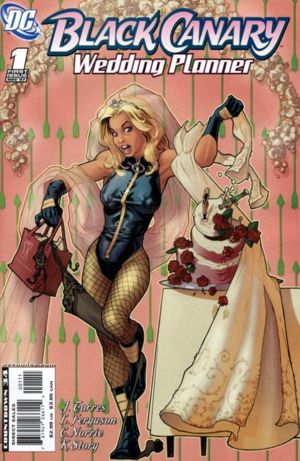
Lee, I have to ask you about the Black Canary Wedding Planner. That’s a pretty big deal. How did that come about exactly?

Lee: I think Jann Jones just got tired of sending rejection letters my way! She had actually been looking at my stuff over the years, and then it seemed the thing that really started to turn her in my favor a bit…were some Miranda Mercury pages I sent off just to show. I wasn’t even necessarily looking for work at that point, but the pages made it to Jann, and she started pushing my stuff around the DC offices a bit, showing it to other editors. And then, when this project came to her, she said I was the first guy she thought of, which I’m extremely grateful for. Honestly, that was a lot of fun. I got to work with Jann and J Torres, who is a great guy, and a really talented writer, so the experience was really, really positive, and is a big reason I’ve had the chance to do a bunch of Supergirl work lately.

Brandon, you’ve been documenting the development of Miranda for the past few months. It seems like quite a brave decision. Did you find you had a lot you needed to get off your chest as a writer making it in the comics industry? Or was it more of a case of letting other writers out there know what the entire process involved?

Brandon: A little of both. Ambidextrous started as something to help me break into the industry, while also serving as a chronicle of the overall “journey.” For years, this meant relating stories and experiences from trying to push my way into the Big Two by any means necessary, but now, it’s serving what I now understand is a greater good: letting people know exactly what it takes to put out a comic book. From the outside it looks fairly simple (at least it did to me). Someone writes a script, someone draws it and inks it, followed by colors, letters, etc. But the actual creation is only one element of the game, and neglects the marketing of the project, the promotion for the project, or any other of the numerous issues and concerns that’ll have to be addressed and accounted for.

My brief time in comics has only made me appreciate the process more, especially when it results in good comics, because there are so many things and people involved that it’s easy for something not to develop as well as you’d hoped. Doing it creator-owned has only intensified this appreciation. The potential payoff is much, much higher, but that’s something that seems well-deserved when weighing the amount of work and care that’s put into it.

Do you have any plans from Miranda beyond the initial 6 issues?

Brandon: Absolutely. If enough people are willing to support the book, then we’re willing to keep making it for them. Starting at issue 295 gives us the latitude to advance both backwards and forwards across the different ends of Miranda’s life and there are extensive plans for both. Once we get a couple months into the game, Archaia will know a lot more about how retailers and fans are responding to the material and we’ll have a better answer to this. But yeah, there’s no way that six issues are enough to contain Miranda Mercury…

Lee: Brandon and I have had a lot of conversations about what’s come before, and where this is all going, and I’m more excited about this book than ever. Plain and simple, no one’s taking this book from me. As long as there are Miranda Mercury comics, I intend to be the guy drawing them…

  • Calendar

    • March 2026
      M T W T F S S
       1
      2345678
      9101112131415
      16171819202122
      23242526272829
      3031  
  • Search