Up now at Broken Frontier is my interview with Nathan Edmondson, writer of the excellent Image series Olympus. The TPB of the series exploring Greek mythology in the context of a modern action film is now out. Check out my interview here.
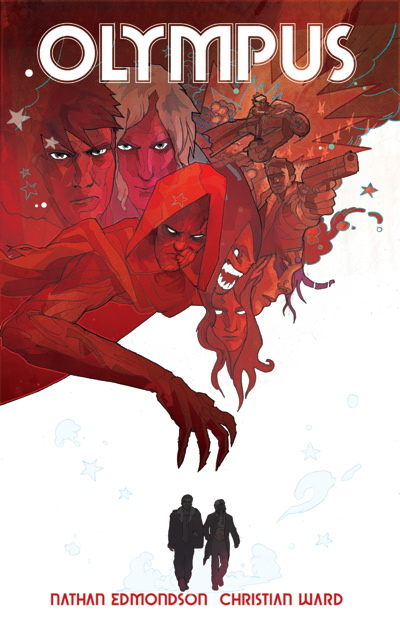

Up now at Broken Frontier is my interview with Nathan Edmondson, writer of the excellent Image series Olympus. The TPB of the series exploring Greek mythology in the context of a modern action film is now out. Check out my interview here.
Thanks to Geek Chic Daily for the heads up on this one. You can get some funky t-shirts combining Star Wars characters and funky music right here. Awesome.
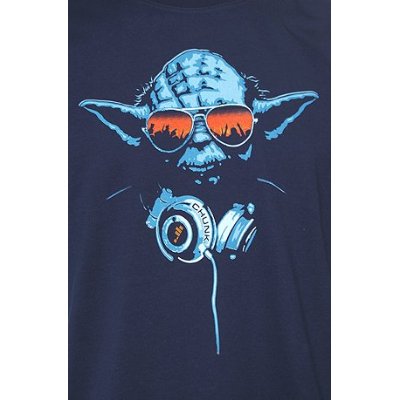
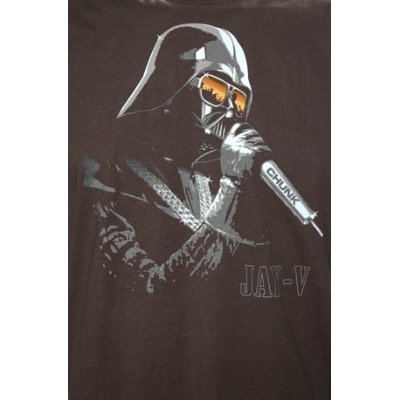
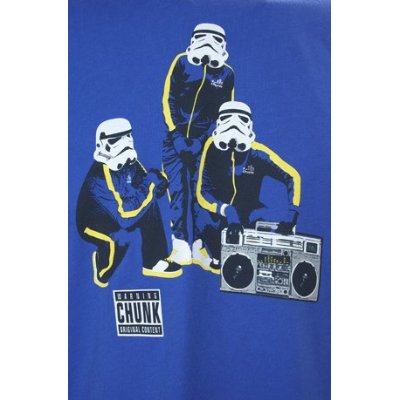
Press release below about those loveable British claymation characters and their rather impressive entry into the world of digital comics.
Wallace & Gromit digital comic reaches half a million downloads!
 Titan Publishing’s Wallace & Gromit digital comic is taking the iPhone by storm with over half a million downloads of its first free app!
Since its launch on November 7, Wallace & Gromit digital comic has reached number one in the UK free books app store, a first for a British comic and has also risen to the number three spot overall in the free apps chart, a cracking feat and no mistake! All four paid for Wallace & Gromit comic apps have been within the top 20 paid apps in the UK book chart since their launch in November.
And it’s not only us Brits who can’t get enough of Aardman’s iconic duo – it’s currently the number one free book download in America and Canada and number 2 in Australia!
Wallace & Gromit digital comics editor Ned Hartley said: “We’ve been amazed at how well our first app has done – Wallace & Gromit is such a great brand, and iPhone users obviously love them as much as we do!”
You can download the first Wallace & Gromit Comic, ‘The W Files’ for free at www.titanpublishing/digital, and there are four other fantastic Wallace & Gromit comics available at the app store, for just 59p/$0.99 each!
Wallace & Gromit digital comics are also now available for download on PSP! Issue 1 is available for free and subsequent issues are just 79p/ $0.99 each – with each issue containing two great Wallace & Gromit stories!
To find out more information and to download some cracking comics, visit
www.titanpublishing.com/digital
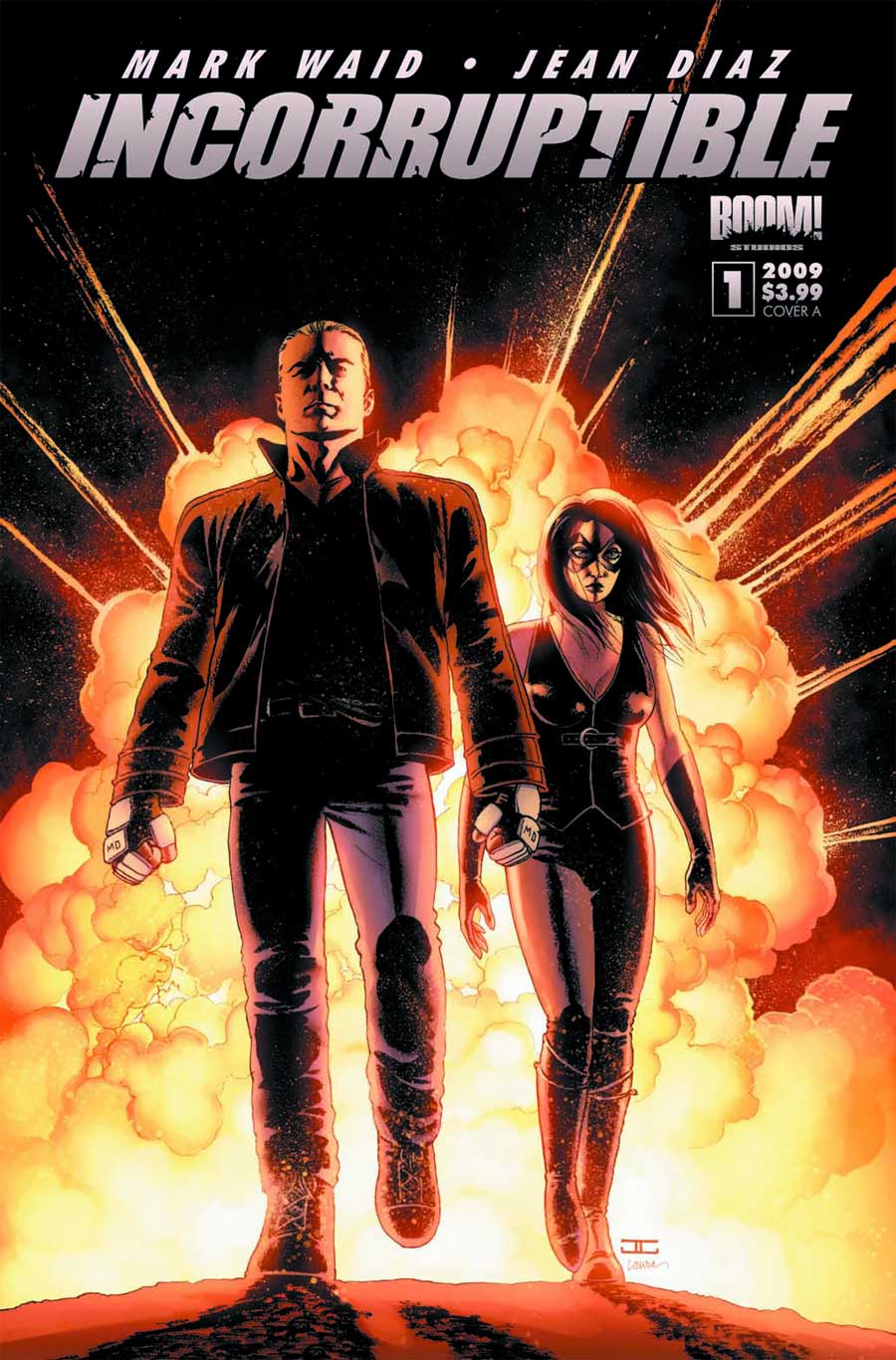 It only seems like yesterday that a website opened up simply declaring, “Mark Waid Is Evil.” Some speculated that it was created by a group of fanboys who for some reason disliked the work of the legendary writer of Kingdom Come and great runs on The Flash and Spider-Man. What it really was was a clever marketing ploy from BOOM! Studios, the indie publisher that Waid is the Editor In Chief of.
The slogan proved true when Irredeemable launched (now in it’s 9th issue) from the writer and artist Peter Krause that focused on hero turned bad, The Plutonian. Like many others, I’ve been bowled over by the dark superhero series, and now it’s joined by a spin-off, Incorruptible. Also written by Waid, and with art by Jean Diaz this series is the other side of the coin, representing a villain turned hero in the wake of The Plutonian’s gruesome acts of destruction.
It begins with Max Damage’s gang pulling a heist, after waiting impatiently for their leader who’s been gone a month. He now shows his new colours, and he’s on the side of the angels, surprising cops and villains alike in an impressive action sequence on a bridge. It’s then off to Max’s hideout where he shows his new attitude to his sidekick of sorts, the appropriately named Jailbait and a police captain.
It’s obvious that this ties firmly into the structure of Irredeemable and is definitely not just a mere tie-in series quickly pumped out to cash in on the success of that series. There’s no real hints as to Max’s origin, and we know from BOOM! that he changes his name from Max Damage to Max Daring, but that’s not set up just yet. In fact not a lot happens here. It feels like the first few minutes of a Lethal Weapon film; all action, high-stakes drama and tough men with weapons, but Waid makes it all so charming and appealing.
I like Peter Krause’s work on Irredeemable, but Jean Diaz’s work is superior. Overall, this series after only one issue, looks set to be even more grungier than it’s originator. Jailbait seems like a Garth Ennis character, and the conflict between our new hero and her, plus all his former villainous team-mates, and the distrust of the remaining heroes should play out brilliantly.
Plus that last page is a doozy and it appears as though Max’s early encounter with The Plutonian became his life turning moment with good reason. Irredeemable demands a high quality story of anything associated with it. Incorruptible looks to be a more than capable sparring partner.
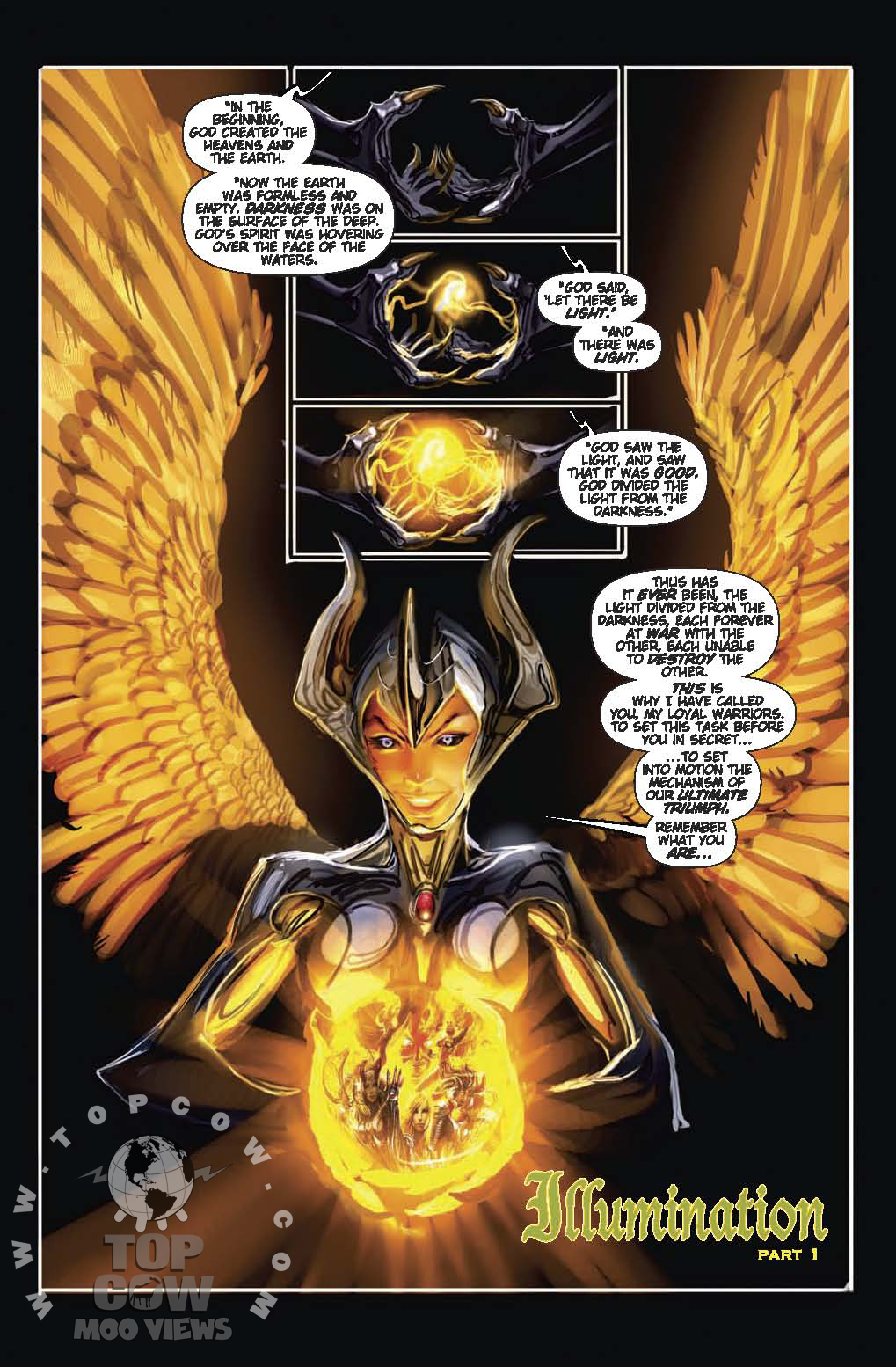
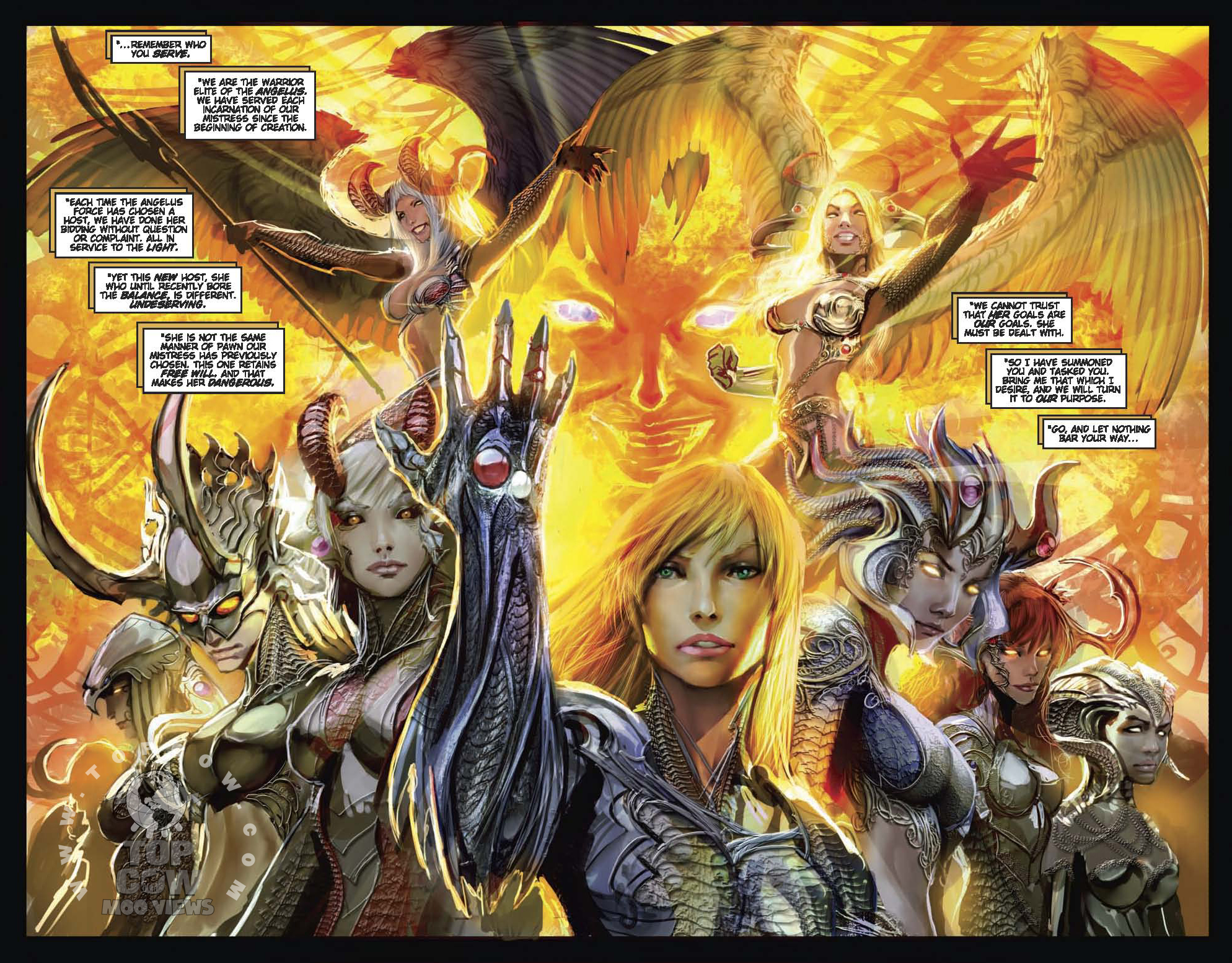
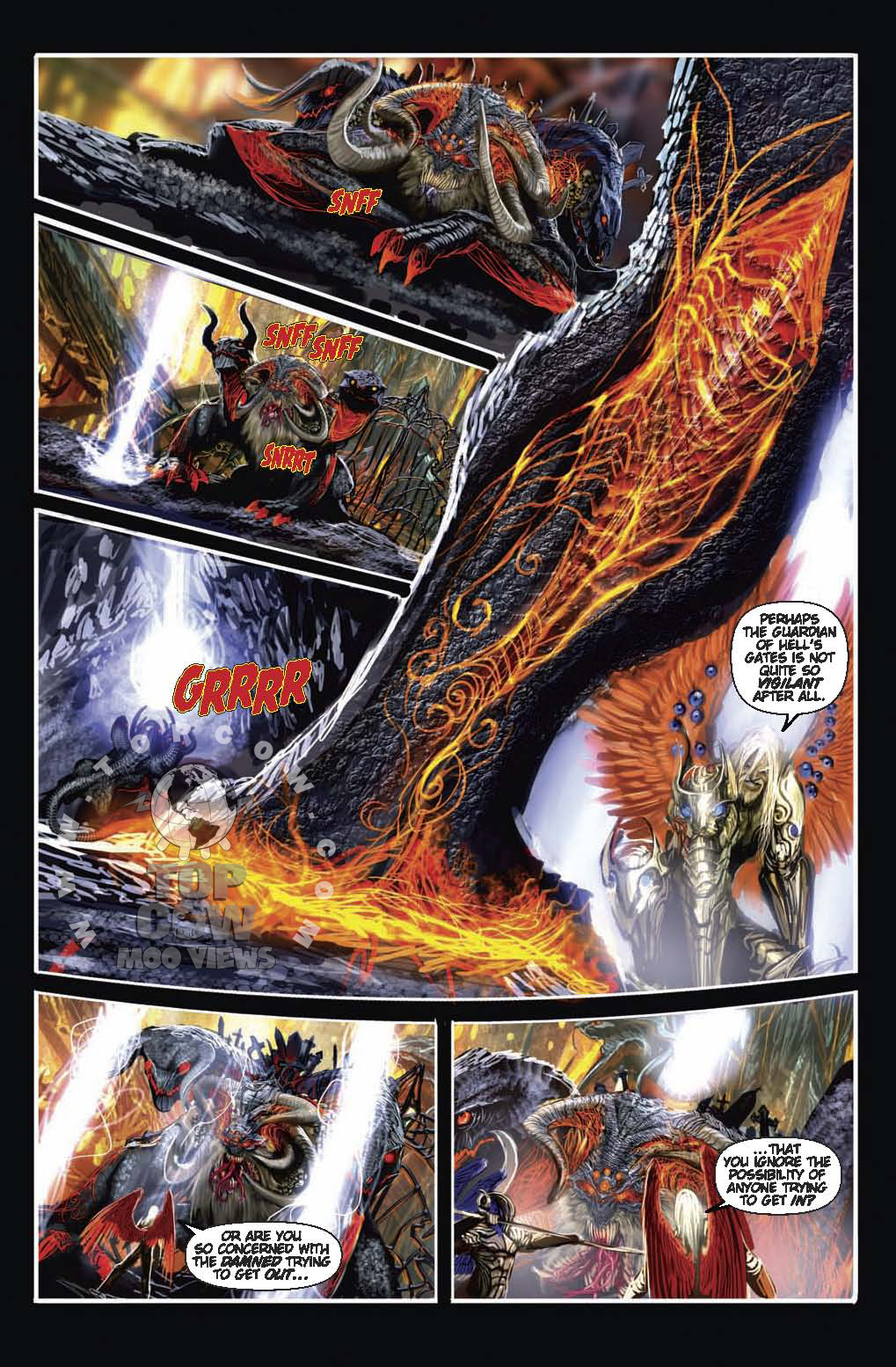
Writer Ron Marz continues his great work, along with artist Stjepan Sejic on a new 6 issue mini-series focusing on Dani Baptiste, from the Witchblade series. Gorgeous preview pages below. Angelus #1 goes on sale tomorrow, December 23.
 Angelus #1
 Ron Marz (A) Stjepan Sejic (Cov) Stjepan Sejic, Eric Basaldua
Taking flight from the pages of “War of the Witchblades”! Danielle Baptiste returns home to New Orleans to come to grips with her new role as the Angelus, the human bearer of the primal force of Light. To complicate matters she must sort out her undefined relationship with Finch while maintaining control of the Angelus host, some of whom covet her power.
Cover A – Stejpan Sejic
Cover B – Eric Basaldua, Rick Basaldua and Caesar Rodriguez
Cover C – Eric Basaldua
Full Color 32 pages $2.99 limited series


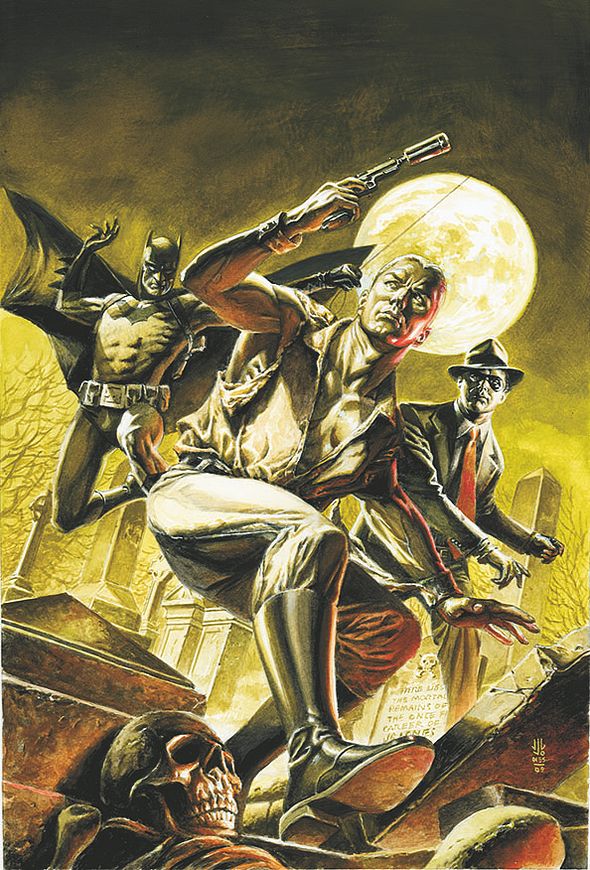 Newsarama has a glimpse at some of the goodies being released in March from DC Comics, including he first issue of their universe melding First Wave series. The idea behind this series is to create yet another alternate universe, one in which pulp-leaning characters such as Batman (now with twin pistols) and Black Canary exist in the same world as Doc Savage, The Spirit and others. Details below.
FIRST WAVE #1
On sale MARCH 3 • 1 of 6 • 40 pg, FC, $3.99 US
Written by BRIAN AZZARELLO
Art by RAGS MORALES
Cover by J.G. JONES
1:10 Variant cover by NEAL ADAMS
DC’s shocking new pulp universe is finally unveiled! In the shadows of the War, the roots of the Golden Tree cabal grew deep into the heart of a fallen world… and the leaders at the heart of this secret organization see no place in their utopia for heroism. Doc Savage, struggling with the loss of his father, has been blind to their advance – until now. Central City’s mysterious Spirit has caught wind of their plans as well. But whose side have the Blackhawks chosen? What is the Red Right Hand? And where is the Batman? Eisner Award winner Brian Azzarello (100 BULLETS, JOKER) and superstar Rags Morales (IDENTITY CRISIS) craft a DC universe like you’ve never seen before! It’s a world with no supermen, only mortal men… Death can come at any moment, and adventure can still be found at every corner of the map! Will Doc Savage be the first to lead the coming world or the last to be crushed under its heel?
On the same subject, Greg Hatcher at CBR has a great post about all the classic illustrators fom pulp novels back in the day, with some looks at vintage Doc Savage covers. It’s well worth a look to see an impressive gallery of old-school covers.
Thanks to writer Tom Taylor’s site, the cover of the collection of the excellent Star Wars: Invasion series from Dark Horse is now up. You may recognise Jo Chen’s great cover from the first issue of the series, but also from the cover of our Arcana mag, in which we have an insightful and amusing interview with Taylor. The official solicitation info of the TPB is below. Congrats must also go to Taylor, as not only is his Rombies one-shot now out from Gestalt (get it now, it’s cheap!) but he’s also working on something special for DC/Wildstorm.
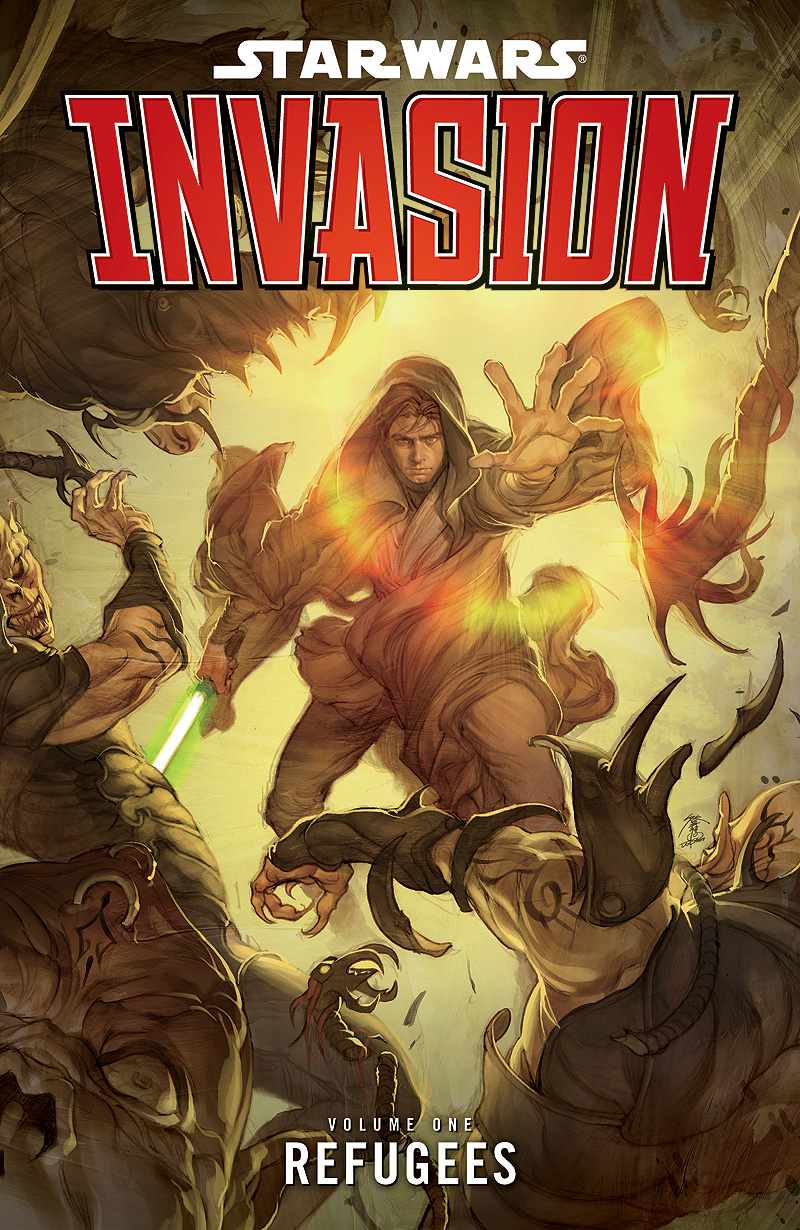 STAR WARS: INVASION VOLUME 1—REFUGEES
Tom Taylor (W), Colin Wilson (A), Wes Dzioba (C), and Jo Chen (Cover)
On sale May 12
FC, 144 pages
$18.99
TPB, 7″ x 10″
Twenty-five years after the Battle of Yavin, Luke Skywalker and the galaxy are facing their first real threat since the Sith were defeated: an invasion of hostile warriors from another galaxy—the Yuuzhan Vong!
The peaceful planet of Artorias is in the path of the alien armada. Finn Galfridian, his spunky sister Kaye, and their parents find themselves separated and fighting for their lives when the surprise invasion occurs. But their ordeal is just beginning . . .
• Collects Star Wars: Invasion #1–#5 and #0.
• This new series ties in to—and fits between—the nineteen novels of Del Rey’s New Jedi Order series.
• Features some of the first visual representations of this turbulent era of the Star Wars saga, including Han and Leia’s Jedi children!
I can’t really conceal my excitement for this film. It’s a great time to be a DC fan! The latest in DC’s growing line of animated films involves the Justice League and their evil counterparts from an alternate earth. I’ve chosen this film as one of the must haves for the first quarter of 2010 in next month’s Arcana mag.
Thanks to Warner Bros, below is an interview with William Baldwin, the actor portraying Batman in the film,w ho reveals he almost played the character on film before George Clooney beat him to it.
DIRTY SEXY MONEY STAR WILLIAM BALDWIN ASSUMES THE ROLE OF BATMAN FOR JUSTICE LEAGUE: CRISIS ON TWO EARTHS
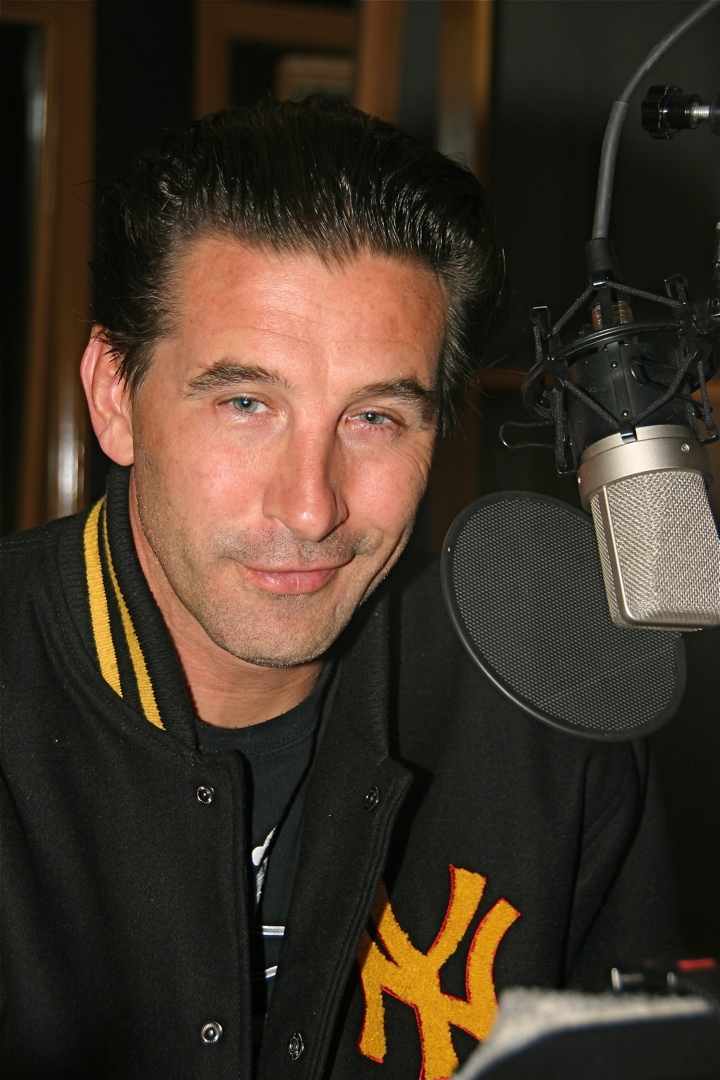 Dirty Sexy Money star William Baldwin slides easily into the famed cowl as the voice of Batman in Justice League: Crisis on Two Earths, an all-new DC Universe Animated Original PG-13 Movie from Warner Premiere, DC Comics and Warner Bros. Animation.
A fan of the super hero genre since his youth when the Baldwin brothers would role play in their backyard, William Baldwin has proudly, enthusiastically undertaken the deep, gravelly vocal tones of the Dark Knight. While Baldwin has crafted a fine career in live-action film and television, Justice League: Crisis on Two Earths represents only his second foray into voiceover for animation, having recorded a few episodes on the Nickelodeon series Danny Phantom.
Beyond ABC’s Dirty Sexy Money television series, Baldwin has offered memorable turns in the feature films Forgetting Sarah Marshall, Flatliners, Backdraft and The Squid and the Whale, the latter of which earned (ironically) a Gotham Award for Best Ensemble Cast.
Justice League: Crisis on Two Earths is an original story from award-winning animation/comics writer Dwayne McDuffie (Justice League). Bruce Timm (Superman Doomsday) is executive producer, and the film is co-directed by Lauren Montgomery (Green Lantern: First Flight) and Sam Liu (Superman/Batman: Public Enemies). The full-length animated film will be distributed by Warner Home Video on February 23, 2010 as a Special Edition 2-disc version on DVD and Blu-Ray™ Hi-Def, as well as single disc DVD, and On Demand and Download.
Baldwin took time after his recording session to chat about visualization techniques in the sound booth, his children’s influence on his choice of roles, the super hero roughhouse role play by the Baldwin brothers (particularly Alec Baldwin) in their youth, and his very nearly being cast in the live-action role of Batman. Now let the man speak …
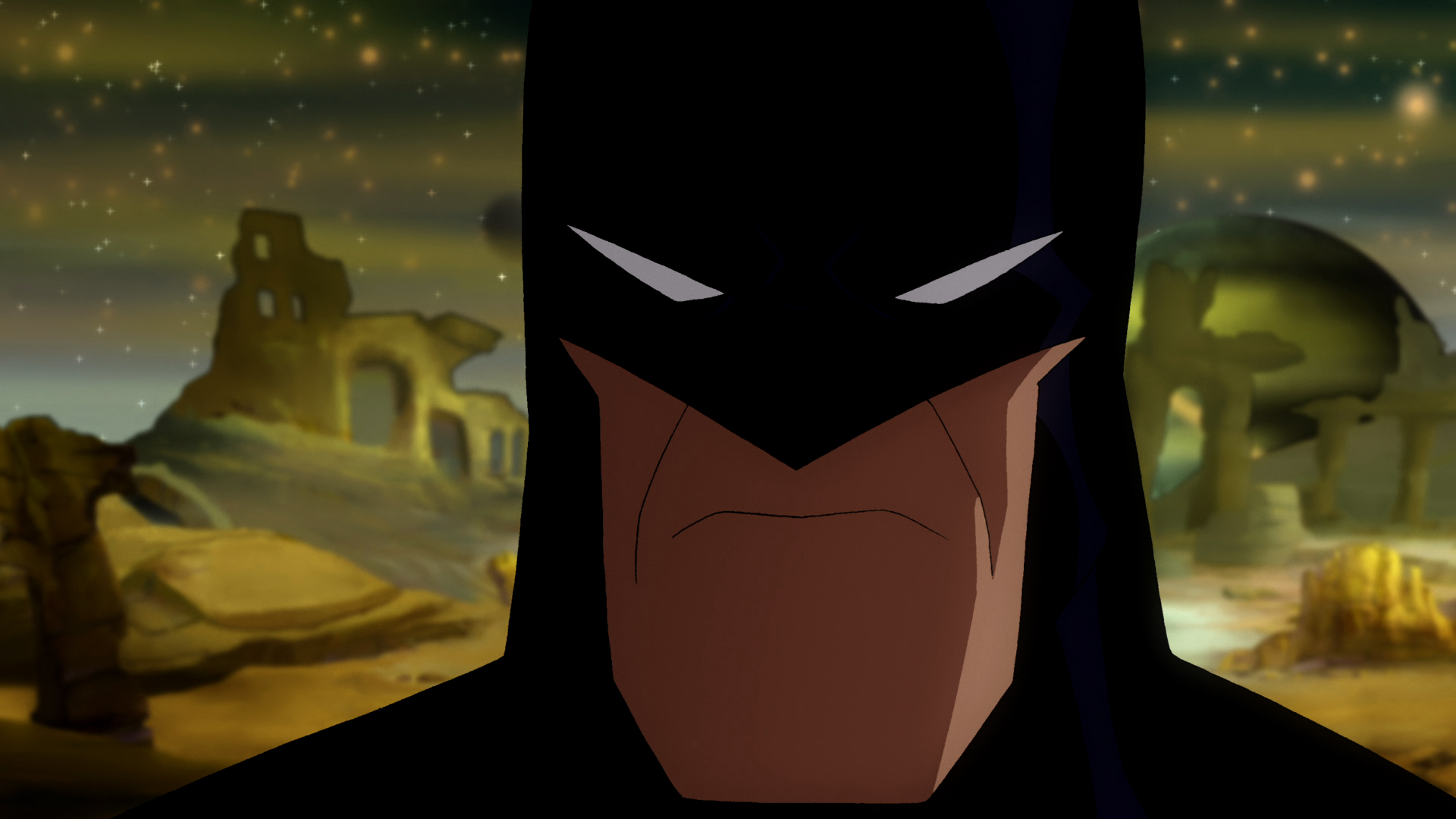 QUESTION: What are your thoughts about joining the list of actors from Adam West and Michael Keaton to Val Kilmer and George Clooney to Kevin Conroy and Christina Bale – that have played Batman?
WILLIAM BALDWIN: I almost did join that group – I was one of Joel Schumacher’s top choices when Val Kilmer wound up playing Batman. Tim Burton and Michael Keaton had left, so Joel had the luxury of replacing Michael Keaton and he told me that his four choices – which was an eclectic, diverse array – were Daniel Day Lewis, Ralph Feinnes, Val Kilmer and me. I didn’t even know it at the time – he told me when I had a meeting with him later. The next time, when George Clooney did it, (Schumacher) said, “You were on my original short list with those other three actors, but the studio went with Val and this time I’d like to go with you.” And that Friday afternoon, I thought I was playing Batman – and then Monday morning, the headlines in the trades said that George Clooney had gotten the part. So apparently, I did actually come very close.
I was very excited to do this. I wasn’t really thinking about any past Batmans, but more of letting the material sort of dictate the choices that I make as an actor. What’s happening physically, what’s happening emotionally, what’s happening in the writing. That’s what really drives your performance.
QUESTION: How did you choose to interpret the character? And was there anything you wanted to do differently than what had preceded you?
WILLIAM BALDWIN: I was mostly influenced by whom I perceive Batman to be, with the possible exception that I think sometimes I allow a certain sensitivity or an emotional dynamic to give (the character) maybe a likeability or an accessibility. That’s almost an insecurity of mine as an actor – to want to breathe a little bit of those types of emotions into characters. I think I find them more appealing and more likeable and more human. What I didn’t choose to do is to go towards the darkness of the way the original Batman series was intended. Because Batman, in the original comic series, was a lot darker than the character that was brought to life in television.
QUESTION: Are there any personal attachments to Batman that make voicing this role special for you?
WILLIAM BALDWIN: It’s a number of things – certainly the history of the character. The people that have been lucky enough to portray Batman on screen, or provide his voice, is a short list and it’s pretty cool. I’m in good company. I enjoyed it as a child, and the character still resonates for me. And I’m a father of an 8-year-old, a 7-year-old, and a 4-year-old – my boy is sandwiched between his sisters, and he just loves the super heroes. We watch Justice League together. I try not to let him overdo it too much with television, but there’s great, wholesome messages that come out of that series. When I told him that I was playing Batman, his jaw dropped. I almost took him out of school today to have him come down here (for the recording session).
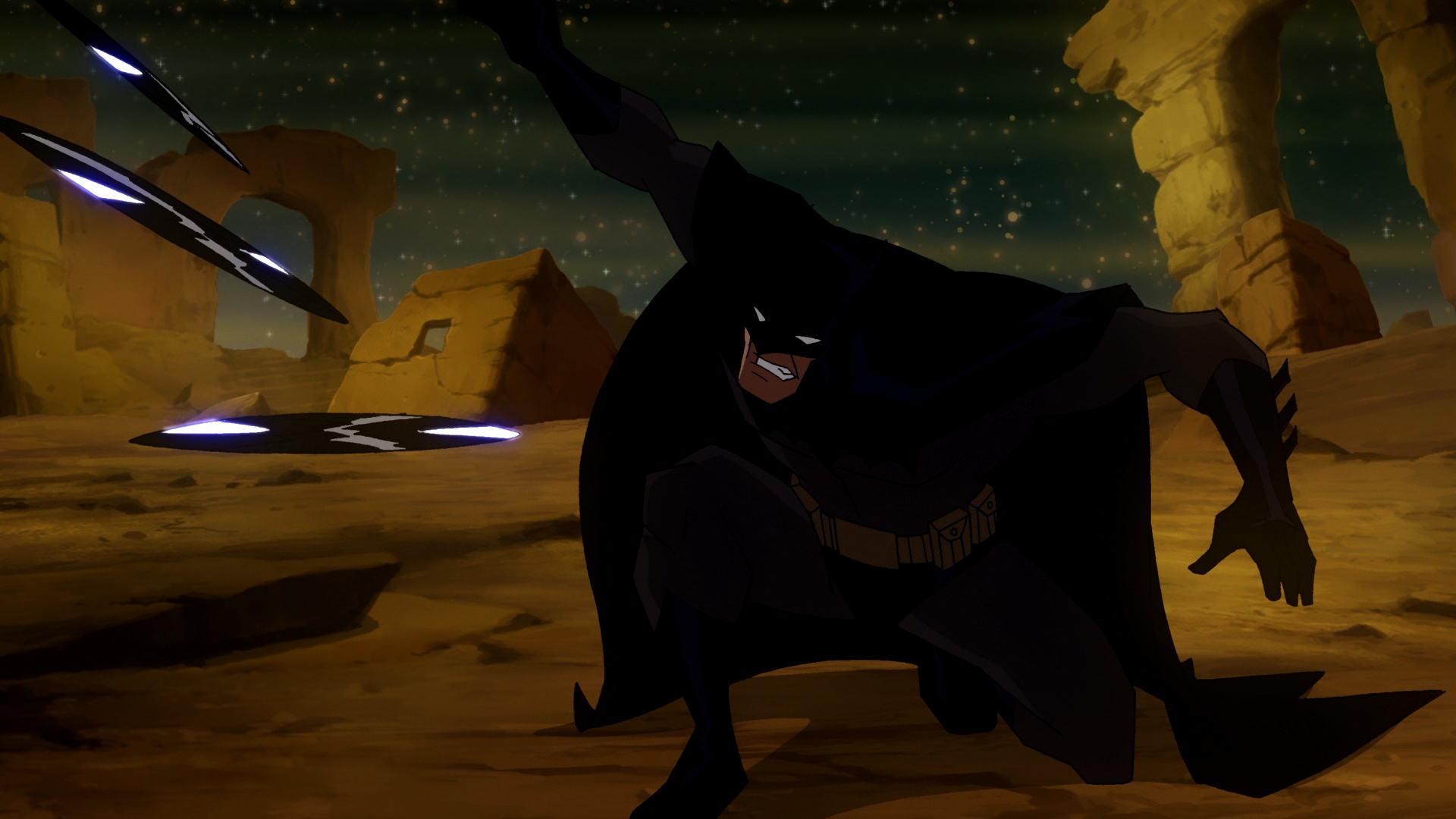 QUESTION: How many times have you said “I’m Batman” in the past week?
WILLIAM BALDWIN: Probably about a half a dozen, usually just joking with my kids and my wife. I was in the studio about a 9-iron from here, where my wife (Chynna Phillips) was recording, and all the band members were giving me different lines to say as Batman. Or having me improvise some lines. And we were having some wicked, twisted fun with it (he laughs).
QUESTION: It seemed you were quite focused in the booth, conveying all the physical and emotional traits as Batman. How immersed in the role did you feel?
WILLIAM BALDWIN: I take it seriously. And I enjoy it, especially recreating the sound effects of the fight sequences and stuff like that. One thing that was interesting to me was how clean they need the lines and, thus, how specific I had to keep my relationship to the microphone, and making sure there weren’t any other sort of ancillary sounds. When I’m doing looping for a film, I guess it’s sort of a method approach. I’ll put things inside my mouth and try to recreate the circumstances or the emotions that existed while I was performing. There’s nothing better than when you’re grunting from lifting something to try and create that sensation. I do a lot of visualization, too. So when you’re having the confrontation with Lex Luthor or Superwoman, sometimes I’ll look through the mike into the booth to somebody in the room. I’ll look at them and just sort of imagine it in my mind, to just pick somebody and lock into that, giving off this energy to them. It’s very helpful for me to have that specificity to lock into.
QUESTION: Did the Baldwin brothers play super hero games growing up?
WILLIAM BALDWIN: You’ll have to get my brother Alec in here sometime – he’s got the scars to prove it. Back in the early ‘60s, he tied a bathroom towel around his neck as a cape and was doing his Superman (impression), and he went through a plate glass sliding door. He ran right through it. He has these big V-shaped scars under his bicep and his forearm from all the stitches that he took when he was five or six years old.
So yeah, we did play super hero games. And my family was pretty rough. I mean, when we were playing super heroes, if there was a cartoon where somebody got thrown off the roof and they landed on the ground with a thud, then Stephen or I got thrown off the roof – into a pile of leaves, or into somebody’s swimming pool.
QUESTION: You rode along with the Chicago Fire Department to prepare for Backdraft. What kind of research went into this performance?
WILLIAM BALDWIN: First of all, some parts lend them self to that type of research and preparation more than others. Secondly, I had a fairly deep understanding of this character because I’ve been watching the shows and films and the character for 40 years. So if I felt like I didn’t have enough of an understanding, I probably would have postponed (the recording session). But when I was looking at the script on a plane a few days ago, I felt it was kind of a piece of cake based on my understanding of the character, and really fueled my attraction to the character and the piece. There’s a lot of two- and three-line exchanges rather than two- and three-paragraph exchanges. There weren’t a lot of monologues that required a lot of line memorization, or anything incredibly challenging emotionally. I just had to get into the rhythm of how the character speaks.
Batman’s spectrum of emotion is fairly narrow – for a number of reasons. He’s always in command, he’s always in control, he’s always holding it together, and he’s pretty tough relative to the rest of us in this room.
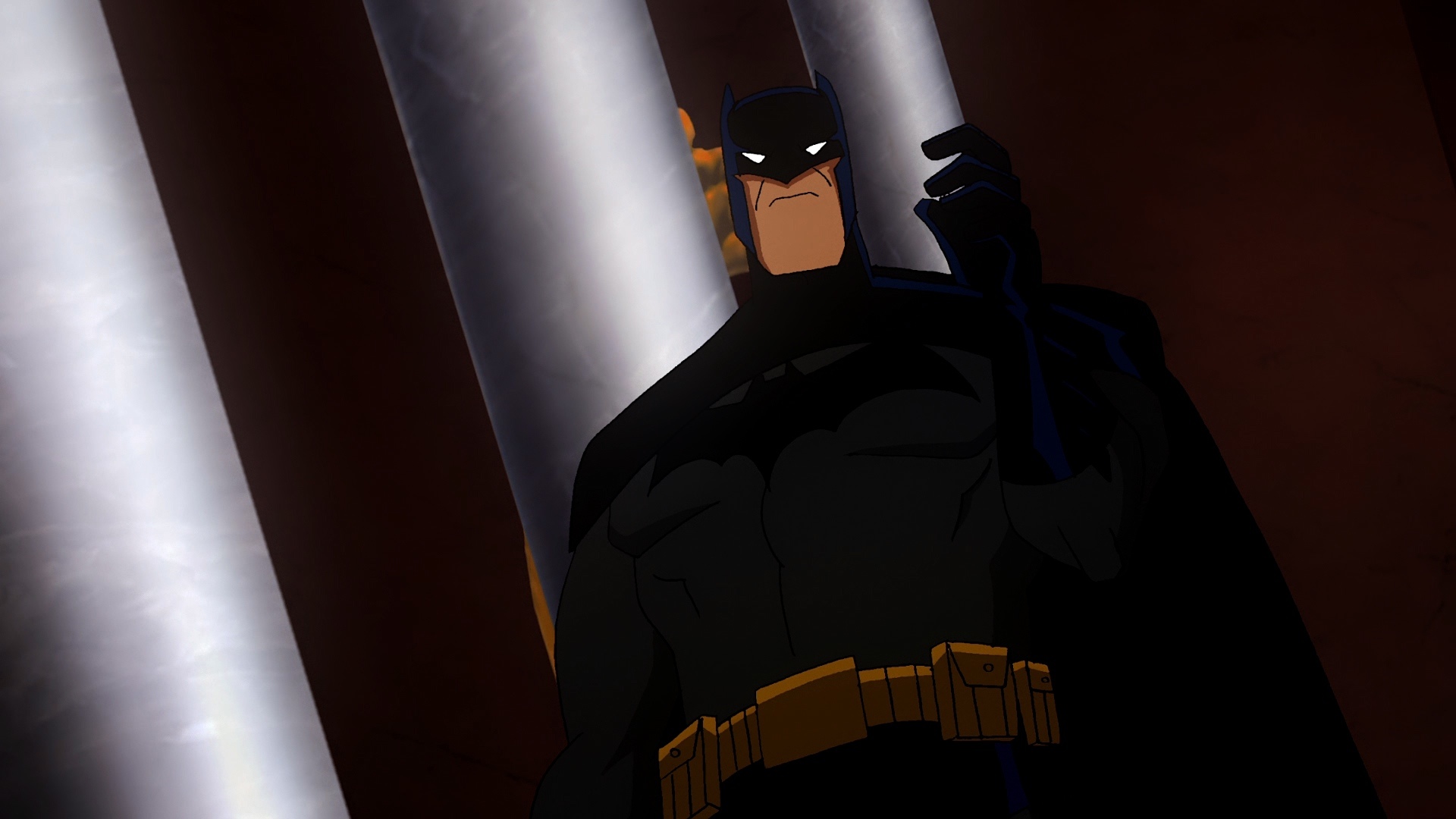 QUESTION: Does the Gotham City/New York connection hold anything special for a lifelong New Yorker?
WILLIAM BALDWIN: There’s always been something cool about (Gotham City) being based on New York – it’s where I’m from, where I grew up, and I’ve spent my whole career there. I remember referring to it as Gotham – not Gotham City, either – more often than I called it Manhattan or New York. I’d be on the West Coast finishing a meeting, and somebody would ask, “Where you going?” And I’d always say “Back to Gotham.”
QUESTION: Did having children that enjoy the genre influence your desire to give voice to an animated character at this point in your career?
WILLIAM BALDWIN: That definitely motivates a lot of the choices that I make as an actor now. I’m looking to be involved with projects that are family oriented. Not exclusively, but I’d like to do some things that my children can see. My brother Alec has done a series of films over the last couple years – Madagascar and Thomas (the Train) and things like that – and the kids got really, really excited about that. And we’re good friends with Chazz Palminteri, and Chazz does a lot of animated voiceover work. When they hear his voice, they really get excited.
I was doing a television series for two seasons, so we would watch that together as a family. Sometimes I would let the kids stay up, and they really got a kick out of it. I did a film last year with Henry Winkler called A Plumm Summer that won a couple of family film festival audience awards. So yes, I’m definitely looking for some choices. Because the films in my past, like Flatliners and Internal Affairs, Three Of Hearts and Backdraft and Sliver, Fair Game and The Squid And The Whale and Forgetting Sarah Marshall, these are all films that my kids aren’t quite ready to see.
QUESTION: You’ve tackled this legendary comic character. What other roles would you like to fill?
WILLIAM BALDWIN: I’d like to surprise some people maybe and do the voice of something that’s much more charactery. It could be much more ethnic. Jewish or Irish or a New Yorker. I have a lot of fun with that stuff. I’d even like to sing. I wouldn’t want to sing in the way that you would need Mariah Carey to sing, but just have a character sing and have fun with that, too.
QUESTION: What were your impressions of this animation experience versus some of your previous experiences?
WILLIAM BALDWIN: I’m getting better at it. I’m very tough on myself, so I’m never quick to say that I felt like it was great when it wasn’t. I usually have my own sort of standards that I set for myself. It felt like I was able to achieve my objectives more quickly. I think that comes with maturity as a performer and, uh, it’s nice to know. Because there’s been times where I’ve done voiceover work where they would normally allot two hours for someone who can bang it out, and they would have to allot three or three and a half or four hours. It’s not that I couldn’t do it quickly, it’s just that I’m such a perfectionist. I tend to be saying “Let me try that again. Let’s do one more … one more … one more.” I think I said, “Let me do one more” about 10 times today, which wasn’t a lot. Sometimes I say it 100 times. I think everybody thought that it felt right, it felt good, it sounded great. It’s always fun, but I want to get it right.
QUESTION: Is it difficult acting alone in the booth?
WILLIAM BALDWIN: It forces you to hone in and focus on the performance aspects and the emotional aspects of what you’re trying, and visual them in your head. Acting is not acting, it’s reacting. You’re reacting to what somebody’s saying and how they’re saying it. That was great about the television show that I just did (Dirty Sexy Money) because the props department would tie me in when we would do something like a telephone conversation. When I had one with Donald Sutherland, I didn’t have to come into the studio to do it. They would just have me call on my cell phone from my home in Santa Barbara, and I would call in when the camera was rolling and I would literally have the conversation with him. In the old days, sometimes you would have the other actor come in on his off day just to read that telephone conversation off camera. Then that changed and you would wind up reading this telephone conversation with the script supervisor who (A) is not an actor, and (B) does not know what the choices of the actor are going to be when they shoot his side of the telephone conversation in two weeks. That can be very difficult and very stilted when they cut that telephone conversation together – sometimes you can tell by the way someone’s reacting to a line that they weren’t hearing the actor do it on that day. They just interpreted what they thought the actor was going to do on that day, and they were wrong. I’m talking about stuff that’s very subtle, like someone raising their voice a little bit in the reaction to the other person. Little things. But that’s acting. You’re not just reacting to the words, you’re reacting to the way the words were said. Was it threatening? Was it menacing? Was it intimidating? Was it submissive? It’s all based on little layers and subtleties.
QUESTION: Can you compare acting on camera to acting in the booth, and how Andrea Romano was able to guide you through those differences?
WILLIAM BALDWIN: It’s sort of a mixed bag. On camera, you’re usually acting to another actor who you’re looking at, who’s in the room with you. Today, I was in the sound room and Andrea was behind the glass. And she’s not an actor. But for a director, from a performance standpoint, she was giving me more than enough. What really helped was the specificity of her notes. When something wasn’t right, she would give me a note that would 180 it, or she would give me a little subtle note. That was great. “You’re forgetting to add in this layer” or “Give me a little bit more urgency.” At one point, I throw a punch and Superwoman catches my fist and starts to squeeze my fist. And I said, “Do you want me to wince and scream in pain when she’s crushing my fist? And am I supposed to fight the temptation of revealing to a woman – because wouldn’t Batman wouldn’t want to give away that power that a woman is causing the pain.” I mean, it would be different if Lex Luthor or Superman were doing this, right? So we sort of hashed that out and found those sort of things as we were going along.
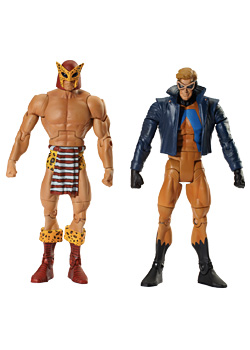
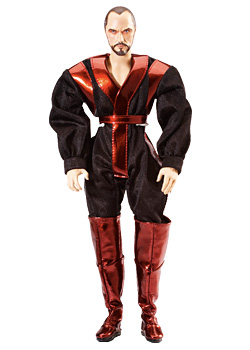
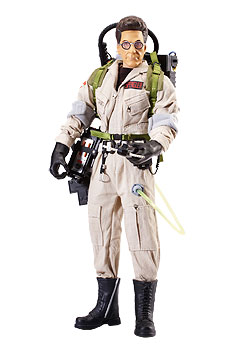
Thanks to Matty Collector.com you can now order these pieces of pop culture goodness, including the D-list DC characters B’Wanna Beast and Animal Man (as a Justice in the Jungle 2 pack), a 12″ General Zod from Superman II and a 12″ Egon Spengler Ghostbusters figure. The last two come with real cloth costumes and nifty accessories. Go here to see these figures and others including Skeletor and a kiddy Hawkman.
DC Comics has been doing this for a while to promote new series and now Marvel is getting in on the act. This is a great opportunity for the comic curious, or fanboys looking to get a start on some great recent superhero series. Details below.
Start Here with Marvel’s Greatest Comics For Only $1.00!
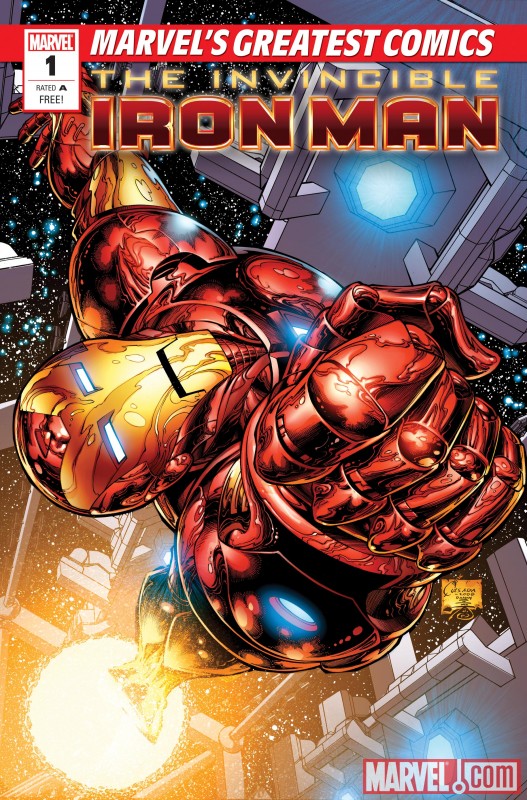 Marvel is proud to announce the all-new Marvel’s Greatest Comics imprint, spotlighting Marvel’s most-acclaimed series with new printings of these must-read issues priced at only one dollar each! This bold new venture, launching in March 2010, offers a perfect jumping on point for new readers as well as provides retailers with a great low cost first chapter to some of the hottest selling Marvel Collected editions. And to really get things going, the first title from this line, Invincible Iron Man #1, is free!
“We’re proud of the books Marvel publishes and now not only are we giving retailers a great way to promote our top collections, but also giving consumers a chance to sample some of our top comics, maybe for the first time and at an unbeatable price,” said David Gabriel, Marvel Senior Vice-President of Sales & Circulation. “Marvel’s Greatest Comics represents one of the best values in comics today and with Free Comic Book Day only months after the initial launch, retailers will want to be well stocked.”
Retailers can check upcoming editions of the Marvel Mailer or with Diamond Customer Service to find out how they can qualify for the free copies.
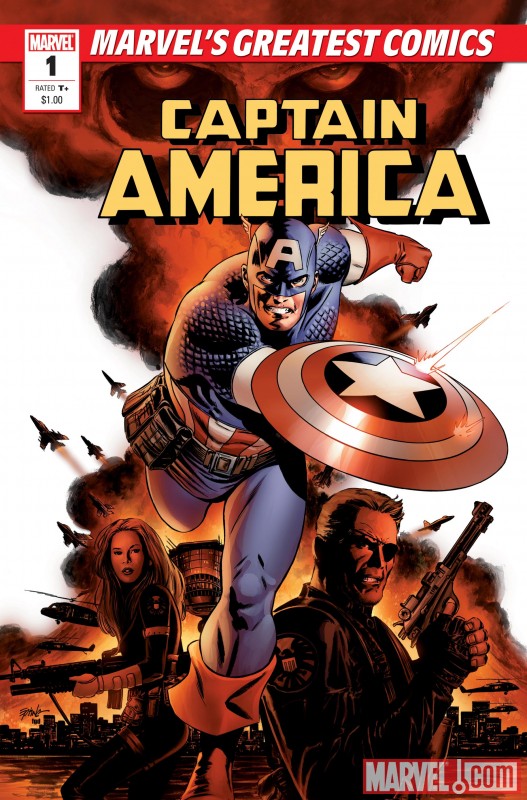 The titles launching in March, at one per week, are:
March 3: INVINCIBLE IRON MAN #1
March 10: CAPTAIN AMERICA #1
March 17: WONDERFUL WIZARD OF OZ #1
March 24: THOR #1
March 31: PUNISHER MAX #1
Stay tuned for more details on Marvel’s Greatest Comics at www.marvel.com!

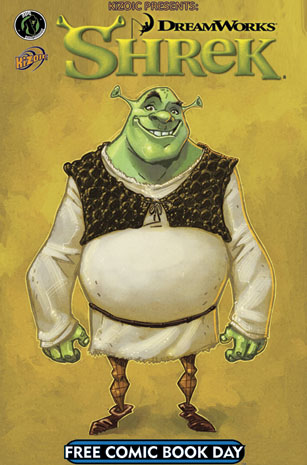
Indie publisher Ape Entertainment have made a bold new addition to their line-up – a line of all-ages comics. Yay! It’s good to see more indie publishers getting in on the kids books act, as there’s still a huge market there. I did notice that they just (very quietly) acquired the Shrek licence from DreamWorks, as seen this week on the just announced list of Gold Sponsors on May’s Free Comic Book Day. Good on them. That’s quite the coup. Also recently unveiled as part of their KiZoic line is next year’s Scratch 9 from Rob M. Worley and Jason T. Kruse. Details below.
 Ape Entertainment today announced plans to publish the all-new young readers comic book miniseries Scratch9, in the summer of 2010 as part of its newly-unveiled KiZoic imprint.
Created by writer Rob M. Worley, Scratch9 features the adventures of a rascally house cat who gains the ability to summon any of his eight other lives to his side to aid him in his adventures.
“I’ve seen what today’s cats are reading and frankly I’m concerned. They’re all walking around saying, ‘LOL,’ and, ‘I can has cheezburger,’ when they don’t even know how to spell ‘cheeseburger,'” said Worley, author of the critically-acclaimed junior novel Heir to Fire. “It’s about time we put forth a positive role model for cats. That’s what we’re doing with Scratch9.”
Illustrating the book is Harvey Award nominee Jason T. Kruse, creator of the graphic novel series The World of Quest which has gone on to become a cartoon airing on CW4Kids, Teletoon and Cartoon Network UK.
The four-issue series features covers by Eisner-winning artist Mike Kunkel, creator of Herobear & the Kid and artist on DC Comics’ Billy Batson and the Magic of Shazam!

“The second that co-publisher Brent Erwin and I saw ‘Scratch9,’ we knew it was a hit in the making,” said Ape Entertainment Co-Publisher David Hedgecock. “Perfect premise matched by an outstanding creative team. We can’t wait to get this into the hands of young readers!”
The book is the second announced offering in Ape Entertainment’s KiZoic line, following Mecha-Nation. KiZoic specializes in content aimed primarily at young readers.
“I couldn’t be more excited to be doing this book with Ape. They’ve been doing kids comics since day one and I knew Scratch9 would fit right in,” Worley said. “And there are some huge things coming from KiZoic. My little cat is going to be keeping some amazing company there.”
Current plans are to solicit Scratch9 in the Diamond Previews catalog early next year with the book arriving in comic shops in the summer.
The 7th entry in DC’s excellent animated films is focused on 2 things near and dear to any true DC fan’s heart – the Justice League and multiple earths. We’re featuring February’s Justice League: Crisis on Two Earths as one of our so-called Objects of Desire for the first quarter of 2010 in the debut ish of the Arcana magazine. Thanks to Warner Bros. below is an interview with the directors of this film.
DIRECTORS LAUREN MONTGOMERY & SAM LIU DISCUSS JOYS & CHALLENGES OF JUSTICE LEAGUE: CRISIS ON TWO EARTHS
When you’re dealing with a story so huge that it spans multiple Earths, it’s sometimes a good idea to arm yourself with multiple directors – as did the production team behind Justice League: Crisis on Two Earths, an all-new DC Universe Animated Original PG-13 Movie from Warner Premiere, DC Comics and Warner Bros. Animation.
Lauren Montgomery and Sam Liu, the animation directors of the past three DC Universe films, have combined their talents to bring Justice League: Crisis on Two Earths to the screen as a blockbuster tale of super heroes and super villains engaged in the ultimate battle of parallel worlds and, through a diabolical plan launched by Owlman, puts the balance of all existence in peril.
Montgomery has been an active member of the directing team behind several of the DCU films, initially guiding the middle section of Superman Doomsday before accepting the sole directorial role for both Wonder Woman and Green Lantern: First Flight. After directing several Hulk and Thor ventures for rival Marvel, Liu made his long-form directorial debut for the DCU series on Superman/Batman: Public Enemies.
As the film’s lead characters are armed with similar talents while coming from distinctly different perspectives, the same can be said of the two directors of Justice League: Crisis on Two Earths. Both Montgomery and Liu are relatively soft-spoken individuals, yet both are opinionated in their approach to animation, diligent in their work ethic, and dedicated to achieving the best possible outcome. Over the
course of making the film, they came to learn a great deal about the other’s vision, and the result is even greater than the sum of their talents.
Justice League: Crisis on Two Earths is an original story from award-winning animation/comics writer Dwayne McDuffie (Justice League). Bruce Timm (Superman Doomsday) is executive producer. The full-length animated film will be distributed by Warner Home Video on February 23, 2010 as a Special Edition 2-disc version on DVD and Blu-Ray™ Hi-Def, as well as single disc DVD, and On Demand and Download.
Montgomery and Liu paused from their current DCU projects (shhh … it’s a secret) to discuss their thoughts on the creation of Justice League: Crisis on Two Earths. FYI: The interviews were conducted separately. Montgomery’s answers are listed first because, well, decorum dictates that ladies go first …
QUESTION: How did you two go about co-directing Justice League: Crisis on Two Earths?
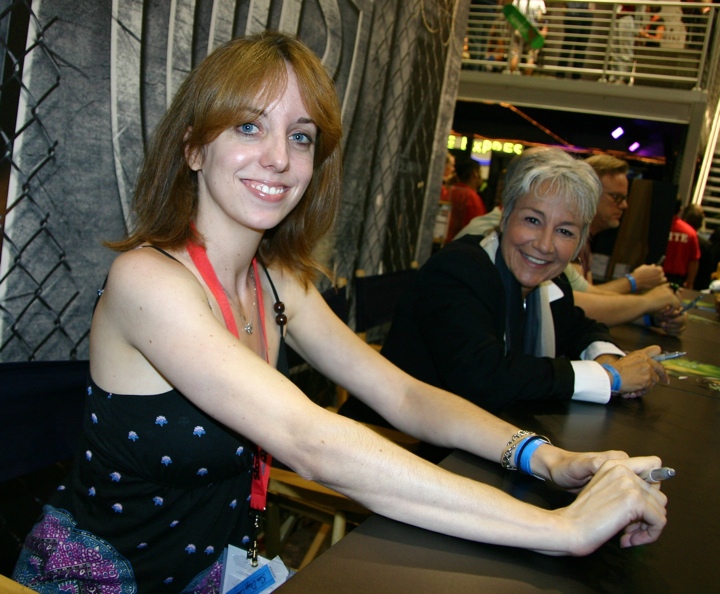 LAUREN MONTGOMERY: We kind of just went over the whole film together and it was really good to get two different points of view as a check and balance for
each other. If we disagreed, we found compromises that would work. If one of us felt strongly about something, we just traded off – Sam would take a sequence he felt strongly about, then I’d take one I wanted. But for the most part, we agreed. We both work in such different ways, it was interesting to see how someone else works and learn from it.
SAM LIU: We went through the film front to back, and if we ran into a problem or an area where either of us had an issue, usually where we thought it could be stronger or could be playing better, we usually solved it right on the spot. If we got to a section that was requiring a lot more revisions, one of us would jump on it and the other would move the rest of the film forward until we hit another rough spot. So that was our process.
QUESTION: What have you learned from each other?
LAUREN MONTGOMERY: Sam breaks things down a lot, he’s very analytical. I tend not to. He spends a lot of time thinking about the story and getting into all the
nooks and crannies of it, and I like to work with the general story. He’ll read the whole book, I’ll read the back of the book. I try to get the emotional points down so people can understand them, but Sam will go even deeper to use shots and set-ups to drive the point home, sometimes metaphorically. He thinks harder than I do.
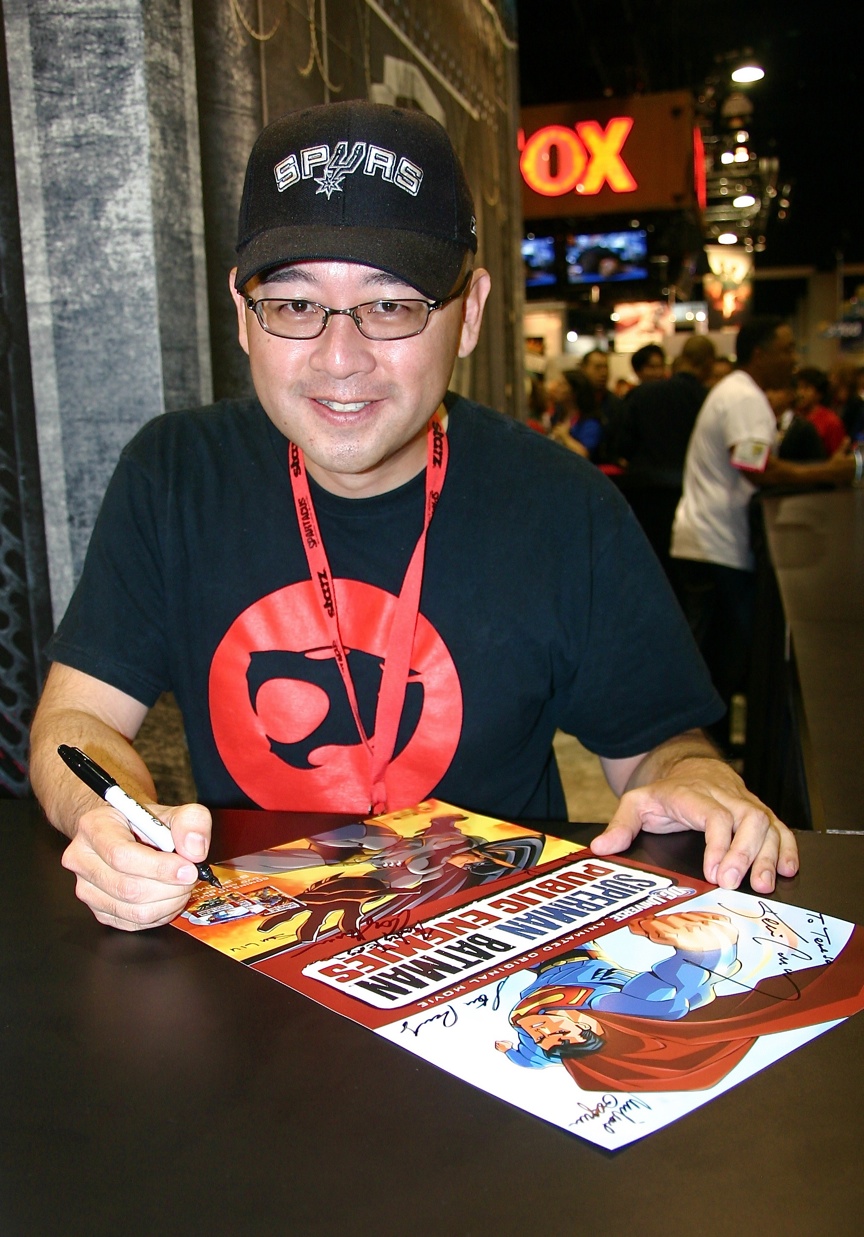 SAM LIU: Our processes are very different. I like getting into a script and breaking things down. Maybe I don’t have the best ideas, but I’m pretty good at recognizing where things are needed. I really liked the back and forth process (with Lauren), talking about ideas and batting it back and forth to find a good solution. Lauren is more instinctual, she works more from the gut. And I think she works off reaction rather than an intellectual breakdown. I’m the other way by process. But I do feel like sometimes I over-analyze things, when sometimes it’s almost like the emotional flow of the movie is good enough. Lauren gets that. Sometimes logic can be bypassed if the scene is engaging enough, or interesting enough. It’ll bridge gaps and you don’t need to analytically fix all those gaps.
QUESTION: What do you think you might have taught each other?
LAUREN MONTGOMERY: I think Sam stresses out slightly less when I’m around. He stresses and I don’t. I think I calm him down a little bit. But when he’s
alone, he stresses out just as much. Hopefully I helped with that.
SAM LIU: I don’t think I taught her anything (he laughs). She’s a free-flowing,
shoot-from-the-hip kind of person, and I’m kind of an angster – I nitpick things. I like getting into the story, and from there some things do need working out – things related to the emotional journey of a character that need to be highlighted or punctuated to set something up for later. I’m a stickler for things like that. And I
think she saw those things.
 I do stress, though – and there are times when I’m freaking out about something and she puts me at total ease. And then there’s times when I’m freaking out and she’s fighting me on it, and it makes it worse. I think we’re both control freaks in our own way, it’s just a difference in approach. I fixate on a lot of things, and she thinks things are just good enough, so let’s move on. We have an innate concept about the overall picture, but she focuses more on the acting and poses and timing and movement, and I think more on structure. I guess there’s a good balance.
QUESTION: Do you have a favorite scene in Justice League: Crisis on Two Earths?
LAUREN MONTGOMERY: There’s a fight between Wonder Woman and Olympia that I thought was really beautifully animated. That’s always fun to watch. It was
boarded well, but the overseas animators took the drawings from the boards and really plussed it out. I think they just enjoy animating girl fights overseas because those scenes always come back looking good.
SAM LIU: More than one scene, I like the overall relatability of the Justice League characters. There was great character interaction. When I watch movies, I like something that has an emotional connection, and this film definitely does.
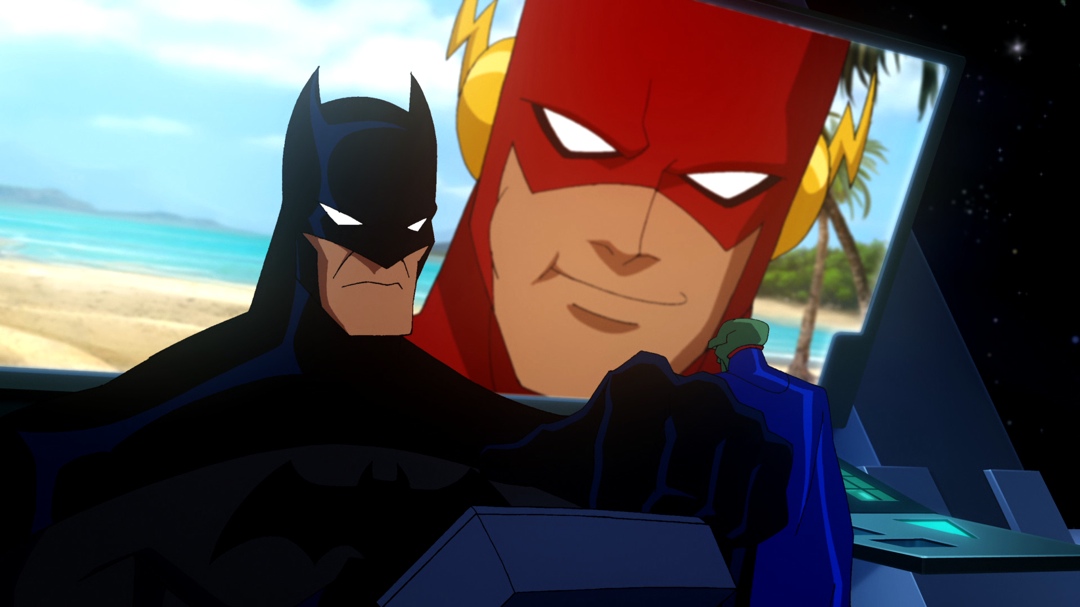
Specifically, I think the spectacle of these evenly matched supers fighting was really cool. Superman versus Ultraman. Flash fighting someone equally as fast. Strengths against strengths. Jay Oliva boarded the last fight sequence and the Superwoman-Wonder Woman fight is great. They’re both strong, super powerful women and I think it was brutal enough as is, but the way Jay made Wonder Woman use the lasso to slam Superwoman to the ground is pretty amazing.
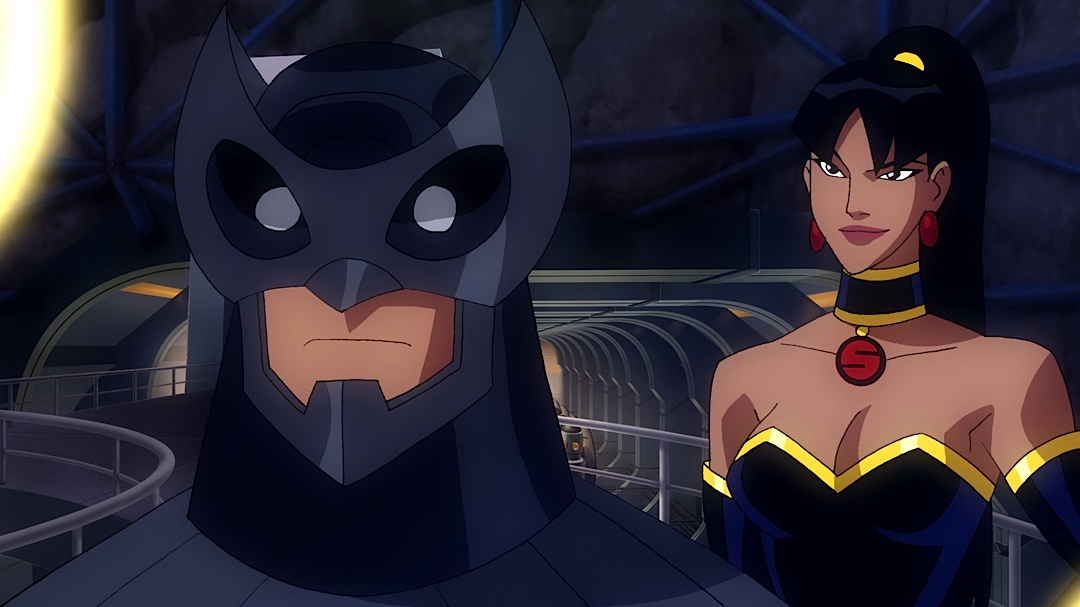 The battle between Owlman and Batman is awesome, too, because it’s sort of this weird intellectual standoff. Owlman is so far into his psychosis as to how the universe operates, it’s very existential. His concept is crazy, but the way he reasons out the technology of how things work and the way he thinks, it gave us great room to improvise Batman’s reaction. And then when they actually fight, it’s brutal. They do these gadget fights, sort of a modern ninja battle. The sound effects on the planet, the colors, the way it’s animated, it all works really well. And James Woods’ voice is perfect – most of the Crime Syndicate is very thuggish, they’re all about stealing money. But Owlman has created the ultimate plan to annihilate everybody, and James Woods does this great build-up. It’s great acting. He plays
Owlman as a little bit off and kind of creepy, but not sinister creepy. His cadence is great, and his voice is almost charming in a way. It was a good mix of all the things I thought we’d have a problem with if we went too far one way or the other. It’s a great, tight sequence and I’m very happy the way it all came together.
QUESTION: What were the challenges of directing this film?
LAUREN MONTGOMERY: It was a challenge because we had a really large cast of characters – lots of main characters – and they all needed a decent amount of
screen time. Both the good guys and the bad. We had to make sure the audience got to know each of those characters and make sure they had a presence in the film that was important, and that was a challenge.
SAM LIU: Definitely the size of the cast and how to give enough screen time to
everyone. At one point, Green Lantern was a little light on having enough important things to do. We needed to add a bit for Lex Luthor, too, and I still don’t think we did enough. We added a fight to show that Lex can fight, too, and tried to beef him up a bit. But there just wasn’t enough screen time to accommodate everyone.
QUESTION: Do you have a favorite character?
LAUREN MONTGOMERY: Superwoman … just because she’s so wrong. She’s a bully, but she’s got the muscle to back it up. She’s everything you shouldn’t be, but is fun to work with.
QUESTION: What skills you learned or developed on past projects were you able to apply to this film?
LAUREN MONTGOMERY: We had the same animation studio that did Wonder Woman, so we were able to draw from the work done on Wonder Woman and improve on that. Overall, the animation was good in Wonder Woman, but there was some poor stuff, too. I think they really improved – they saw what we
responded to in Wonder Woman and they tried to do what they knew we liked, and it was good.
SAM LIU: I think, this whole process was better for me this time, especially working with Bruce (Timm) and Lauren. I was able to let go a little bit and not have to over-think things, and still know that things would work out. I generally stress over everything until the very last minute. With Lauren, I sort of learned that you can say “that’s enough” and move on to the next thing. I appreciate Lauren and her patience, and that we’re still friends. In the end, you take care of the important things and everything will work out.
QUESTION: So, are you happy being an animation director?
LAUREN MONTGOMERY: It’s never been an easy job. It can be draining. But it’s still a really fun job. I mean, we get to work on great stories with iconic characters. I know people who would kill to work on Batman and Superman. When you think of it that way – well, if I weren’t working in this job, I’d definitely want to. A little bit of the excitement is taken off because I’ve done it so many times, but it’s still a really cool thing to do.
SAM LIU: I love doing long-form animation. I’ve been offered to go back to TV
series, but I like this better. Direct-to-videos are hard – you have a short amount of time to create a world from the ground up every time and, once it’s done, it goes on the shelf and you move on – but I’m so glad I don’t have to deal with BSP (Broadcast, Standards & Practices – the network’s content watchdogs). What I love most is that you get to tell stories people can love, you can have emotional pain and great action, and you get to work with things that are too adult for
children’s broadcasting. That’s the stuff that I like – telling full stories. So I’m very happy.
QUESTION: What’s your favorite part of the job?
LAUREN MONTGOMERY: The best part is when you see the film start to come back (from overseas animation studios) and it’s looking good. That’s a really
nice part. When you see it coming together to be something good, that’s very satisfying. You know all your hard work has paid off.
SAM LIU: I think it has to be working with the story and the characters. I love
the development of the characters and how they fit into the story, helping their growth, even if it’s subtle or small. I like finding the core of what our story is about and trying to push that story. I think most of the time it’s about the characters and their conflicts in the beginning, and how they resolve those conflicts. On this film, we were able to do that a lot even after production had been underway – particularly with Batman’s motivation, and showing why it was important for him to stay behind and get Watchtower online. Superman believes one thing; Batman has a different opinion. It’s a conflict, and it pays off later.
QUESTION: You’ve been living with this film for well over a year. Can you still watch and enjoy it?
LAUREN MONTGOMERY: I enjoy it most with a new audience. You get to see their reactions, and it makes me look at it in a new light. I enjoy watching all of our movies, which is a good thing – it’s nice to be able to watch what you’ve done and feel good about it.
SAM LIU: It’s hard sometimes, because when you’re making a movie, there’s so
many things you want and wish for, and you still tend to see the things that are missing. In this case, I’m comfortable watching because there are so many things that were done right. I’m not comfortable watching some of my older stuff. But this is one of the best movies I’ve ever worked on, and it’s very satisfying. I think
there’s the right amount of action, good conflict, good closure, and intelligent characters. They’re not just one-dimensional characters. So it’s satisfying to watch.
QUESTION: What’s the DC Universe film you hope to direct some day?
LAUREN MONTGOMERY: I want that Aquaman project, but I doubt we’ll every make it.
SAM LIU: I’d love to do Sandman from the Vertigo line. I don’t know what kind
of story that would be, but I’d love to work with Neil Gaiman because I really loved those comics.
QUESTION: Now that you can see the final product, how do the voices match their animated characters?
LAUREN MONTGOMERY: Gina Torres and James Woods are probably my favorites. Everybody loves Owlman. He’s such a unique character. Gina is really good as Superwoman – she has this strong, seductive, confident voice, and it makes you fear and respect her. Mark Harmon is really good as Superman. At first I was worried because I thought his age might come through, but his voice really works well. It’s funny because when we started watching the voice with the animation, it struck us how you could hear little tones of George Newbern and Tim Daly – two of our regular Supermans – in his voice, which is pretty cool.
SAM LIU: I really liked Mark Harmon – he’s got a gentle streak and it goes
really well with the strength of his voice. When he was in the recording booth, I thought he might be too gentle, but it works even in the scenes where he has to be more assertive or powerful. I think it works really well because it never crosses that line of him being mean or not genuine or sneaky. It’s very pure, just as Superman should be.
I also thought Josh Keaton did a great job as Flash. He’s hilarious. So much of these movies are based on the acting, and Josh really sold it. The chemistry between characters was good, too. James Woods and Gina Torres have this strange relationship, and their acting makes them real characters. They really engaged their personalities. That’s what good actors do. The voices in this cast really flesh out the characters and give them texture.
Arcana Comics is Canada’s biggest comic book publisher, and the giver of a great opportunity I’m blessed to be a part of, with my creative cohort Dave. If you haven’t seen the trail of breadcrumbs I’ve been laying over the last few months, I’m co-cretaing a new quarterly comics mag, entitled Arcana, which is released on January 27. The latest Arcana Comics newsletter went out today and here’s the mention of the mag, plus a mention of Dave and I by Sean O’Reilly,(interviewed by his VP Mark Poulton) the guy who founded Arcana Comics. Wow, it’s pretty easy to pat yourself on the back and type simultaneously!
Arcana Launches Comics & Pop Culture Magazine!
Arcana Studios, an award winning comic book publisher and transmedia producer, is proud to announce the launch of Arcana Magazine. Debuting on January 27th, 2010, and solicited in the current November Previews (Diamond Code: NOV09 0599) is the new quarterly magazine simply entitled Arcana, the re-designed print version of the on-line comics based magazine Extra Sequential. The first issue features interviews with Star Wars: Invasion writer Tom Taylor, artist Josh Medors, Singaporean writer Edmund Shern, Surrogates creator Robert Venditti, and ground breaking artist David Mack. Also included are previews from upcoming comics and features such as a look back at the Death of Superman event, a talk with pro cyclist/comics fan Dave Zabriskie, a brief chat with the legendary Marv Wolfman, and an article of the current love affair between musicians and comics, including an interview with Coheed & Cambria’s Claudio Sanchez. There’s also a look at just how to market comics today, a breakdown of popular comic book terms and more. Arcana #1, a 96 page full color magazine goes on sale January 27th, 2010.
http://www.arcanaquarterly.com
MP: Arcana has a new pop culture/comic magazine due out in January. What sets it apart from other magazines and what can fans expect?
SO: Our key people, Kris Bather and David Lapsley, are creating a magazine that is like no other. It’s focus is art…it’s Wizard meets Maxim with a strong artistic direction. I really am excited about this magazine as it will open up new doors for our publishing arm.
Dog Eaters, written by Malcolm Wong with great art by Guillermo Angel wasn’t fortunate enough to get every issue of its 6 ish mini-series out from troubled publisher, Dabel Bros. However, now that DB has been bought by Dynamite Entertainment, hopefully other similar unfinished series may get a second chance.
As for Dog Eaters, the Trade will be released as a digital download when all 6 issues are finished, with the 4th ish currently being completed. A spiffy “music-animatic” of the debut issue for the series is below and Malcolm’s Dog Eaters blog can be found here. You can also get the first 3 issues here.
 comicbookjesus