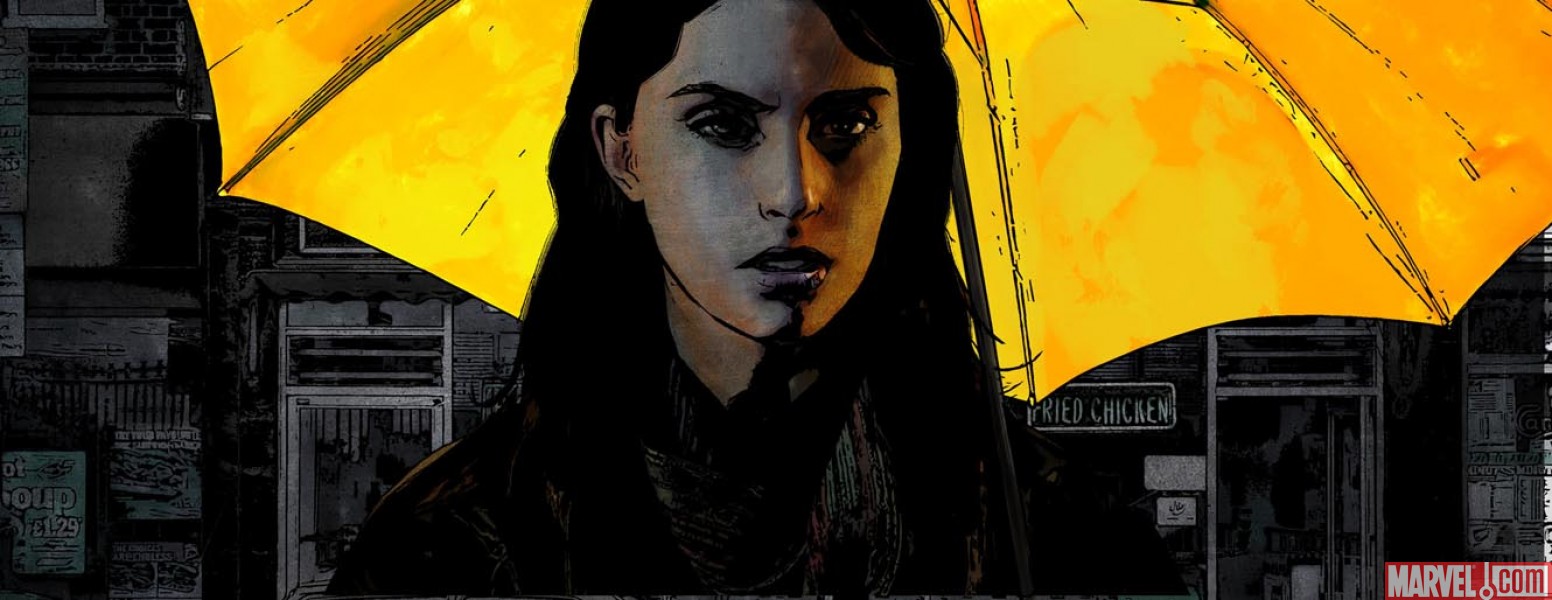
The Spectre Preview

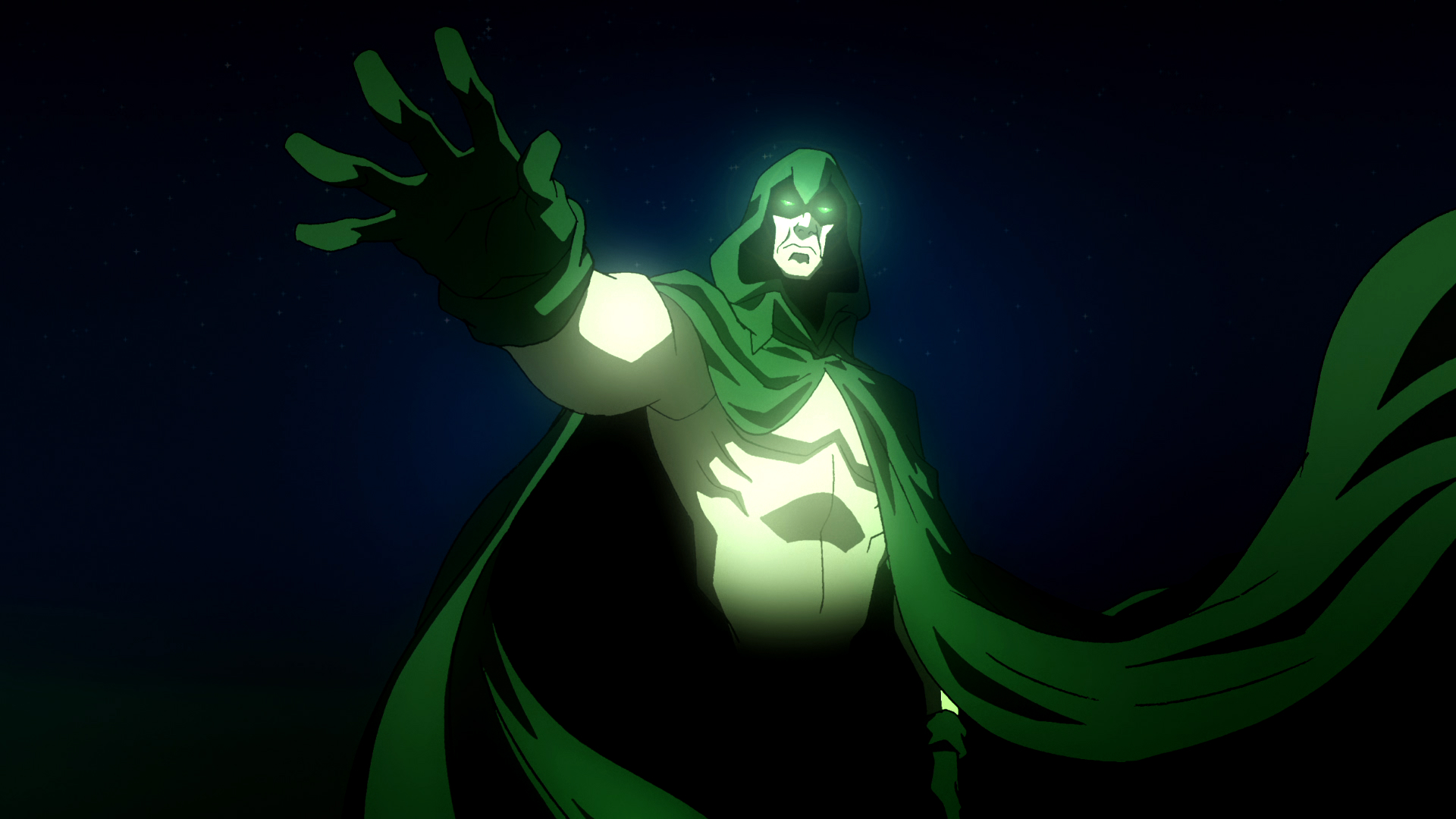
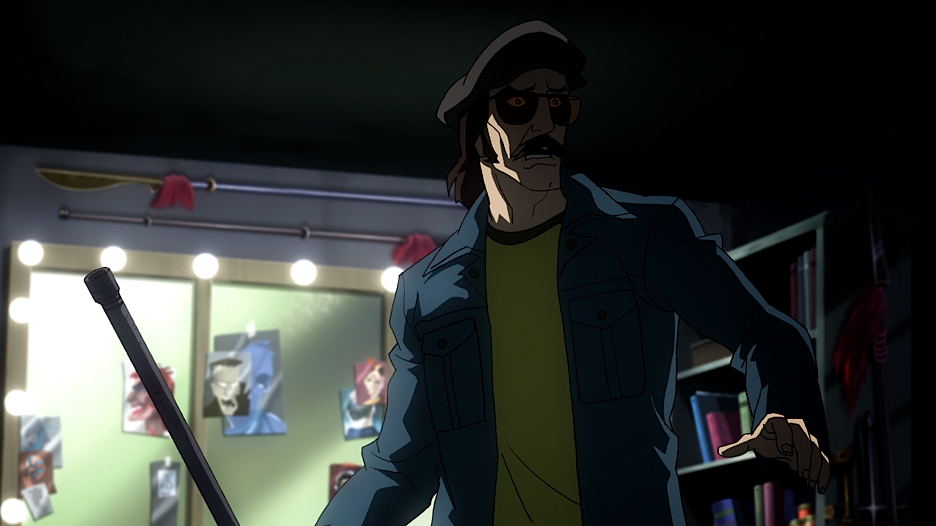
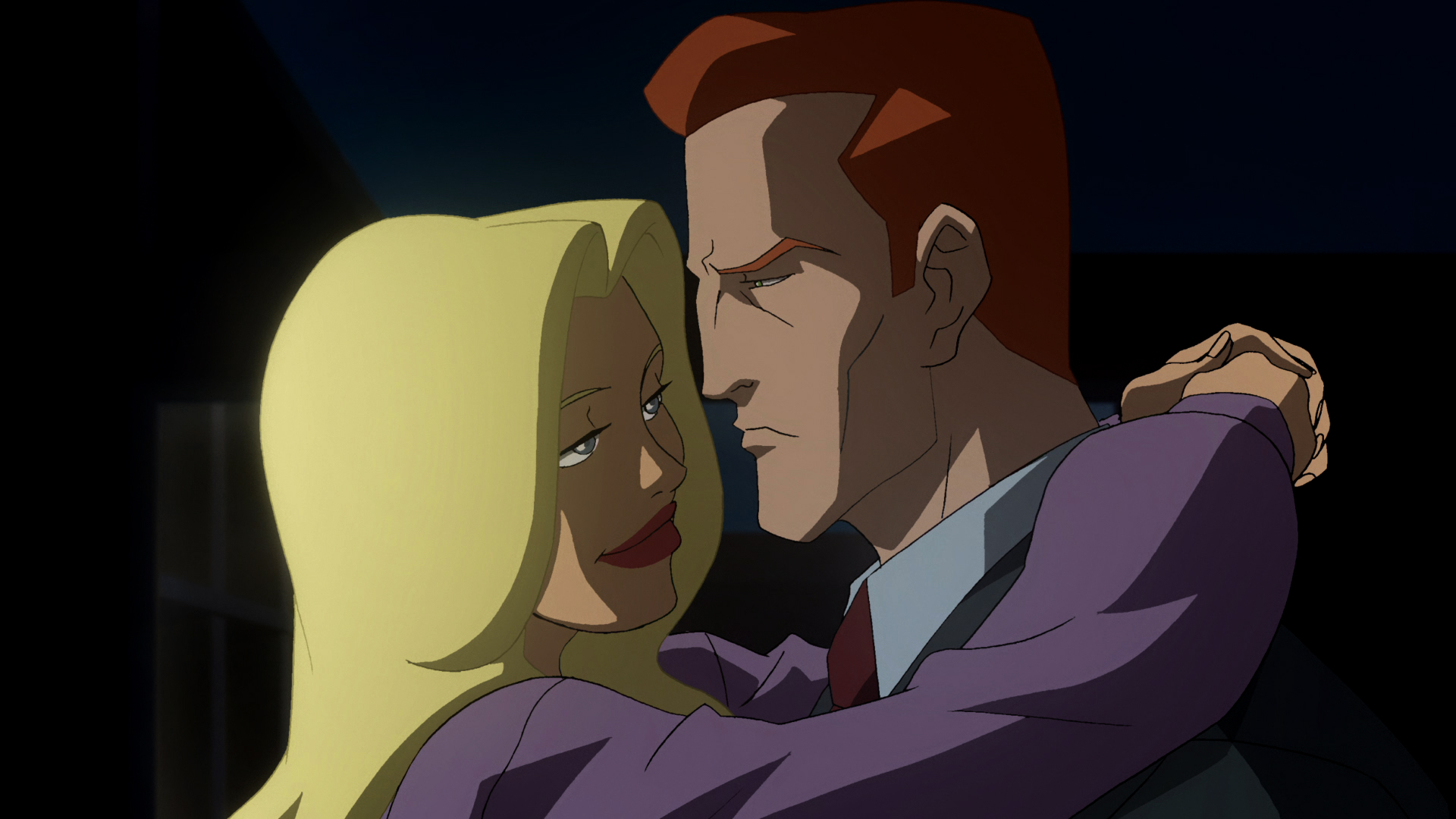
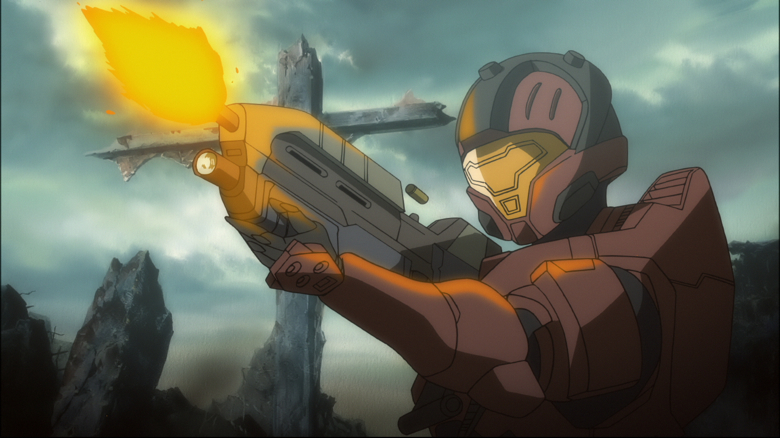
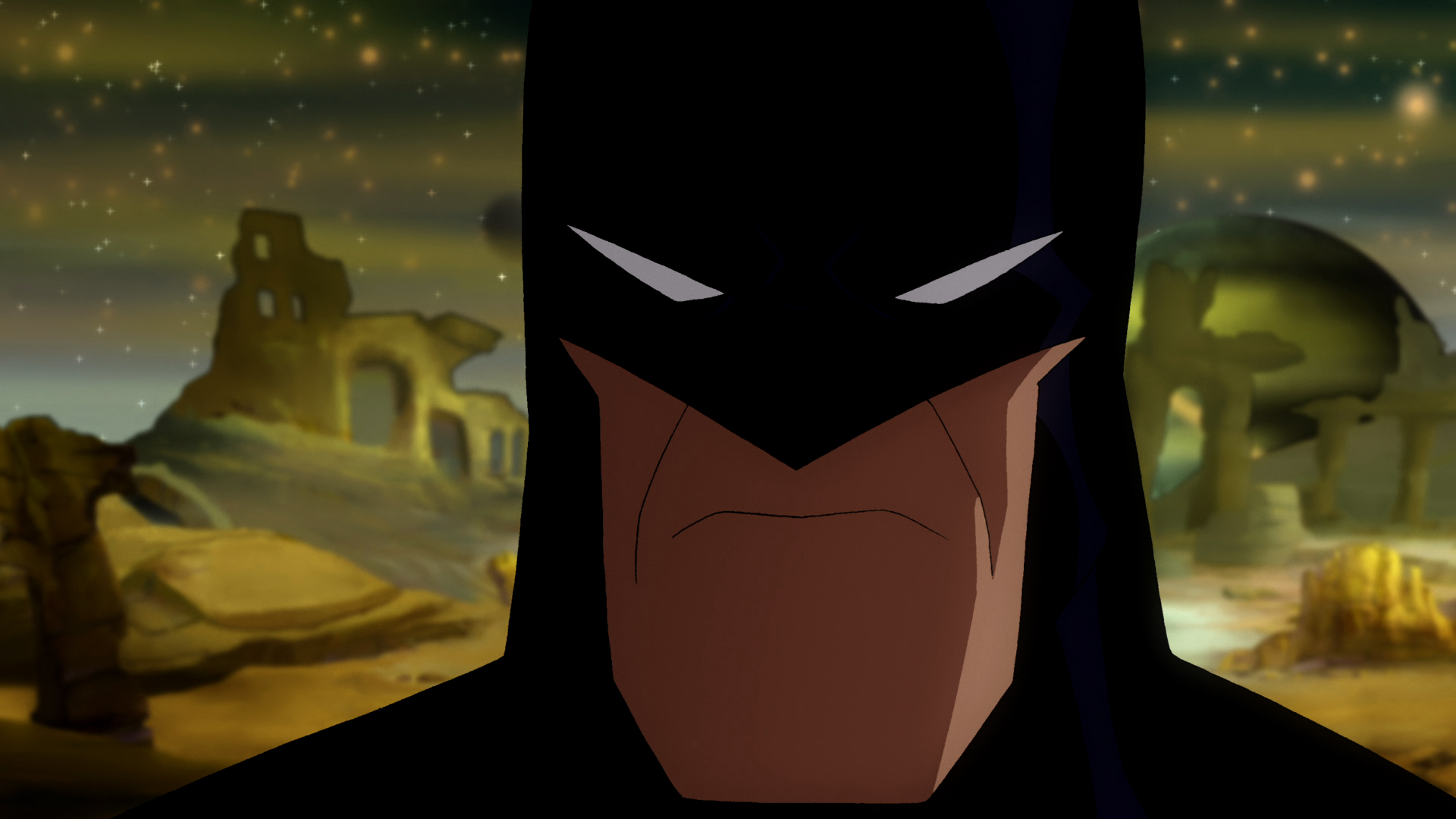
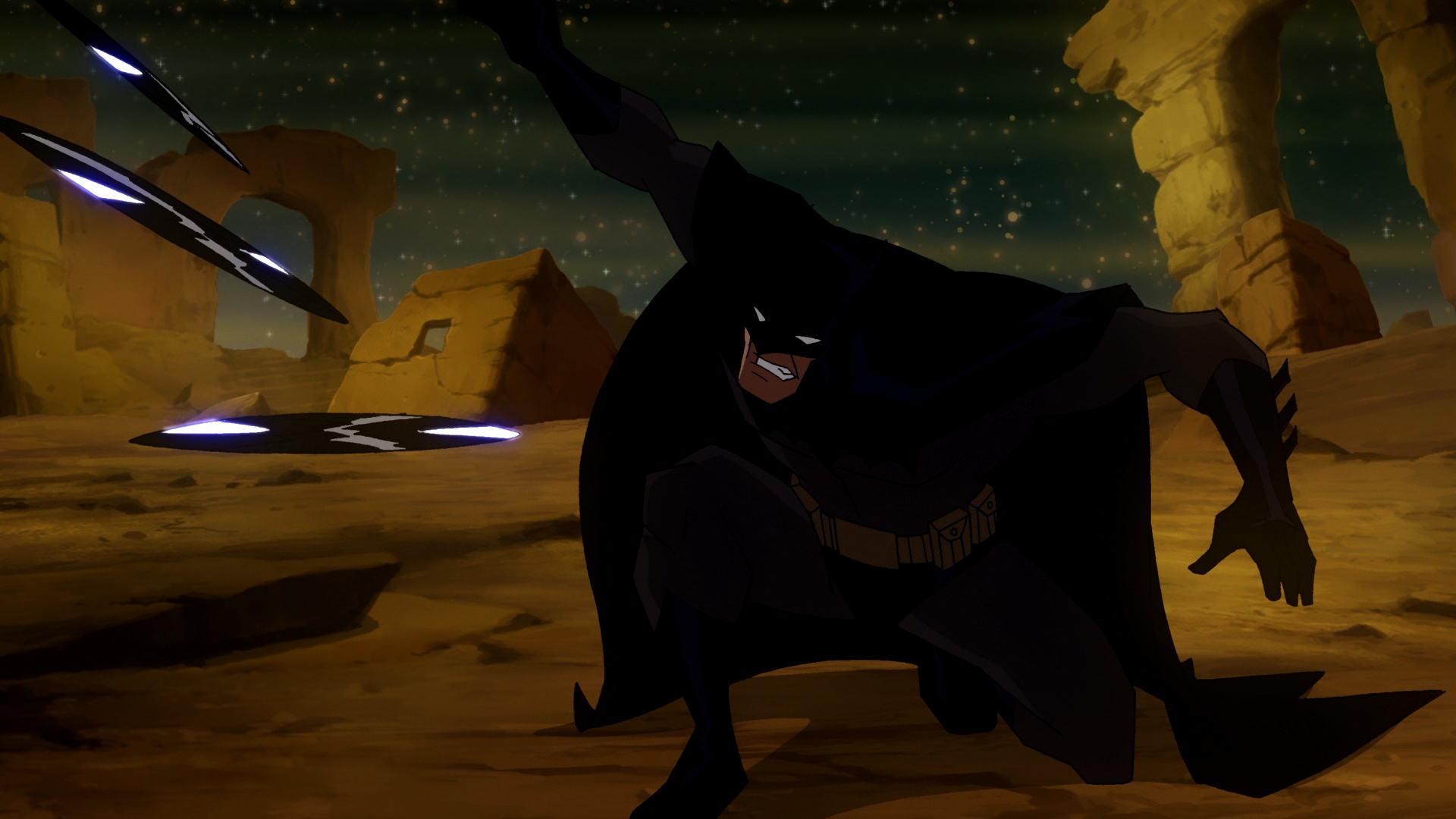
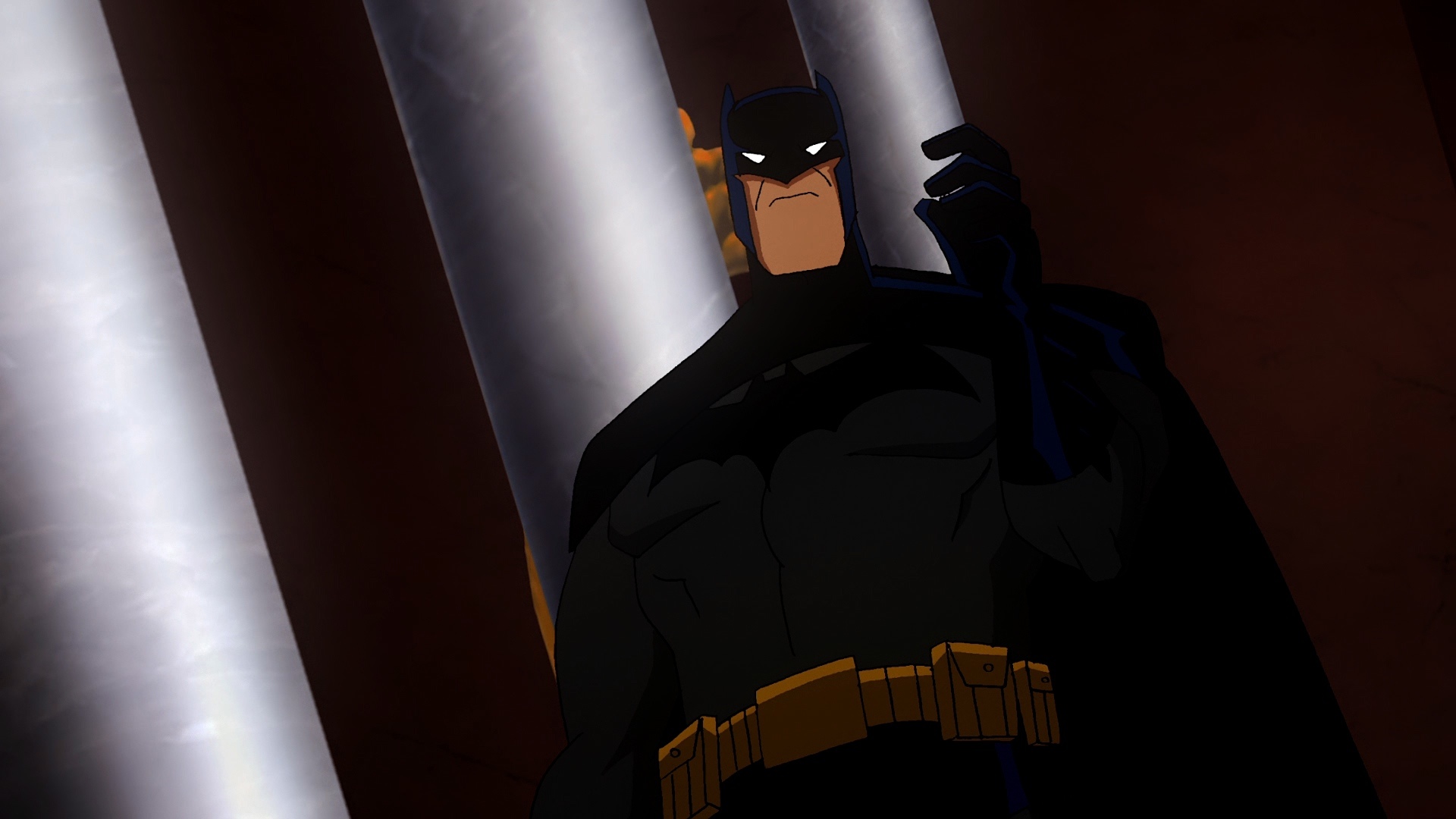
Below is the press release and a few snazzy pics from the first short film in the series of great DC animated films. The Spectre will be an extra in the highly anticipated Justice League: Crisis on Two Earths film out on Feb 23.

From the creative forces behind the DC Universe animated original PG-13 movies, DC Showcase puts the spotlight on favorite characters from throughout the annals of DC Comics in fascinating, short-form tales sure to entertain longtime and new fans alike.

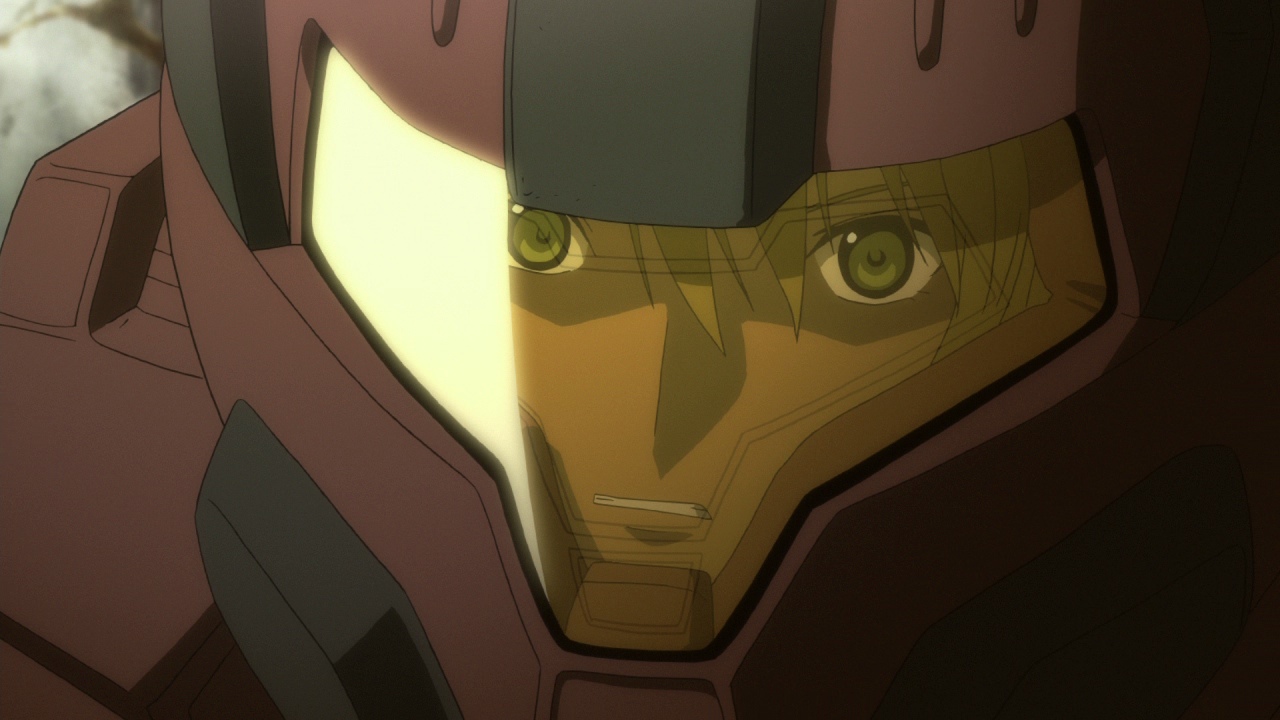
The Spectre focuses on a detective story with an ethereal twist, featuring the otherworldly character originally introduced by DC Comics in 1940. The short is written by Steve Niles (30 Days of Night) and directed by Joaquim Dos Santos (G.I Joe: Resolute). The voice cast is led by Gary Cole (Entourage) as the title character and Alyssa Milano (Charmed) as Aimee Brenner. The Spectre will be distributed February 23 by Warner Home Video as part of the Justice League: Crisis on Two Earths Blu-ray/DVD. DC Showcase is a co-production from Warner Premiere, Warner Bros. Animation, Warner Home Video and DC Comics. Bruce Timm is Executive Producer. Future DC Showcase titles include Jonah Hex (written by Joe Lansdale).

President Deathstroke Speaks

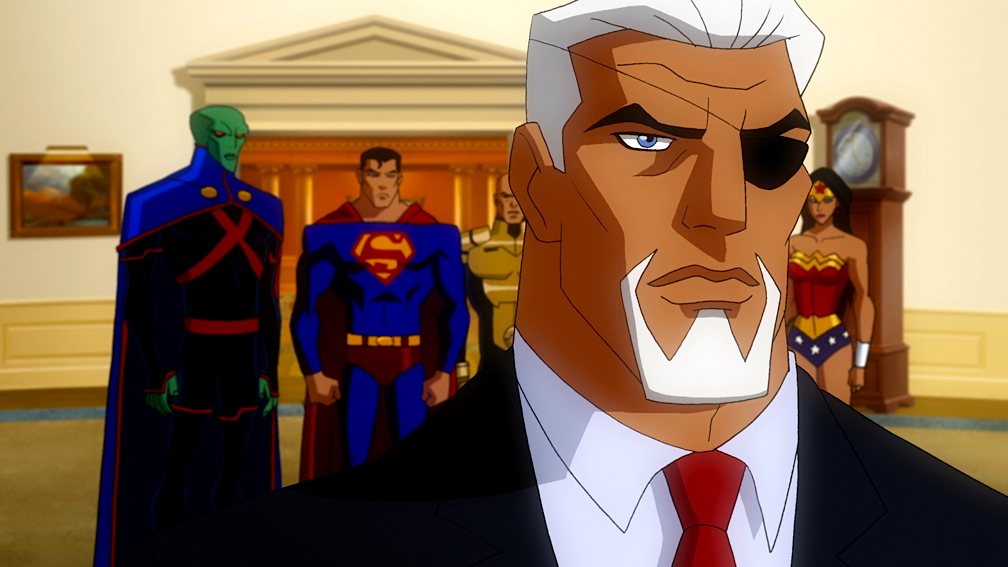
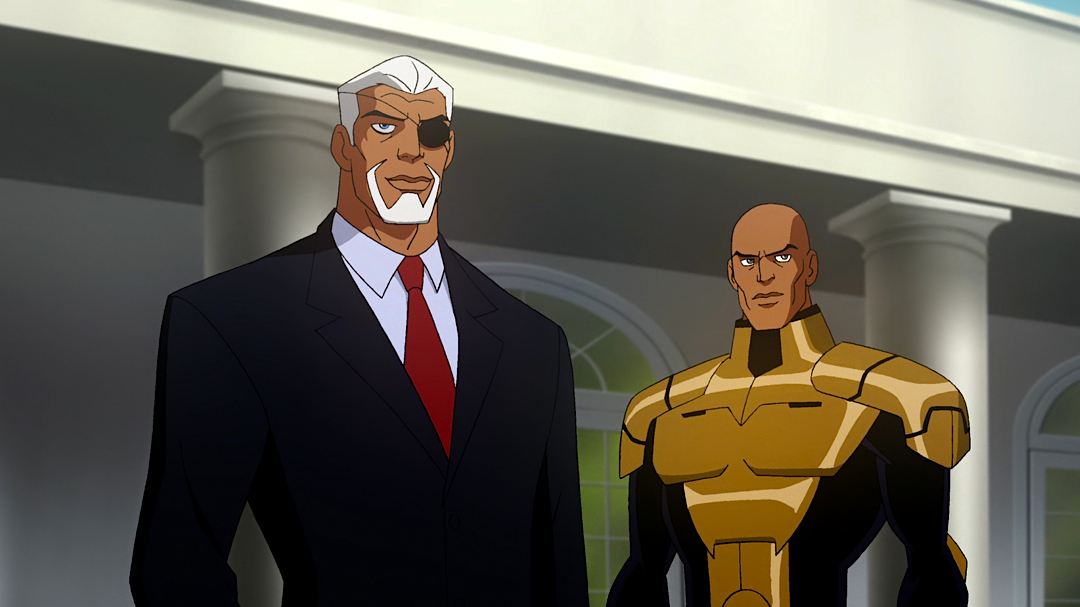
Thanks to Warner Bros. for their interview with actor Bruce Davison, who plays President Slade Wilson aka Deathstroke in Feb 23’s animated film, Justice League: Crisis on Two Earths. Having one of the meanest hombres in the DC Universe as President in an alternate earth is an awesome move.

VETERAN ACTOR BRUCE DAVISON MAKES ANIMATION VOICEOVER DEBUT IN JUSTICE LEAGUE: CRISIS ON TWO EARTHS

Bruce Davison is no stranger to political office – at least in a fictional situation. He’s played an ambassador, senator, congressman and judge, but Davison steps up in class – in his first voiceover for animation – as President Wilson in Justice League: Crisis on Two Earths, an all-new DC Universe Animated Original PG-13 Movie coming February 23, 2010 from Warner Premiere, DC Comics and Warner Bros. Animation.

In Justice League: Crisis on Two Earths, a “good” Lex Luthor arrives from an alternate universe to recruit the Justice League to help save his Earth from the Crime Syndicate, a gang of villainous characters with virtually identical super powers to the Justice League. What ensues is the ultimate battle of good versus evil in a war that threatens both planets and puts the balance of all existence in peril. Davison’s President Wilson is caught in the middle of the battle, attempting to find a balance between leading the human citizens of the parallel Earth and not being crushed by the powerful Crime Syndicate.

Davison’s credits stretch through film and television to the tune of 160 different movies and series roles, catching the world’s attention in 1971 as the title character in the benchmark rat-attack thriller Willard. He has since been a regular on primetime series, covering the gamut from The Waltons, Murder She Wrote and thirtysomething to Seinfeld, Lost, Close to Home and Knight Rider. Davison’s film career has featured memorable and critically acclaimed roles in X-Men and X2, Six Degrees of Separation, Short Cuts, Grace of My Heart and Longtime Companion, the latter performance garnering an Academy Award nomination, a Golden Globe Award, an Independent Spirit Award, and top honors from the National Society of Film Critics and the New York Film Critics Circle. Though he has recorded numerous books-on-tape, Justice League: Crisis on Two Earths represents Davison’s first foray into the animated world.

Justice League: Crisis on Two Earths is an original story from award-winning animation/comics writer Dwayne McDuffie (Justice League). Bruce Timm (Superman Doomsday) is executive producer, and Lauren Montgomery (Wonder Woman, Green Lantern: First Flight) and Sam Liu (Superman/Batman: Public Enemies) are co-directors. The full-length animated film will be distributed by Warner Home Video as a Special Edition 2-disc version on DVD and Blu-Ray™ Hi-Def, as well as single disc DVD, and On Demand and Download.

During his recording session, Davison had a few minutes to discuss his inaugural animated role, his personal history with super heroes, an early adoration for EC Comics, and his ascent up the fictional political ladder. We’ll let his words take it from here …

QUESTION: What’s it like being one of two characters without super powers in an all-super hero movie?

BRUCE DAVISON: Well, it’s par for the course. In X-Men, I played Senator Kelly and, as my son likes to say, I didn’t really have any powers – I just melted. It’s tough when your action figure can’t stand up. I had to stick it in a glass of water because it didn’t have any feet, just this sort of drippy stuff off the bottom (he laughs). So I’m used to not having any real strength powers. But President Wilson is a pretty macho guy, which is great.

QUESTION: And you’ve got a nice progression here. Marvel makes you a senator, DC makes you President …

BRUCE DAVISON: Yes, I AM the President (he laughs). And I actually have feet in this one, plus an eye-patch. So I’m definitely moving up in the super hero world.

QUESTION: How did you enjoy your maiden voyage into animation voiceovers?

BRUCE DAVISON: I’ve done books-on-tape, including a Stephen King book and a few other things. But it’s really interesting to be a character that will then be created as opposed to trying to fit in. I’ve spent a lifetime voicing over (looping) myself in films over the years. But it’s a lot easier to just create something and then let the animators put it together. Oh, and it’s just a blast doing the recording – it’s like being six years old again.

QUESTION: Were you picturing the character in your head while recording, or just focusing on conveying certain emotions?

BRUCE DAVISON: Well, I always try to look at my characters as being better than I am. That’s one of the reasons I guess I became an actor – because you get to create a persona that’s bigger or better or more interesting than your own. I sort of found President Wilson to be like Dale Dye, the guy that does all the military shows on History Channel. The guy who gets in the trenches. He’s been there, done that. So, I’d better shape up.

QUESTION: Did super heroes play a role in your youth?

BRUCE DAVISON: I hate to date myself, but my earliest memories are Flash Gordon. I would love playing Flash Gordon in the neighborhood. We lived outside of Philadelphia in Drexel Hill, and I would be Flash Gordon and my friend was Dr. Zarkov – and we’d get beat up by the Catholic kids, who were the clay people, on the way home from school. And then we’d have auditions for Dale Arden. So that was sort of my childhood fantasy.

QUESTION: Do you remember any first experiences with Superman or Batman?

BRUCE DAVISON: Oh, yeah – George Reeves working with “Truth, Justice, and the American Way” – you know, in the ’50s when there were just three channels on the TV, and you watched the Indian on the Test Pattern until nine when things started coming on. I did have a cape and I did jump off my stairs – and survived (laugh). I really loved running around the hill, trying to do the whole “Truth, Justice and the American Way” thing (hums the theme song). I’d try to take off just like he did, and end up sliding on my face down the hill. But that was always off camera for me and I figured they didn’t see that part, just the great take off (laughs).

QUESTION: How did comic books influence your upbringing?

BRUCE DAVISON: I was a major EC Comic freak. I just loved them all. “Tales Of The Crypt,” “Weird Science” … all of the older stuff. I just really loved the artwork – Wally Wood and all of those great artists. But they scared the bejesus out of me as a kid. I remember one very vivid comic in which a baseball player would spike people, sliding into everybody, so they cut him all up and played baseball with his head and used his legs as the bats. I think they used his trunk as home plate. That really scared me (he laughs). It was a really interesting time. They used to run articles in the comics about how people in Congress were trying to make it a Commie plot to ban EC. I found that really interesting – that was really the dawning of my first understanding of politics and censorship.

QUESTION: Why are superheroes important for us?

BRUCE DAVISON: I think it gives us a sense of idealism and strength that we don’t have but we wish we did. It’s like, why do we create religion? Because we need super heroes to take care of us, to live up to.

QUESTION: You’ve done so many different things. What do people most often recognize you for?

BRUCE DAVISON: Well, if they’re my age, probably Willard, because that was an impressionable movie when you’re young. The younger people know me from X-Men. And then if you’re 12, it’s Knight Rider. It’s as though every few years something comes along and then I’m sort of remembered for that. But people don’t really know that I can do anything else until the next time.

QUESTION: Did you learn anything from your first animation voiceover experience?

BRUCE DAVISON: I learned it’s a lot of fun. It really is. And you just have to sort of wing it with the other actors. You do have to work within the iambic pentameter of the technical world of the medium. You can’t pop things and you can’t get too close to the microphone and you can’t get too breathy. You really have to sort of create a character vocally within a framework of technology. So you can’t step out of it in order to do something that maybe you would do as an actor on film or on stage. When you’re on stage, even a whisper, you have to reach very far away. In film, you can be much more intimate. But just using your voice, you have to create something that’s somewhere in the middle so that it paints a picture and yet it’s not intimate enough to get lost.

For more information, images and updates, please visit the film’s official website at www.JUSTICELEAGUECRISIS.com.

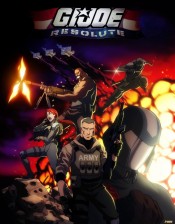
G.I. Joe: Resolute DVD Review

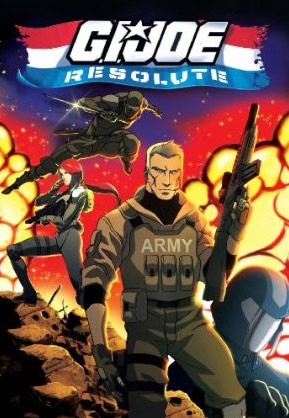
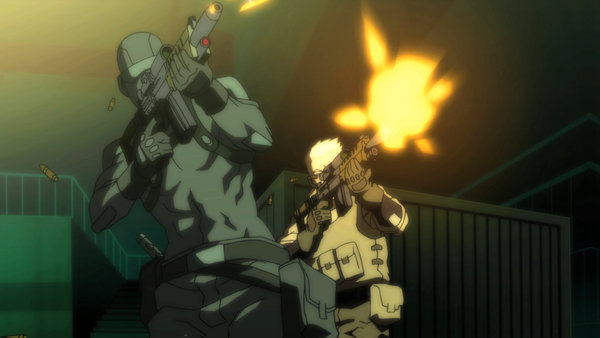
Far superior to the deservedly maligned live action film, G.I Joe Resolute was originally a series of 11 short animated films shown on the net, before being shown in its entirety on TV. Now it’s available on DVD for those who didn’t see it on US or Canadian TV, or for those that did, because it is worth seeing more than once. Written with gusto by comics scribe Warren Ellis  (The Authority, Anna Mercury) and directed by Joaquim Dos Santos (Justice League Unimited), this is G.I. Joe as it should be. It respects the ‘80s cartoon series, but reinvents the franchise for a modern, tech savvy audience. Unlike the live action film, Resolute relishes in the military and technological aspects of the Hasbro property with greater realism, filling the screen with mature dialogue and dynamic action scenes.

Sabotaging the U.S.S Flagg, the Joe’s aircraft carrier base, Bazooka’s death, the destruction of Moscow and a 24 hour ultimatum to the U.N by Cobra Commander, and Snake Eyes infiltration within a Cobra base. That’s all in the first few minutes of Resolute. Old favourites such as Tunnel Rat, Roadblock and Flint appear, as does a new female Dial Tone, and of course, Duke, Scarlett, Destro and Baroness. Cameos by Ripcord, Zartan, Stalker, Wild Bill and a few unnamed others are present too, and though I had a heap of Joe toys in my youth I can’t recall all their names. More observant fans will notice more I’m sure.

Resolute never appears disjointed as a complete 1 hour film. In fact you’d never know it was originally a multi-part adventure. In the story, there’s also a look at the origins of the silent Snake Eyes and Storm Shadow and an awesome battle between them.  The bad guys are about good as shooting as Stormtroopers and the side missions such as Tunnel Rat’s destruction of Cobra’s satellites and Gung Ho and Roadblock’s battle with Destro and Baroness in Alaska to free a few hostages are all presented equally. No one character really steals the show, though Snake Eyes is cool as always.

The anime flavour and slight costume redesigns really work here and fans of the series need not be concerned. It’s in good hands.

The voice acting is great, the animation is fluid and the action is intense. There’s a final scene after the credits which hints at a possible resurrection of one of the characters who died. Hopefully that means more Resolute episodes on the way. There’s definitely a market for mature Gen X tailored entertainment treated with respect and maturity.

There’s a few extras on the DVD, including a 20 minute interview segment with executive producer Steve Drucker , lead art designer Dan Norton and director Dos Santos. Obviously Norton and Santos are long-time Joe fans. Norton mentions that his toy battles were intense, leading to the deaths of his Joes, complete with funerals. The trio answer a few fan questions and discuss the origin of the project as a desire to make something for the adult fans, and why Warren Ellis was “one of the wow names,” and his unfamiliarity to the Joe Universe, but familiarity with near future military tech helped the approach to the story.

The bonus called And Now You Know is a short action scene showing Snake Eyes dispatching some Cobra goons with ruthless efficiency, and a tongue in cheek nod to the old Public Service Announcements of the ‘80s cartoon series.

Rounding out the extras are a few storyboards and Joe Files offering short bios on Duke, Roadblock, Scarlett, Snake Eyes, Cobra Commander, Baroness, Storm Shadow and Destro.

Resolute is proof that good ideas don’t need to be stuck to the cobwebs of nostalgia, but can be given a new lease of life, pleasing the original fans while making a few more along the way.

New JLA: Crisis And Halo Legends Pics

Courtesy of Warner Bros. comes a nice Christmas present; brand new pictures from the latest DC animated film adaptation and the Halo anthology movie.

Justice League: Crisis on Two Earths features on our must-have list in next month’s debut Arcana magazine and is released on February 23. Halo Legends based on the hugely popular game franchise consists of 7 short films created by different Japanese animation studios, and arrives on February 12.

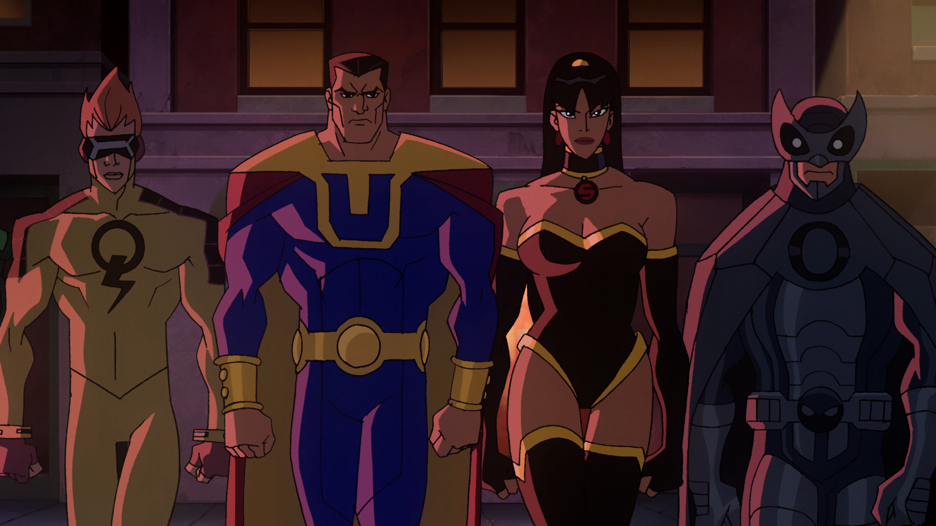
Four core members of the Justice League’s parallel world entity, the Crime Syndicate: (from left) Johnny Quick, Ultraman, Superwoman and Owlman.

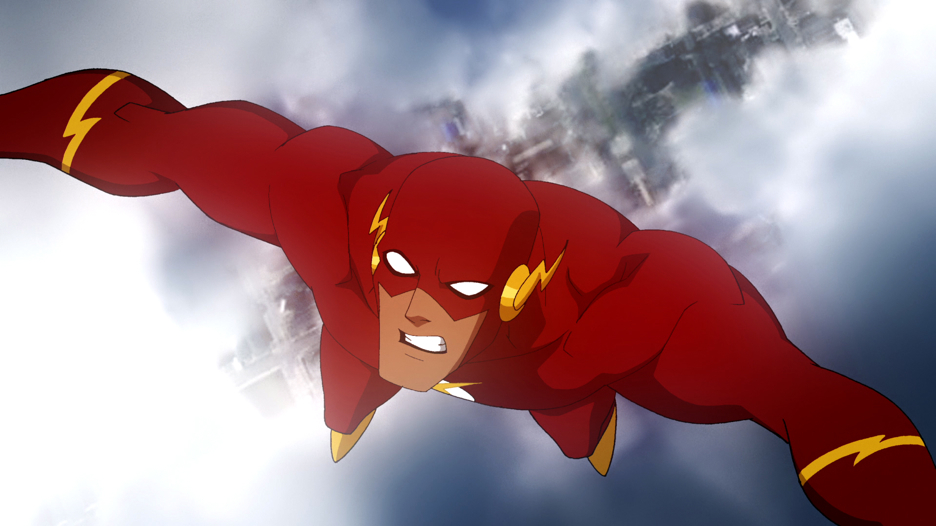
The Flash … in a free fall (no, he can’t fly)

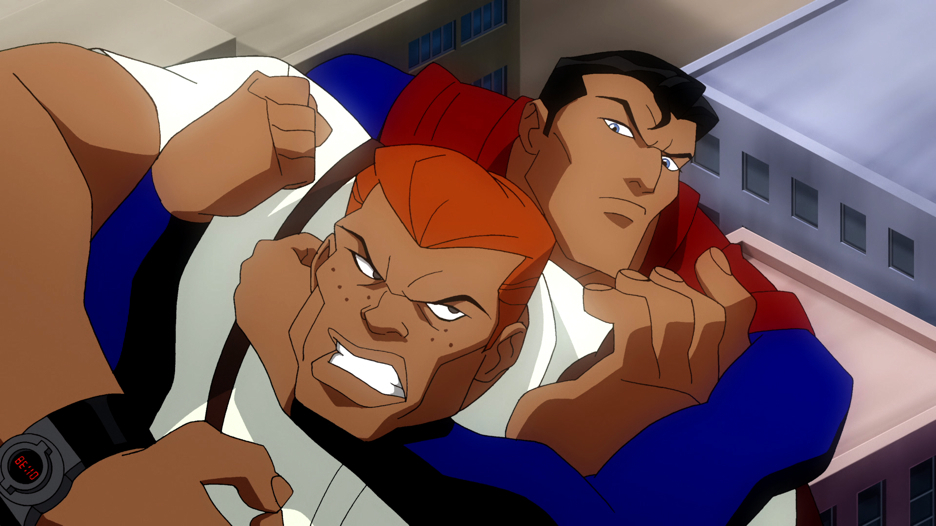
Superman wrestles with the parallel Earth’s bulked up Jimmy Olsen.

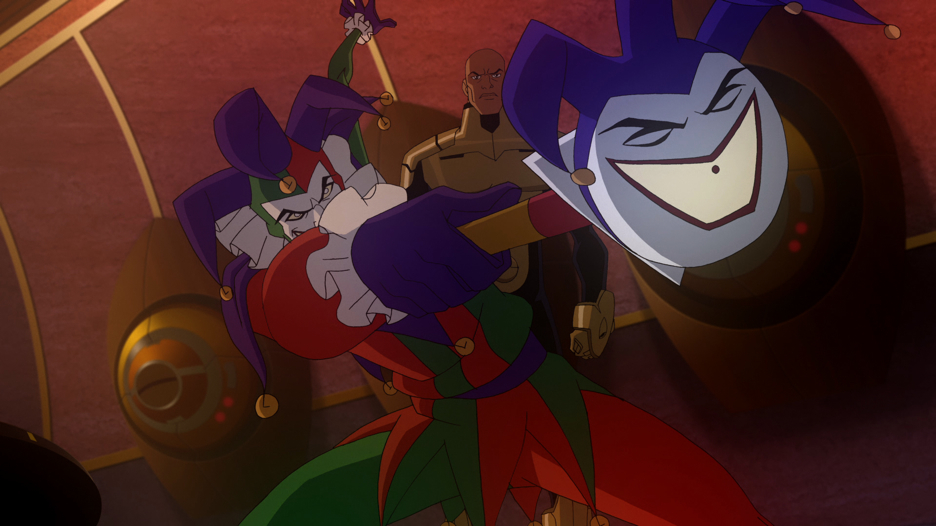
The Jester, a member of the parallel Earth’s Justice League, helps Lex Luthor break free from the Crime Syndicate.

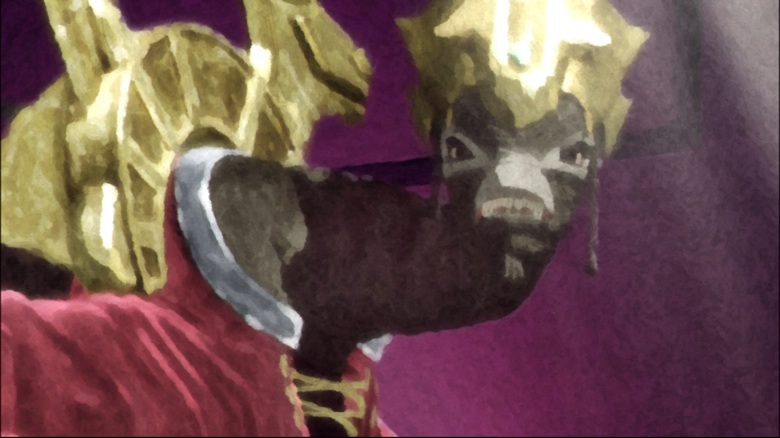
The villain ultimately responsible for the core issues within The Duel.

The battle rages.

A prime example of the detail within the CG anime of The Package episode.

William Baldwin Is Batman

I can’t really conceal my excitement for this film. It’s a great time to be a DC fan! The latest in DC’s growing line of animated films involves the Justice League and their evil counterparts from an alternate earth. I’ve chosen this film as one of the must haves for the first quarter of 2010 in next month’s Arcana mag.

Thanks to Warner Bros, below is an interview with William Baldwin, the actor portraying Batman in the film,w ho reveals he almost played the character on film before George Clooney beat him to it.

DIRTY SEXY MONEY STAR WILLIAM BALDWIN ASSUMES THE ROLE OF BATMAN FOR JUSTICE LEAGUE: CRISIS ON TWO EARTHS

Dirty Sexy Money star William Baldwin slides easily into the famed cowl as the voice of Batman in Justice League: Crisis on Two Earths, an all-new DC Universe Animated Original PG-13 Movie from Warner Premiere, DC Comics and Warner Bros. Animation.

A fan of the super hero genre since his youth when the Baldwin brothers would role play in their backyard, William Baldwin has proudly, enthusiastically undertaken the deep, gravelly vocal tones of the Dark Knight. While Baldwin has crafted a fine career in live-action film and television, Justice League: Crisis on Two Earths represents only his second foray into voiceover for animation, having recorded a few episodes on the Nickelodeon series Danny Phantom.

Beyond ABC’s Dirty Sexy Money television series, Baldwin has offered memorable turns in the feature films Forgetting Sarah Marshall, Flatliners, Backdraft and The Squid and the Whale, the latter of which earned (ironically) a Gotham Award for Best Ensemble Cast.

Justice League: Crisis on Two Earths is an original story from award-winning animation/comics writer Dwayne McDuffie (Justice League). Bruce Timm (Superman Doomsday) is executive producer, and the film is co-directed by Lauren Montgomery (Green Lantern: First Flight) and Sam Liu (Superman/Batman: Public Enemies). The full-length animated film will be distributed by Warner Home Video on February 23, 2010 as a Special Edition 2-disc version on DVD and Blu-Ray™ Hi-Def, as well as single disc DVD, and On Demand and Download.

Baldwin took time after his recording session to chat about visualization techniques in the sound booth, his children’s influence on his choice of roles, the super hero roughhouse role play by the Baldwin brothers (particularly Alec Baldwin) in their youth, and his very nearly being cast in the live-action role of Batman. Now let the man speak …
QUESTION: What are your thoughts about joining the list of actors from Adam West and Michael Keaton to Val Kilmer and George Clooney to Kevin Conroy and Christina Bale – that have played Batman?

WILLIAM BALDWIN: I almost did join that group – I was one of Joel Schumacher’s top choices when Val Kilmer wound up playing Batman. Tim Burton and Michael Keaton had left, so Joel had the luxury of replacing Michael Keaton and he told me that his four choices – which was an eclectic, diverse array – were Daniel Day Lewis, Ralph Feinnes, Val Kilmer and me. I didn’t even know it at the time – he told me when I had a meeting with him later. The next time, when George Clooney did it, (Schumacher) said, “You were on my original short list with those other three actors, but the studio went with Val and this time I’d like to go with you.” And that Friday afternoon, I thought I was playing Batman – and then Monday morning, the headlines in the trades said that George Clooney had gotten the part. So apparently, I did actually come very close.

I was very excited to do this. I wasn’t really thinking about any past Batmans, but more of letting the material sort of dictate the choices that I make as an actor. What’s happening physically, what’s happening emotionally, what’s happening in the writing. That’s what really drives your performance.

QUESTION: How did you choose to interpret the character? And was there anything you wanted to do differently than what had preceded you?

WILLIAM BALDWIN: I was mostly influenced by whom I perceive Batman to be, with the possible exception that I think sometimes I allow a certain sensitivity or an emotional dynamic to give (the character) maybe a likeability or an accessibility. That’s almost an insecurity of mine as an actor – to want to breathe a little bit of those types of emotions into characters. I think I find them more appealing and more likeable and more human. What I didn’t choose to do is to go towards the darkness of the way the original Batman series was intended. Because Batman, in the original comic series, was a lot darker than the character that was brought to life in television.

QUESTION: Are there any personal attachments to Batman that make voicing this role special for you?

WILLIAM BALDWIN: It’s a number of things – certainly the history of the character. The people that have been lucky enough to portray Batman on screen, or provide his voice, is a short list and it’s pretty cool. I’m in good company. I enjoyed it as a child, and the character still resonates for me. And I’m a father of an 8-year-old, a 7-year-old, and a 4-year-old – my boy is sandwiched between his sisters, and he just loves the super heroes. We watch Justice League together. I try not to let him overdo it too much with television, but there’s great, wholesome messages that come out of that series. When I told him that I was playing Batman, his jaw dropped. I almost took him out of school today to have him come down here (for the recording session).
QUESTION: How many times have you said “I’m Batman” in the past week?

WILLIAM BALDWIN: Probably about a half a dozen, usually just joking with my kids and my wife. I was in the studio about a 9-iron from here, where my wife (Chynna Phillips) was recording, and all the band members were giving me different lines to say as Batman. Or having me improvise some lines. And we were having some wicked, twisted fun with it (he laughs).

QUESTION: It seemed you were quite focused in the booth, conveying all the physical and emotional traits as Batman. How immersed in the role did you feel?

WILLIAM BALDWIN: I take it seriously. And I enjoy it, especially recreating the sound effects of the fight sequences and stuff like that. One thing that was interesting to me was how clean they need the lines and, thus, how specific I had to keep my relationship to the microphone, and making sure there weren’t any other sort of ancillary sounds. When I’m doing looping for a film, I guess it’s sort of a method approach. I’ll put things inside my mouth and try to recreate the circumstances or the emotions that existed while I was performing. There’s nothing better than when you’re grunting from lifting something to try and create that sensation. I do a lot of visualization, too. So when you’re having the confrontation with Lex Luthor or Superwoman, sometimes I’ll look through the mike into the booth to somebody in the room. I’ll look at them and just sort of imagine it in my mind, to just pick somebody and lock into that, giving off this energy to them. It’s very helpful for me to have that specificity to lock into.

QUESTION: Did the Baldwin brothers play super hero games growing up?

WILLIAM BALDWIN: You’ll have to get my brother Alec in here sometime – he’s got the scars to prove it. Back in the early ‘60s, he tied a bathroom towel around his neck as a cape and was doing his Superman (impression), and he went through a plate glass sliding door. He ran right through it. He has these big V-shaped scars under his bicep and his forearm from all the stitches that he took when he was five or six years old.

So yeah, we did play super hero games. And my family was pretty rough. I mean, when we were playing super heroes, if there was a cartoon where somebody got thrown off the roof and they landed on the ground with a thud, then Stephen or I got thrown off the roof – into a pile of leaves, or into somebody’s swimming pool.

QUESTION: You rode along with the Chicago Fire Department to prepare for Backdraft. What kind of research went into this performance?

WILLIAM BALDWIN: First of all, some parts lend them self to that type of research and preparation more than others. Secondly, I had a fairly deep understanding of this character because I’ve been watching the shows and films and the character for 40 years. So if I felt like I didn’t have enough of an understanding, I probably would have postponed (the recording session). But when I was looking at the script on a plane a few days ago, I felt it was kind of a piece of cake based on my understanding of the character, and really fueled my attraction to the character and the piece. There’s a lot of two- and three-line exchanges rather than two- and three-paragraph exchanges. There weren’t a lot of monologues that required a lot of line memorization, or anything incredibly challenging emotionally. I just had to get into the rhythm of how the character speaks.

Batman’s spectrum of emotion is fairly narrow – for a number of reasons. He’s always in command, he’s always in control, he’s always holding it together, and he’s pretty tough relative to the rest of us in this room.
QUESTION: Does the Gotham City/New York connection hold anything special for a lifelong New Yorker?

WILLIAM BALDWIN: There’s always been something cool about (Gotham City) being based on New York – it’s where I’m from, where I grew up, and I’ve spent my whole career there. I remember referring to it as Gotham – not Gotham City, either – more often than I called it Manhattan or New York. I’d be on the West Coast finishing a meeting, and somebody would ask, “Where you going?” And I’d always say “Back to Gotham.”

QUESTION: Did having children that enjoy the genre influence your desire to give voice to an animated character at this point in your career?

WILLIAM BALDWIN: That definitely motivates a lot of the choices that I make as an actor now. I’m looking to be involved with projects that are family oriented. Not exclusively, but I’d like to do some things that my children can see. My brother Alec has done a series of films over the last couple years – Madagascar and Thomas (the Train) and things like that – and the kids got really, really excited about that. And we’re good friends with Chazz Palminteri, and Chazz does a lot of animated voiceover work. When they hear his voice, they really get excited.

I was doing a television series for two seasons, so we would watch that together as a family. Sometimes I would let the kids stay up, and they really got a kick out of it. I did a film last year with Henry Winkler called A Plumm Summer that won a couple of family film festival audience awards. So yes, I’m definitely looking for some choices. Because the films in my past, like Flatliners and Internal Affairs, Three Of Hearts and Backdraft and Sliver, Fair Game and The Squid And The Whale and Forgetting Sarah Marshall, these are all films that my kids aren’t quite ready to see.

QUESTION: You’ve tackled this legendary comic character. What other roles would you like to fill?

WILLIAM BALDWIN: I’d like to surprise some people maybe and do the voice of something that’s much more charactery. It could be much more ethnic. Jewish or Irish or a New Yorker. I have a lot of fun with that stuff. I’d even like to sing. I wouldn’t want to sing in the way that you would need Mariah Carey to sing, but just have a character sing and have fun with that, too.

QUESTION: What were your impressions of this animation experience versus some of your previous experiences?

WILLIAM BALDWIN: I’m getting better at it. I’m very tough on myself, so I’m never quick to say that I felt like it was great when it wasn’t. I usually have my own sort of standards that I set for myself. It felt like I was able to achieve my objectives more quickly. I think that comes with maturity as a performer and, uh, it’s nice to know. Because there’s been times where I’ve done voiceover work where they would normally allot two hours for someone who can bang it out, and they would have to allot three or three and a half or four hours. It’s not that I couldn’t do it quickly, it’s just that I’m such a perfectionist. I tend to be saying “Let me try that again. Let’s do one more … one more … one more.” I think I said, “Let me do one more” about 10 times today, which wasn’t a lot. Sometimes I say it 100 times. I think everybody thought that it felt right, it felt good, it sounded great. It’s always fun, but I want to get it right.

QUESTION: Is it difficult acting alone in the booth?

WILLIAM BALDWIN: It forces you to hone in and focus on the performance aspects and the emotional aspects of what you’re trying, and visual them in your head. Acting is not acting, it’s reacting. You’re reacting to what somebody’s saying and how they’re saying it. That was great about the television show that I just did (Dirty Sexy Money) because the props department would tie me in when we would do something like a telephone conversation. When I had one with Donald Sutherland, I didn’t have to come into the studio to do it. They would just have me call on my cell phone from my home in Santa Barbara, and I would call in when the camera was rolling and I would literally have the conversation with him. In the old days, sometimes you would have the other actor come in on his off day just to read that telephone conversation off camera. Then that changed and you would wind up reading this telephone conversation with the script supervisor who (A) is not an actor, and (B) does not know what the choices of the actor are going to be when they shoot his side of the telephone conversation in two weeks. That can be very difficult and very stilted when they cut that telephone conversation together – sometimes you can tell by the way someone’s reacting to a line that they weren’t hearing the actor do it on that day. They just interpreted what they thought the actor was going to do on that day, and they were wrong. I’m talking about stuff that’s very subtle, like someone raising their voice a little bit in the reaction to the other person. Little things. But that’s acting. You’re not just reacting to the words, you’re reacting to the way the words were said. Was it threatening? Was it menacing? Was it intimidating? Was it submissive? It’s all based on little layers and subtleties.

QUESTION: Can you compare acting on camera to acting in the booth, and how Andrea Romano was able to guide you through those differences?

WILLIAM BALDWIN: It’s sort of a mixed bag. On camera, you’re usually acting to another actor who you’re looking at, who’s in the room with you. Today, I was in the sound room and Andrea was behind the glass. And she’s not an actor. But for a director, from a performance standpoint, she was giving me more than enough. What really helped was the specificity of her notes. When something wasn’t right, she would give me a note that would 180 it, or she would give me a little subtle note. That was great. “You’re forgetting to add in this layer” or “Give me a little bit more urgency.” At one point, I throw a punch and Superwoman catches my fist and starts to squeeze my fist. And I said, “Do you want me to wince and scream in pain when she’s crushing my fist? And am I supposed to fight the temptation of revealing to a woman – because wouldn’t Batman wouldn’t want to give away that power that a woman is causing the pain.” I mean, it would be different if Lex Luthor or Superman were doing this, right? So we sort of hashed that out and found those sort of things as we were going along.

Halo Legends Interview

There’s some great animated films coming out in February, such as Planet Hulk, Justice League: Crisis on Two Earths (oh yeah!) and now, Halo Legends which is released by Warner Home Video on DVD and Blu-Ray on February 16. Halo is a great universe deserving of this kind of interpretation, and will hopefully be better than the disappointing Batman: Gotham Knight film. Below is the press release and  interview with Frank O’Connor, one of the men behind this unique anime film.

The Halo universe expands into anime this spring via Halo Legends, a DVD anthology of episodic films based within the popular game’s mythology produced by 343 Industries, a unit within Microsoft Game
Studios. One of the key orchestrators of Halo’s morphing from interactive entertainment to on-screen magic is Frank O’Connor, the Halo franchise development director.

Warner Home Video will distribute Halo Legends as a Special Edition 2-disc version on DVD and Blu Ray™, as well as single disc DVD and available On Demand and Digital Download. The new street date is
February 16, 2010.

Born and raised in Edinburgh, Scotland, O’Connor is renowned throughout the gaming industry for his insightful expertise and innovative direction working with Halo. After a long career as a journalist for several gaming publications, O’Connor has parlayed a keen sense of the gaming industry – and a devout love for the games therein – into a career as a creator of content and story lines for the worldwide phenomenon that is Halo.

For Halo Legends, O’Connor worked directly with Japanese screenwriters on each of the seven stories – spread over eight episodic installments – that include all the elements familiar to Halo fans. Exploring the origin and historical events of the Halo universe and its intriguing characters. Halo Legends has been created in the same breakthrough format as The Animatrix and Batman Gotham Knight with each individual episode imagined by a cutting-edge, renowned Japanese anime director/animator.

Most of the individual episodes fall within Halo’s 26th Century mythology as the battle between humanity and aliens rages on in an attempt to protect Earth and mankind’s ever-dwindling collection of space colonies. The dramatic, action-packed stories feature characters and locales familiar to Halo fans, and episodes range in length between 10 and 17 minutes –  resulting in nearly two hours of animated
adventures. O’Connor took a few moments from his busy schedule to discuss the exciting production and offer a glimpse behind the scenes in the creation of Halo Legends.

QUESTION: Halo Legends not only shifts from interactive game to animated film, but also to a variety of anime styles. Was there any worry that going anime would make the production unrecognizable as a Halo brand?

FRANK O’CONNOR: The Halo brand is strong enough to survive and even thrive through interpretation. Halo iconography is recognizable in virtually any form. When you look at a Warthog that’s drawn by a Japanese artist or a Spartan that’s animated in a way you’ve never seen it before, it’s still intrinsically Halo. The brand really lends itself to comics and animation beautifully. It withstands all sorts of interpretation and is still recognizable Halo, rather than just diluting and becoming generic sci-fi.

The wonderful thing about a completely immersive world like Halo is that it’s not just the visuals that are instantly recognizable. There are so many elements involved in playing the game, including the audio, the music, the sound effects – it’s all part of the experience. When you’ve played these games for six or seven years, and you hear a Warthog engine, you instantly recognize it. So in an episode as distinctly different visually as “The Duel,” it may take a while before you actually see that energy sword and it’s apparent that this is Halo, but the sounds might bring you into this story much earlier as being from the Halo universe.

This is a world that people come to know with great, detailed intimacy. You might’ve watched Star Wars 20 times, but Halo fans have played the game hundreds and hundreds of times. Most of our mid-level players, say those at Level 33, have logged more than 2,000 games just on Halo 3. If you’re a Level 50 player, that number goes up geometrically.

QUESTION: How did you decide which stories to tell in Halo Legends?

FRANK O’CONNOR: There are really two driving forces behind our creative development. First, there were things we were curious about. We wanted to investigate what shaped the Elite civilization, their solidifying of the Covenant, and their place in it. The second, but equal part of the equation was that we wanted to provide backstory about what fans are curious about. Our story for “The Package” fits that neatly – fans want to see more about the Spartans, and they wanted to see them fighting in a group. Normally you see one Spartan in battle – the question came up, “What happens when you have that force multiplier?”

We came up with dozens of topics, but these were the hot button stories. For “The Babysitter,” we were interested in the rivalry between the ODSTs and the Spartans, so we wanted to put them together and see what happened. “The Duel” gave us the chance to delve into the pure civilization and the futile aspects of that society. We used “The Package” to present a story that not only featured the Master Chief but had multiple Spartans fighting together.

QUESTION: Can you give a quick breakdown of what fans can expect in the other Halo Legends stories?

FRANK O’CONNOR: “Prototype” is very Japanese in style as we worked with Bones and director Yasushi Muraki – both the studio and Muraki are huge in Japan right now. He has created an anime sub-genre called Muraki Circus, which features a lot of flying, mecha fighting, weapons, explosions, dog-fighting – and that fit perfectly with the creation of a Halo prototype weapon. Still, we really wanted to make it a human story, so we worked with Muraki to blend those two ideas. Ultimately, it’s the introduction of a prototype of Spartan equipment that’s never been employed, and played out in the very pure anime style of Muraki Circus.

The Halo universe is big and expansive, and “Origins” gave us the chance to take Halo newbies through that universe one step at a time. At the same time, for Halo fans, we wanted to go really deep and show
them things they’ve imagined but never seen before. Part I of “Origins” is the forerunner of civilization, and the advent of the flood threat that led to the creation of the Halos. “Origins Part 2” deals with the current Halo universe and everything from the advancement of human space travel to contemporary Halo fiction.

“Odd One Out” is just flat out fun. We worked with Toei Animation to create an episode that Halo fans and responsible parents could show their kids. It’s all fun, lots of parody and no gunfire, along the way poking fun at all the macho archetypes that inhabit the Halo universe.

You’re going to have to see “Homecoming” – it’s about Spartan origins, and it’s just too spoiler-filled to describe it. I will say this, though – it’s got the cutest poster of any of the stories, and that’s ironic because it’s a really dark story.


QUESTION: How did you balance giving the Japanese artists balance specific instructions vs. creative freedom?

FRANK O’CONNOR: We didn’t try to control their every pen stroke. There were some things that needed to be maintained – a Warthog has to look like a Warthog. But we gave them a lot of creative freedom. “Prototype” is an excellent example in that the actual prototype is an entirely brand new piece of Spartan equipment. I think the Japanese artists had a good time trying to create new inventions, and for the most part we embraced those creations. There were a few things we rejected or simply worked with the artists until we had them just right. We gave very loose descriptions, mostly emotional threads rather than pinpoint direction. But in many cases, we simply said, “Here’s some goalposts, but we want your interpretation.” In most cases, they exceeded our wildest expectations.

QUESTION: Why go with anime over animation?

FRANK O’CONNOR: The funny thing is that the question these days is “What is anime?” It has expanded in so many directions. But still, there’s a distinct way anime deals with the narrative in animation, exploring ideas and ambitious techniques that we don’t often do in western animation. That was one of the things that drew us to anime.

The other difference is that there aren’t that many outfits (in the U.S.)  that can produce shorts or an anthology of shorts in the way we saw this project playing out, and yet Japan has a very rich pool of
talent and studios that are perfectly suited to this type of production. And we were anxious to work with those talented artists and studios. We made a wish list of the studios and pretty much got everyone we wanted.

QUESTION: Were there any artists that wanted to work no Halo Legends as badly as you wanted to work with them?

FRANK O’CONNOR: Shinji Aramaki is sort of a central figure – he works well with everyone. There’s no ego there – he’s a nice collaborative force. We worked closely with Aramaki on “The Package,” and with Aramaki and Bones on “Prototype.” The great part is that he’s a huge Halo fan – he has completed the game on “Legendary” difficulty, which most people haven’t done – let alone a legendary Japanese director. He’d always wanted to work on a Halo project, so he was already well versed on the fiction and was excited about the opportunity.

QUESTION: How much of a learning curve was there for the anime studios in getting fully vested in the Halo universe?

FRANK O’CONNOR: Some of the studios had to learn Halo from scratch, so we educated them in the universe and they took that and ran with it – and they became genuine, passionate fans. I’ve spent a significant amount of time in Japan, going over the game, the artwork, the concept art. A lot of the artists were playing the game at the same time, so I played with them. We felt it was important that they were very understanding of the game. As we went along, every single overseas team had someone on their staff that became their resident Halo nerd, their internal expert.

QUESTION: Does Halo Legends have an overall theme that unites all seven stories?

FRANK O’CONNOR: These episodes don’t have a rigid super arc beyond the theme of artistic interpretation. The individual pieces are made up of a lot of very universal story themes. It’s the idea of a hero’s journey – every single episode features a heroic archetype. There are the more traditional Achilles and Ulysses types, the clever ones that succeed through craft and guile and wit. Sacrifice and heroism are general themes, but that’s germane to the game of Halo. There’s not much time for romance when you’re shooting at everything. Ultimately, the episodes are like the game in that you’re putting yourself in the shoes of a hero and his or her journey.

QUESTION: Halo is a very interactive experience. Why will fans embrace the opportunity to sit and watch rather than interact and play?

FRANK O’CONNOR: Halo Legends does the reverse. I think we have a lot of players that probably don’t fully understand the narrative of the fiction. A lot of people don’t stop and smell the roses while playing – mainly because it’s easy to miss the narrative when you’re surrounded by explosions and Banshees. This gives fans a chance to enjoy Halo in a completely different experience – to sit down on a couch and take in the story without worrying about being shot or how much health you have left. For anyone interested in a preview I suggest they log into to Halo Waypoint on Xbox LIVE to see preview episodes of Halo Legends running through early next year every Saturday.

Justice League: Crisis On Two Earths Trailer

Oh yeah, this is what I’m talking about! Whereas Marvel’s direct to DVD animated films have been fairly bland affairs treated with kid gloves, Warner Bros. are giving DC diehards film after film to get excited about. It’s a smart approach that they’ve employed with every recent film, such as Superman/Doomsday, Green Lantern: First Flight and Superman/Batman: Public Enemies, and it goes a little something like this; don’t bog down the story in exposition but just get straight to what the fans want. Apparently Public Enemies sold like gangbusters, and now Warner Bros. are considering a first for this series; a sequel.

This approach works splendidly, as it’s the fanboys and girls that lap this stuff up and expect the same kind of maturity and action they get from their comics. However, with great extras explaining just who these characters are and revealing a little DC history, newbies need not be overwhelmed, but hopefully intrigued by the DCU.

So, gushing aside, next year’s DVD feature is entitled Justice League: Crisis on Two Earths and features a good Lex Luthor from an alternate earth visiting “our” Justice League’s aid in wiping out their evil counterparts, the Crime Syndicate. Trailer below. I said Public Enemies was the best of these films, but I may just have to revise that statement early next year.

G.I. Joe Resolute On DVD

GI Joe Resolute DVDAvailable tomorrow November 3 is the DVD and Blu-Ray collection of these excellent animated Joe adventures, penned by comics scribe Warren Ellis. More adult and violent and just plain cool than the embarrassing live action film, Resolute is a must-have for fans of the Joes as they should be.

These short episodes originally aired on the adult swim TV channel and here earlier in the year. The DVD contains about an hour of episodic adventures, plus exclusive missing footage, film maker interviews, Joe files, storyboards and a teaser for something called Now You Know.


Superman/Batman: Public Enemies Review

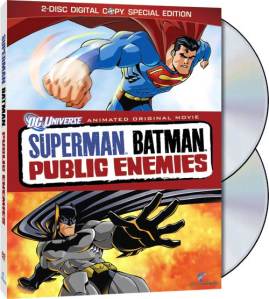
Superman/Batman: Public Enemies DVDAwesome. Just awesome. The beauty of these DC animated films is that each one is so unique in what it reveals about the DC Universe. Superman/Batman: Public Enemies is a quintessential blockbuster. If Jerry Bruckheimer teamed up with Dan DiDio, this would be the result.

Of course, the pedigree of this film is much loved, as well it should be. The Superman/Batman comic series was launched by writer Jeph Loeb and artist Ed McGuiness in 2003 and is a favourite of mine, and may others. Those first 6 issues showed the great heights to which comics can attain, and highlighted the different centres between the 2 lead characters, thanks to Loeb’s specific inner monologues for both.

This film adaptation may only be just over an hour long, but it’s thankfully very similar to the plot of those 6 issues. After James Bond-like intro credits, it begins with a brief montage showing the current state of the U.S (ie, an economic disaster zone) which leads to Superman baddie Lex Luthor becoming President . This was an all too short plot device in the comics, but it did deliver gold, like in this story. Luthor uses his newfound power to frame Superman for the murder of Metallo and the paranoia from an oncoming kryptonite meteor to offer a $1 billion bounty for Superman and Batman, as enemies of the state.

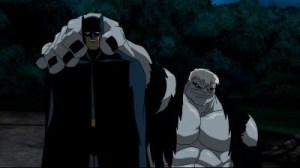
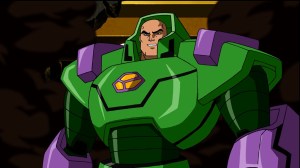
Solomon GrundyFor those that fondly recall the initial series, you’ll be pleased as punch to know that all the good stuff has been pulled from the page to the screen. The kryptonite bullet, Luthor injecting himself with liquid kryptonite, the clash with Captain Marvel and Hawkman, Hiro the new Japanese Toyman and his giant robot. It’s all here. However, new fans will be lost. With all the supervillain and hero cameos, there are no expository speeches detailing their origins, powers or even names. A nice touch would’ve been a bonus feature with such info, but the curious can always read the TPB collecting the comic series, and go from there. There are also hints at Superman’s death and his romance with Lois, but again, these are for fanboys joy only. However, who can deny the joy of seeing so many cameos minute after minute? Mongul, Black Lightning, Gorilla Grodd, Nightshade, Power Girl (voiced by Smallville’s Alison Mack) and many more make any fanboy heart gleeful.

Public Enemies is a lavish film, filled with Ed McGuiness-styled looks and action packed direction by Sam Liu. Tim Daly, Kevin Conroy and Clancy Brown are back from their respective Superman: The Animated Series and Batman: TAS. It’s great to hear, and see these characters on-screen again, as Supes, Bats and Luthor.

Lex Luthor Power SuitThe 2 disc version comes with some great features that are a delight to any veteran DC reader like me.  Disc 1 has a look at the current dead-risng epic Blackest Night, with interviews with writer Geoff Johns and DC head honcho Dan DiDio. There are also looks at the four previous DC animated films (Batman: Gotham Knight, Wonder Woman, Justice League: The New Frontier and Green Lantern: First Flight) though these are not new. Trailers for Fringe, GL: First Flight and the stand-out Batman: Arkham Asylum game are there too.

Disc 2 has an interesting feature looking at the different mindsets of the two caped heroes, a casual Dinner  With DCU feature, in which casting director Andrea Romano, Batman voice actor Kevin Conroy, producer Bruce Timm and DC Exec. Gregory Noveck drink coffee and discuss their long running animated ventures. Also included is an exciting look at the next DC animated feature, Justice League: Crisis on Two Earths, which looks to be even better than this one. Two episodes from Superman: TAS, hand-picked by Timm are thrown in for good measure. They are Knight Time and The Demon Reborn and each episode feature the two heroes teaming up, with The Demon also including a Ra’s Al Ghul cameo and the sometimes humorous Knight featuring Clark impersonating Batman, with a little help from Robin and a little trouble from The Penguin, Riddler and Bane.

Really, DC are proving they’re on to something with these films and each one feels like a grateful nod to DC fans. Hopefully they serve to entertain the DC-curious too. If any of Warner Bros. live action attempts comes even close to this, then the man on the street will proudly become more familiar with DC characters rather than Spider-Man and Wolverine.

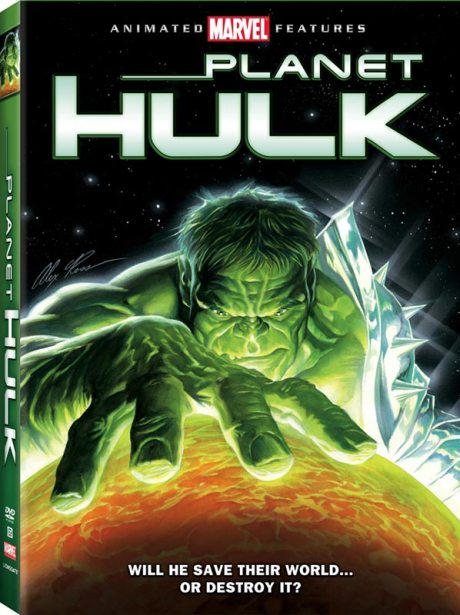
Planet Hulk DVD Artwork

The next Marvel animated film is Planet Hulk, based on the Greg Pak-penned series in which Hulk is shuttled off Earth, lands on a different planet and becomes a gladiator/king. Below is the trailer for the film, which hits in February, and the newly revealed box art from Alex Ross.

Planet Hulk DVD Art

Marvel Toon Artwork

Glimpse Into Marvel Animation’s Secret Archives…

Marvel.com Presents Marvel Animation Daily Exclusives

See all-new concept art, storyboards, character designs, backgrounds, videos, music and more

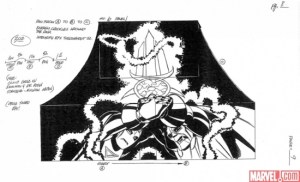
SHS SketchFor the first time ever, Marvel Animation and Marvel.com invite fans to enter the vault of Marvel Animation’s never before seen images. Available for an exclusive sneak peek are some of Marvel Animation’s most popular shows The Super Hero Squad Show, Iron Man Armored Adventures and Wolverine and the X-Men, just to name a few. From original concept sketches of characters to backgrounds, storyboards, final colored character and background artwork, and so much more, the Marvel Animation vault is officially open and fans can see it exclusively at http://www.marvel.com

Each unique feature offers engaging information and questions that will intrigue and excite all Marvel fans. Accompanied with all-new facts about Marvel Animation’s hit shows, each image offers a rare glimpse into the Marvel Universe. For the first time, Marvel Animation is delivering a behind the scenes look at the creation of some of its most popular animated series, giving fans a deeper look into Marvel’s past, present and future animated properties.

As if it could get any better, each animated series is linked to the “Related News” sections that include character biographies, episode synopses, music videos, trailers, sneak previews and so much more! For the first time ever, Marvel fans will be able to experience first hand the development and creation of the world’s greatest Super Heroes!

The Super Hero Squad

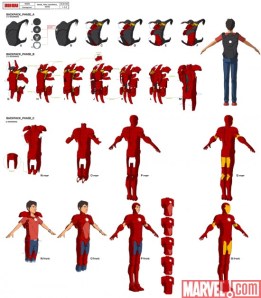
Iron Man Armored Adventures SketchWhen the greatest (and coolest) heroes on the planet unite to face the world’s greatest villains, you get the biggest, most family-friendly Super Hero team-up in TV history. It’s no small job protecting Super Hero City from the wild, weird (& even wacky) villainy of VillainVille’s infamous baddies… but the Super Hero Squad is always up for the job. These brave heroes totally deliver the action – but with plenty of humor on the side.

Animation Exclusives featuring THE SUPER HERO SQUAD SHOW include:

SHS Concept Art

Character Sketches

Background Sketches

Full Color Character Poses

Full Color Background Art

Storyboards

And so much more…

Iron Man Armored Adventures

Tony Stark is not the typical teenager… he’s a billionaire, brilliant inventor… and Iron Man! Iron Man Armored Adventures follows Tony Stark, 16-year-old genius and heir to the billion-dollar corporation Stark International, as he battles the enemies of world peace with his revolutionary power armor technology. Growing up, Tony had always lived a life of luxury, but everything went horribly wrong when a tragic plane accident robbed him of his father and nearly cost him his own life. Eager to honor the memory of his dad, Tony now uses his suit of invincible armor and technical know-how to protect those who would also fall prey to tragedy, corruption and conspiracy. With help from his friends Jim Rhodes and Pepper Potts, Tony’s activities as Iron Man usually result in high-speed flight, high-tech battles and high-octane quests for justice.

Animation Exclusives featuring IRON MAN ARMORED ADVENTURES include:

IMAA Concept Sketches

IMAA Rough Drawings

IMAA Screenshots

Iron Man Suit Concepts

Storyboards

Final Color Character Imagery

Background Artwork

And so much more…

Wolverine and the X-Men

The story begins as an explosive event shatters the lives of the X-Men and takes away their mentor, Professor X. The beaten heroes, including Beast, Storm, Cyclops and Nightcrawler, walk away from it all but then they are given a rare glimpse into the future, where they see a world in utter ruin…ruled by giant destructive robots. They discover the world has spiraled out of control because the X-Men have given up. So now the most legendary of all X-Men, Wolverine, must take the lead on the ultimate mission–to prevent the world’s destruction—while fending off enemies Magneto and The Brotherhood.

Animation Exclusives featuring WOLVERINE AND THE X-MEN:

WXM Concept Sketches

Rough Character Images

Colored Final Character Images

Exclusive Wolverine and X-Men Images

WXM Screenshots

Background Imagery

And so much more…

Justice League: Crisis On Two Earths Pics

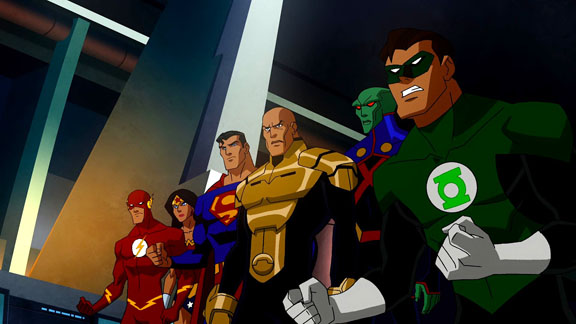
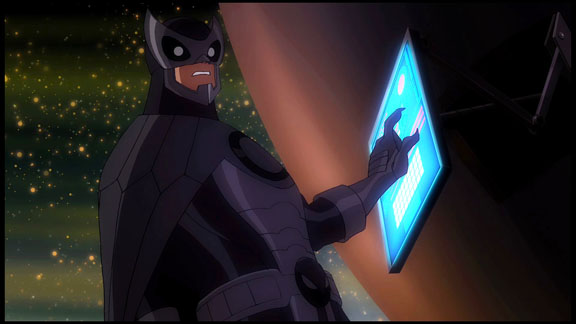
Two teaser images have been released for the next DC animated film arriving next year. The setup is this: a heroic Lex Luthor arrives from an alternate earth requesting the help of the Justice League in defeating their evil counterparts on good Lex’s home planet. Below are pics of hero Lex in gold armour surrounded by “our” Justice League, and a pic of the bad League’s version of Batman, namely Owlman.

With a story that seems to be based on 2000’s graphic novel, JLA: Earth 2 by Grant Morrison and Frank Quitely and the introduction of the Multiverse into the DC animated films, this will be yet another one to watch. Here’s the official skinny.

An original story from award-winning animation/comics writer Dwayne McDuffie (Justice League) rooted in DC Comics’ popular canon of “Crisis” stories.

Bruce Timm (Superman Doomsday, Green Lantern) is executive producer. Lauren Montgomery (Wonder Woman, Green Lantern) and Sam Liu (Superman/Batman: Public Enemies) are co-directors.

Good Lex Luthor and JLA

In Justice League: Crisis on Two Earths, a “good” Lex Luthor arrives from an alternate universe to recruit the Justice League to help save his Earth from the Crime Syndicate, a gang of villainous characters with virtually identical super powers to the Justice League. What ensues is the ultimate battle of good versus evil in a war that threatens both planets and, through a diabolical plan launched by Owlman, puts the balance of all existence in peril.

All-star voice cast led by Mark Harmon (NCIS) as Superman, James Woods (Ghosts of Mississippi) as Owlman, Chris Noth (Sex and the City, Law & Order) as Lex Luthor, William Baldwin (Dirty Sexy Money) as Batman, Gina Torres (Serenity, Firefly) as Super Woman and Bruce Davison (X-Men) as the President.

Owlman

The Super Hero Squad

Marvel’s new animated series with kid-friendly versions of their characters has now debuted on the Cartoon Network. Below are the details, including the impressive voice talent involved.

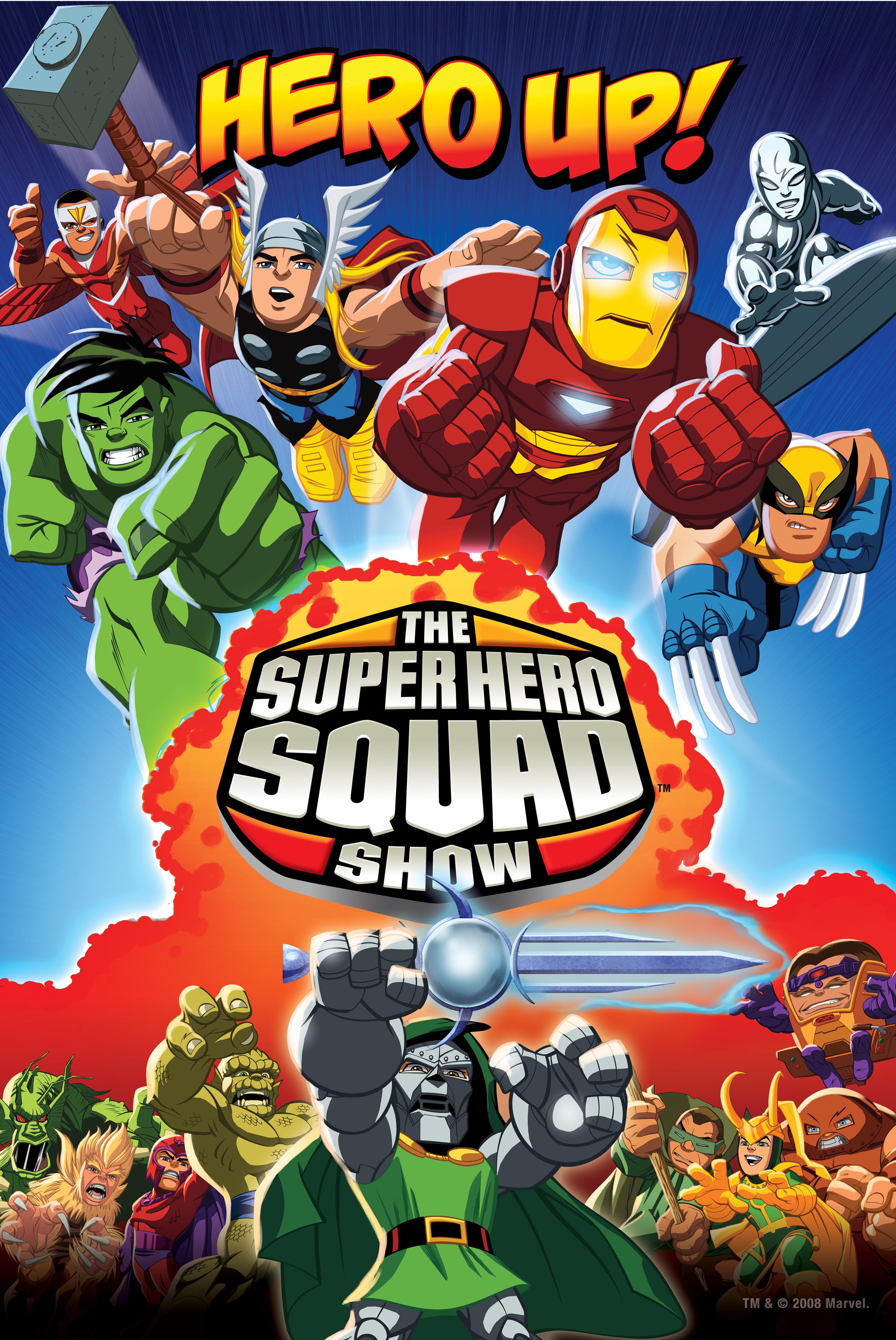
SuperHeroSquadShowOn Monday, September 14, The Super Hero Squad Show makes its Marvel-ous debut on the Cartoon Network with an action-packed sneak peak you can’t miss! Experience the adventures of Iron Man, Captain America , Thor, Silver Surfer, Wolverine, Storm and all your favorite Marvel Heroes like never before! The greatest heroes in the universe unite against the deadliest villains in an exciting, family friendly Super Hero team up unlike any in history! The Super Hero Squad unites to protect Super Hero City for VillainVille, as they must stop Dr. Doom and his allies from gathering pieces of the powerful Infinity Sword, or the bad guys will rule the universe! Luckily, the City is filled with Marvel Super Hero guest-stars to help out in a pinch. These brave heroes totally deliver the action – but with plenty of humor on the side as they “Hero Up!” to save the day.

The Super Hero Squad Show features superstar talent playing the roles of the series’ memorable characters, including:

Tom Kenny (Spongebob)

Charlie Adler (Transformers 1 & 2)

Steve Blum (Wolverine and the X-Men, Hulk Vs.)

Grey DeLisle (Fairly Oddparents and The Replacements).

And when it comes to guest-stars, The Super Hero Squad Show features the greatest characters—and talent—including:

Wayne Knight (Seinfeld)

LeVar Burton (Reading Rainbow, Star Trek: The Next Generation)

Michelle Trachtenberg (Gossip Girl, 17 Again, Buffy)

Greg Grunberg (Heroes)

Lena Headey (Terminator: Sarah Connor Chronicles, 300)

Adrian Pasdar (Heroes)

Tricia Helfer (Battlestar Galatica)

Jennifer Morrison (House)

Tamera Mowry (Twitches and Sister, Sister)

Robert Englund (A Nightmare on Elm Street films)

Stan Lee as the Mayor of Super Hero City .

Marvel Motion Comics

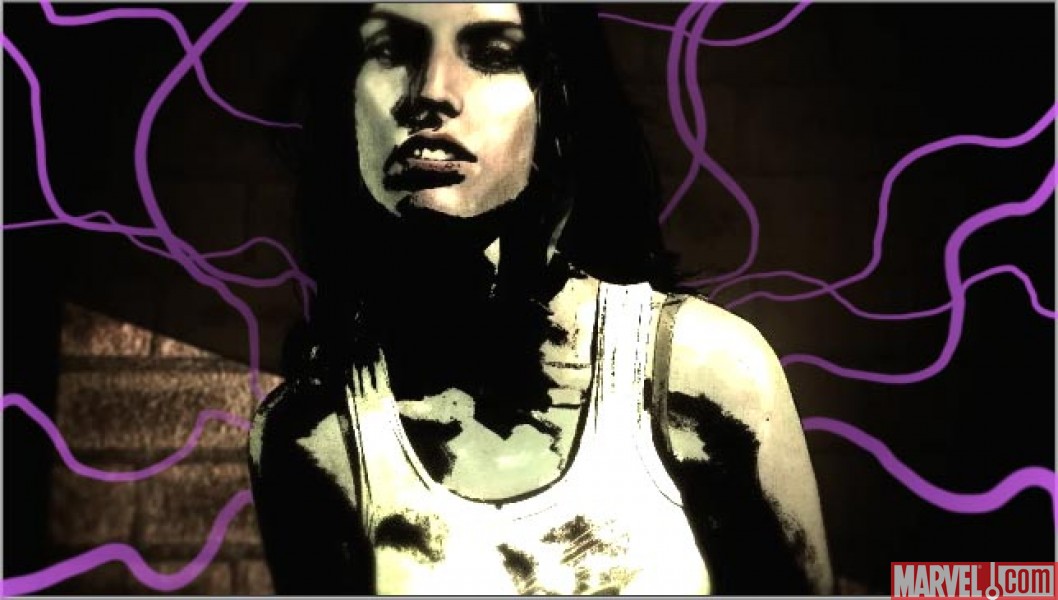
Just released from Marvel is the trailer for the Astonishing X-Men motion comic, below. Also now available from iTunes is the second episode of the original Spider-Woman motion comic series by Brian Michael Bendis and Alex Maleev. See scenes from the episode here and the release schedule can be found here. The animation looks pretty fluid and natural.

SpiderWoman_MotionComic_Episode2_Preview2

SpiderWoman_MotionComic_Episode2_Preview3

  • Calendar

    • January 2026
      M T W T F S S
       1234
      567891011
      12131415161718
      19202122232425
      262728293031  
  • Search